
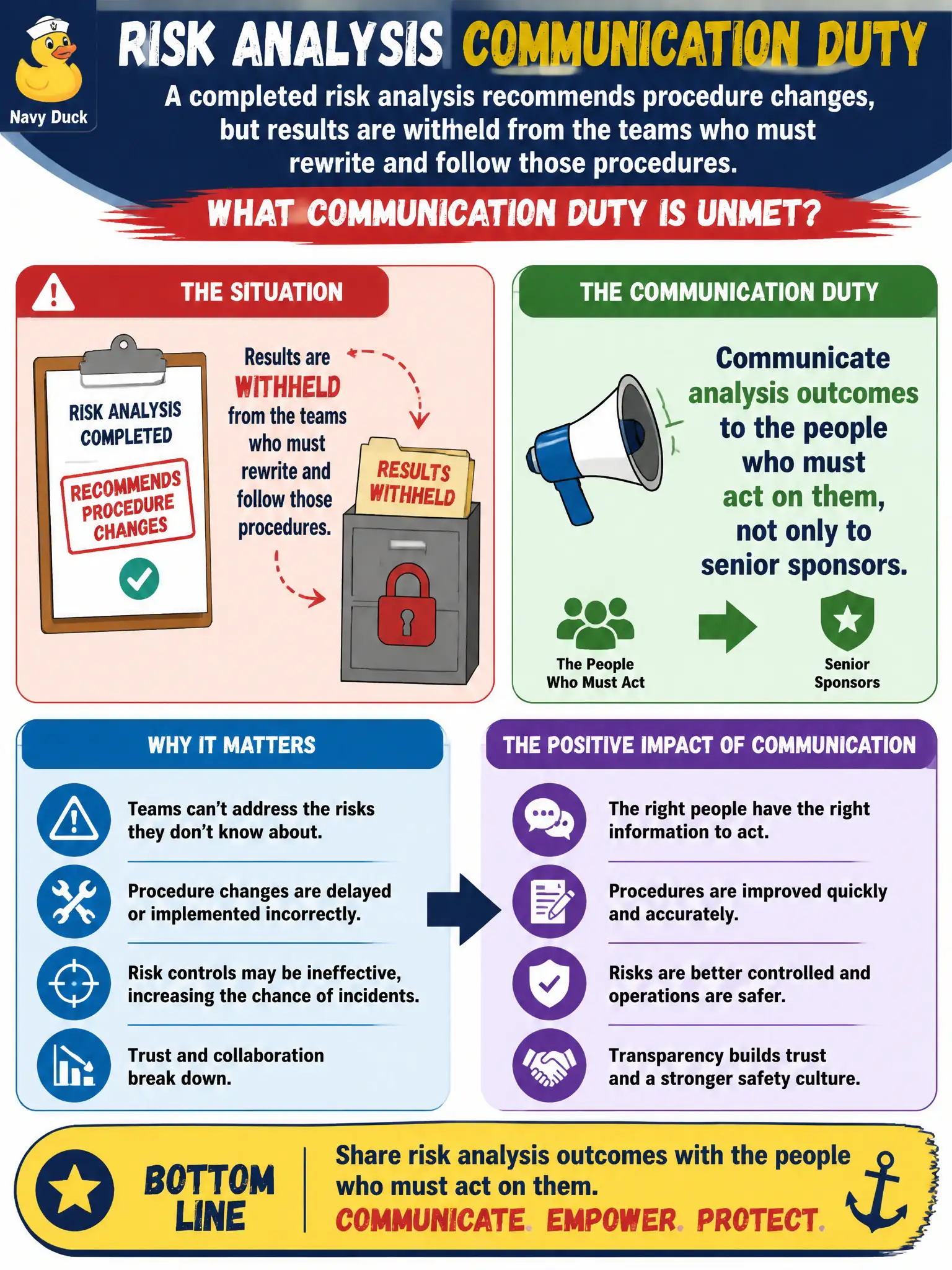
A completed risk analysis recommends procedure changes, but results are withheld from the teams who must rewrite and follow those procedures. What communication duty is unmet?
Select an answer to reveal the explanation.
Short Explanation
If the folks who rewrite the playbook never see the analysis, nothing changes on the floor. Share outcomes with the people who have to act.
Full Explanation
Completed risk analysis that recommends procedure changes must be communicated to the people who must rewrite and follow those procedures, not only to senior sponsors who commissioned the study. Withholding outcomes from operating teams leaves staff executing obsolete steps and wastes the analytical investment while residual risk continues. Restricting visibility to the board so operational teams act on rumors substitutes gossip for controlled dissemination and produces uneven, unofficial workarounds. Waiting for a press release before procedure owners update work instructions confuses public affairs timing with internal operational communication duties. Hiding results to prevent workers from worrying about residual risk paternalizes staff and blocks informed participation in controls they must perform. Sponsors need decision summaries; doers need actionable detail, owners, and due dates for changes. Sensitive security details may be compartmented, but procedure-relevant findings still require a need-to-know path to operators. Exam caveat: communication duty follows actionability, not organizational rank alone. Operational check: brief procedure owners on recommendations, assign change tasks with due dates, update work instructions, verify staff acknowledgment, report completion to sponsors, and schedule a follow-up observation that field practice matches the new procedures.