
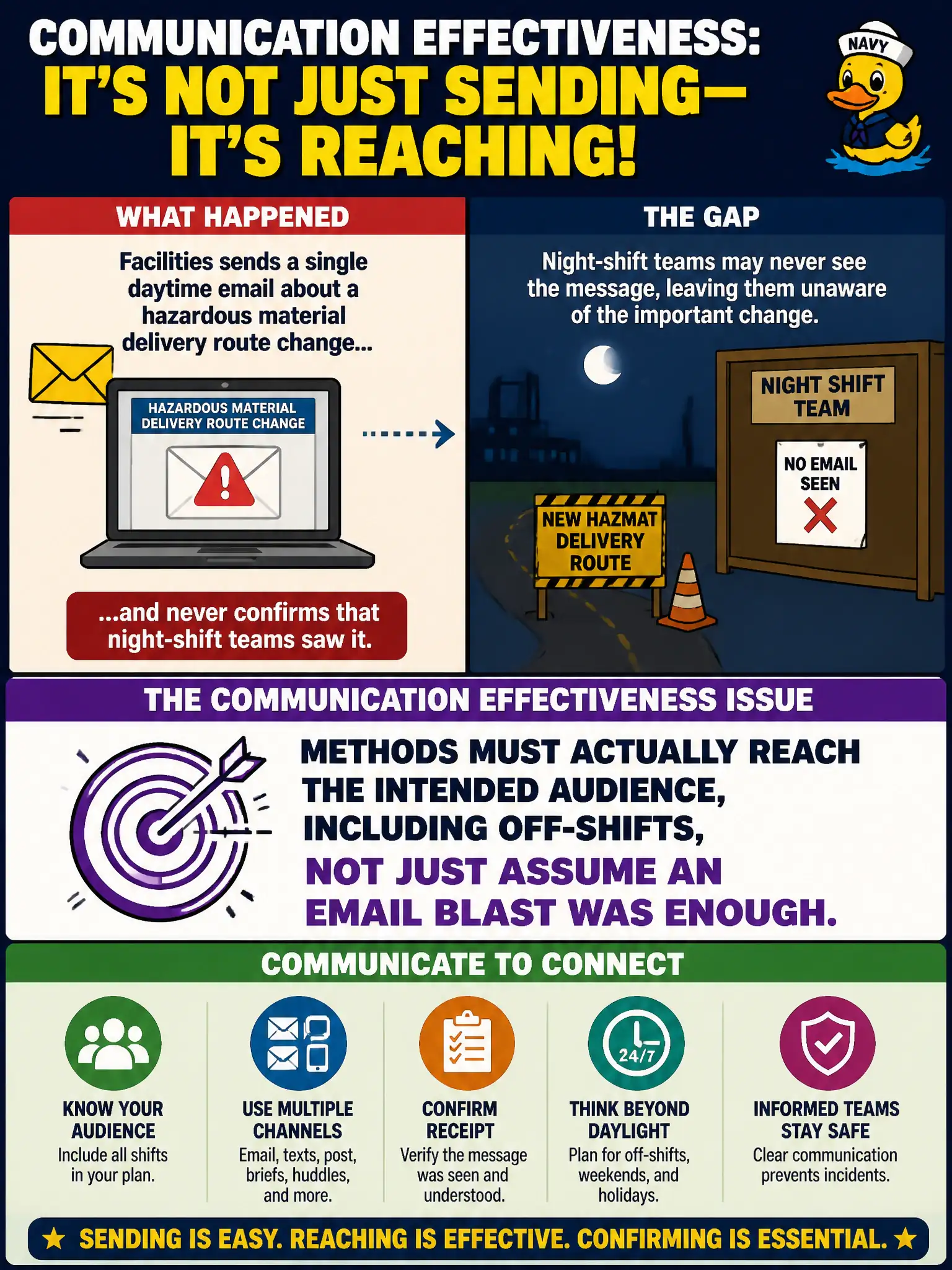
Facilities sends a single daytime email about a hazardous material delivery route change and never confirms that night-shift teams saw it. What communication effectiveness issue does this create?
Select an answer to reveal the explanation.
Short Explanation
Day-shift email does not magically wake the night crew. Pick methods—and check receipts—so every shift that needs the news actually gets it.
Full Explanation
Communication methods must actually reach the intended audience, including off-shifts; sending a single daytime email about a hazardous material delivery route change and never confirming that night-shift teams saw it creates effectiveness gaps and surprise exposures at docks and yards. One email does not equal confirmed receipt for every shift merely because the subject line is marked urgent or high importance. Night-shift workers are not outside the communication audience for daytime operational changes that alter their routes, staging areas, and emergency response assumptions. Delivery-route changes need active communication even when drivers already know the old path; the point of the message is the new hazard geography and rules. Reach includes shift coverage, language access, and acknowledgment for safety-critical changes in municipal operations. Read receipts help but may be insufficient; high-risk changes often need briefings or signed acknowledgments. Exam caveat: message sent is not the same as message received and understood. Operational check: brief all shifts before the route change goes live, post maps at docks, require supervisor confirmation for nights, keep a backup verbal briefing script, and verify the first night operations follow the new path without entering the retired hazard zone.