
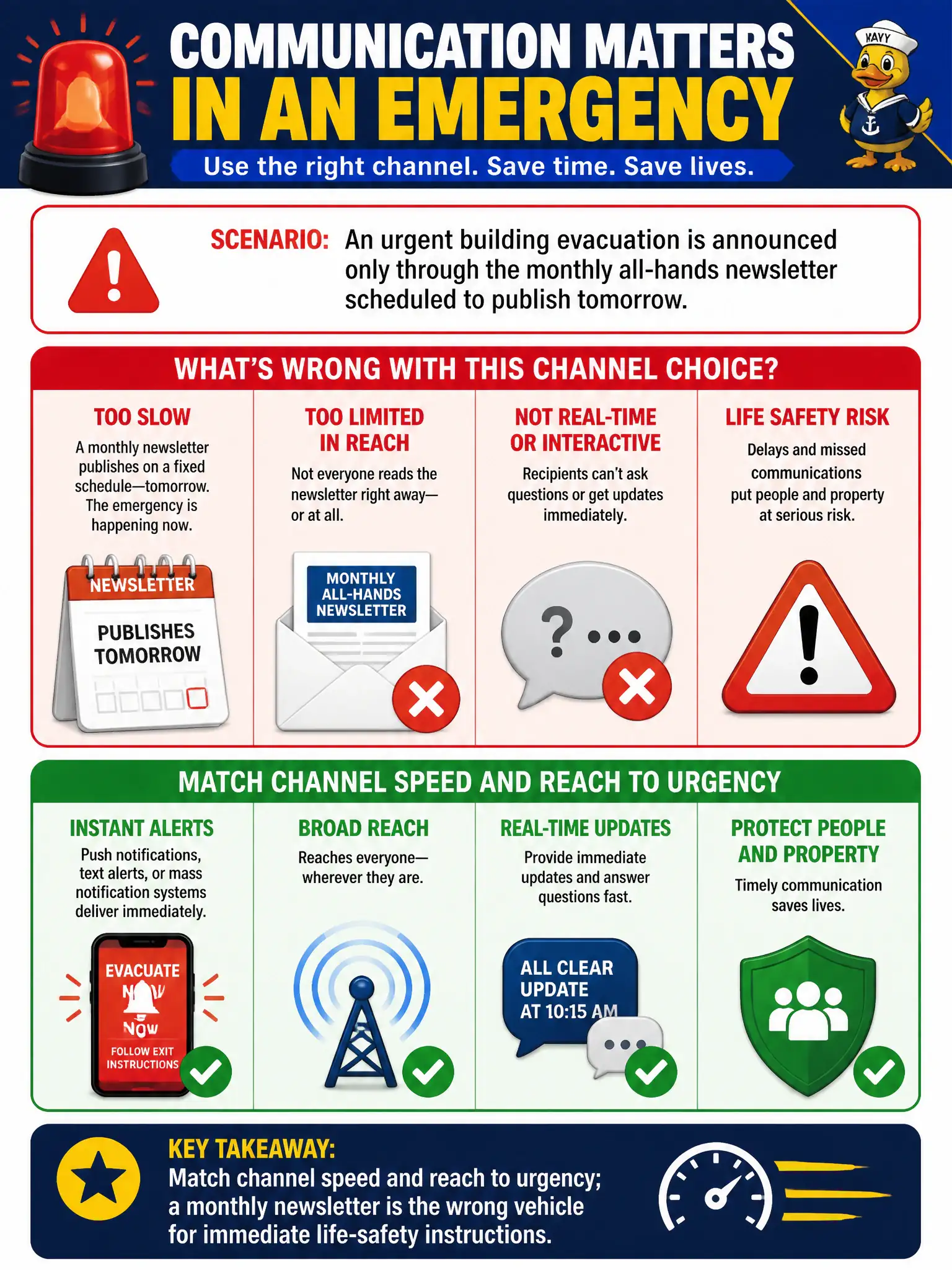
An urgent building evacuation is announced only through the monthly all-hands newsletter scheduled to publish tomorrow. What is wrong with this channel choice?
Select an answer to reveal the explanation.
Short Explanation
A monthly newsletter is a slow train. Evacuation needs a siren, PA, or instant alert—not tomorrow's inbox essay.
Full Explanation
Channel speed and reach must match urgency; announcing an urgent building evacuation only through a monthly all-hands newsletter scheduled to publish tomorrow is the wrong vehicle for immediate life-safety instructions. Newsletters are not ideal for immediate alerts merely because they include full graphics; delay defeats the protective purpose regardless of layout quality. Legal approval of newsletter copy last month does not make a slow channel appropriate for today’s evacuation and can create false confidence that communication duties are met. Claiming evacuations should never be communicated because occupants will notice alarms alone ignores visitors, hearing or language barriers, high-noise areas, and alarm impairments, and still fails as a complete notification strategy. Urgent protective actions need push channels such as public address, SMS, desktop alerts, radio, or floor wardens per the emergency plan, often in layers. Layered notification is best practice; the exam error is relying on a slow channel as primary or sole method. Exam caveat: after-action newsletters may document events but cannot initiate evacuation. Operational check: use the emergency notification system for evacuation, confirm alarms and PA function, train floor wardens, retire newsletter-only thinking for life safety, and test time-to-notify against the building’s evacuation performance standard.