
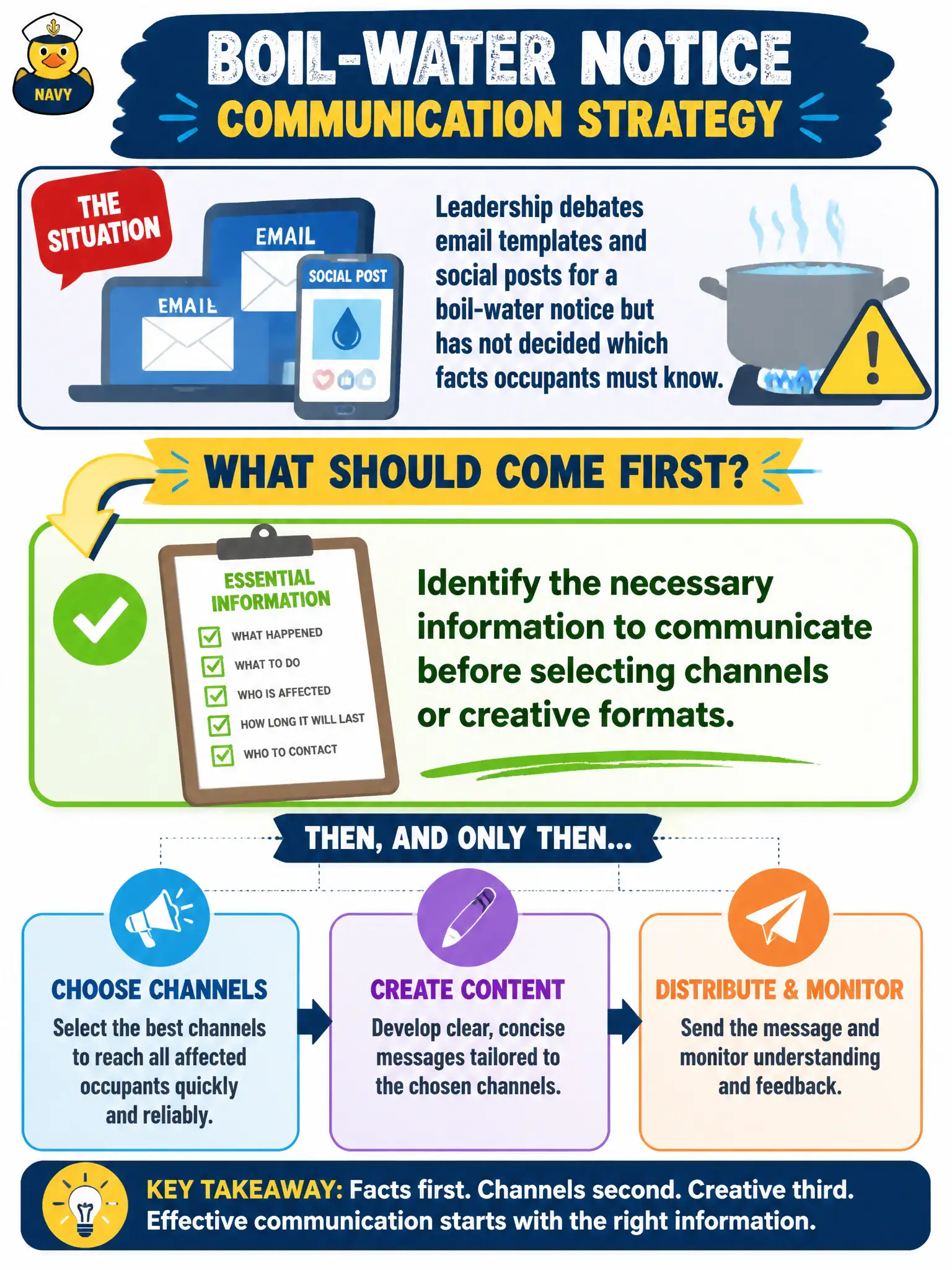
Leadership debates email templates and social posts for a boil-water notice but has not decided which facts occupants must know. What should come first in the communication strategy?
Select an answer to reveal the explanation.
Short Explanation
You cannot pick the megaphone before you know the message. First lock the must-know facts—then pick channels that can carry them.
Full Explanation
Communication strategy for a boil-water or similar public-health notice should identify the necessary information occupants must know before selecting channels or creative formats: what happened, what to do with water, whom it affects, how long, and where to get the next update. Choosing the most followed social channel before listing any facts privileges medium over message and risks polished posts that omit protective actions residents need. Delaying all content decisions until a full after-action report exists withholds urgent guidance during the exposure window and confuses investigation closure with operational notification. Issuing conflicting drafts from every department so recipients can compare versions manufactures confusion and erodes trust in municipal communications. Content clarity precedes channel choice; channels then match urgency, accessibility, and audience reach. Legal and scientific review can refine wording without postponing core protective facts indefinitely when interim templates exist. Exam caveat: CRMC communication items often test sequence—facts first, then channel and creative. Operational check: draft the must-know fact list first, obtain rapid technical concurrence, select channels that reach affected occupants quickly including offline populations, prohibit conflicting freelancing, and verify the first message includes actionable water-use instructions and the next update time.