
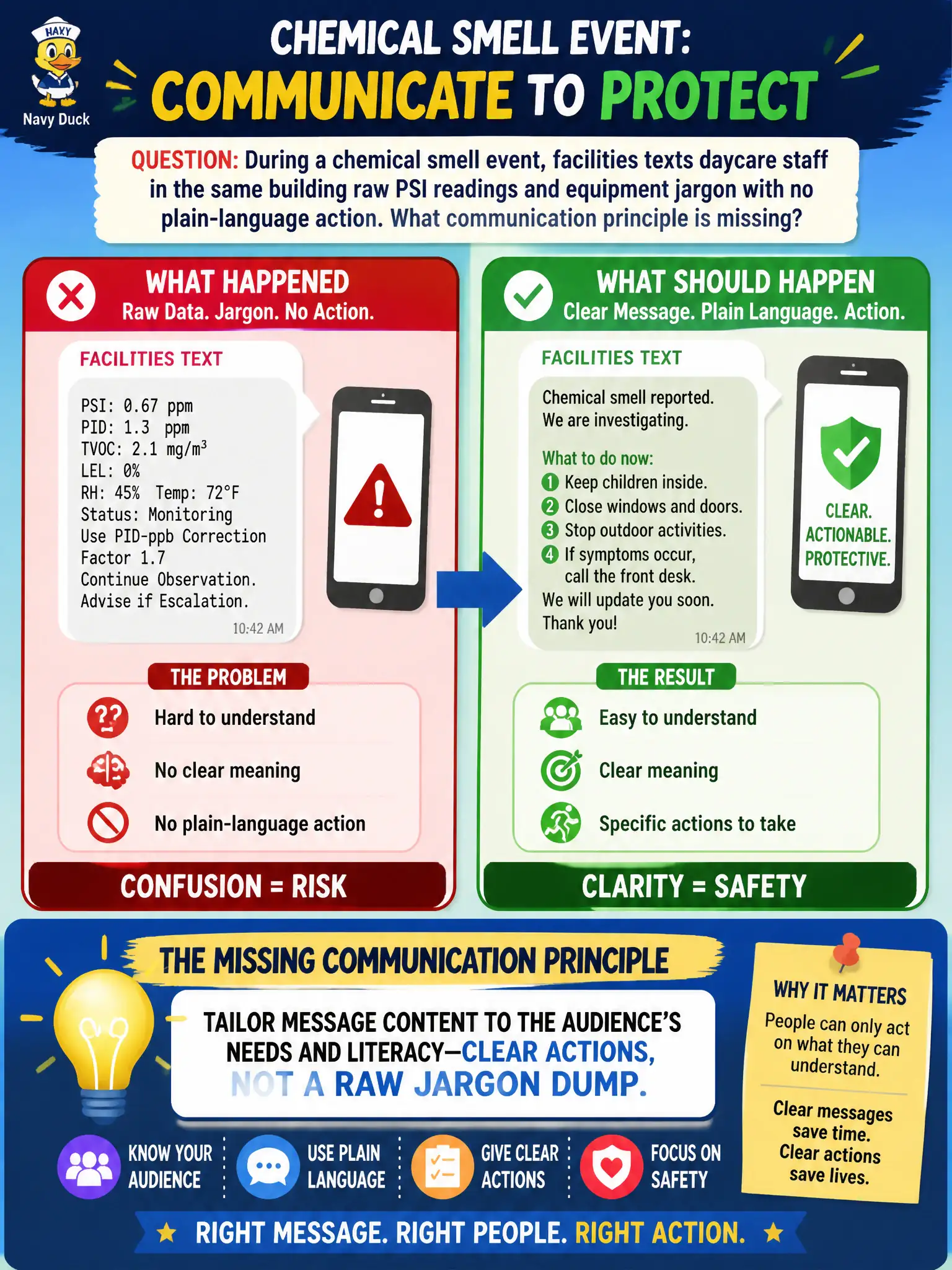
During a chemical smell event, facilities texts daycare staff in the same building raw PSI readings and equipment jargon with no plain-language action. What communication principle is missing?
Select an answer to reveal the explanation.
Short Explanation
Parents and teachers need 'leave now' or 'stay put,' not a pressure-gauge lecture. Match the message to the audience—plain words and clear actions beat jargon.
Full Explanation
During a chemical smell event, risk communication must tailor message content to the audience’s needs and literacy—clear protective actions for daycare staff sharing the building, not a raw text dump of PSI readings and equipment jargon from facilities. Sending the most technical dataset available to prove transparency can obscure what caregivers must do immediately to protect children and themselves and can freeze decision-making. Waiting to message daycare staff until the incident is fully closed withholds protective action during the hazard window when shelter, relocate, or avoid-corridor instructions matter most. PSI numbers alone in all capital letters still fail if recipients cannot translate telemetry into evacuate, shelter, or wait guidance with timing. Audience analysis is a core part of communication strategy for civic facilities with mixed occupants who lack process-control literacy. Transparency and clarity are compatible; jargon dumps serve neither operations nor care duties. Exam caveat: technical appendices can follow plain-language action messages for specialized partners. Operational check: use plain-language templates stating required actions, timing, and contacts; confirm daycare receipt and understanding; stop raw SCADA dumps as the primary message; brief facilities communicators; and after-action the event for literacy, speed, and completeness of protective instruction.