
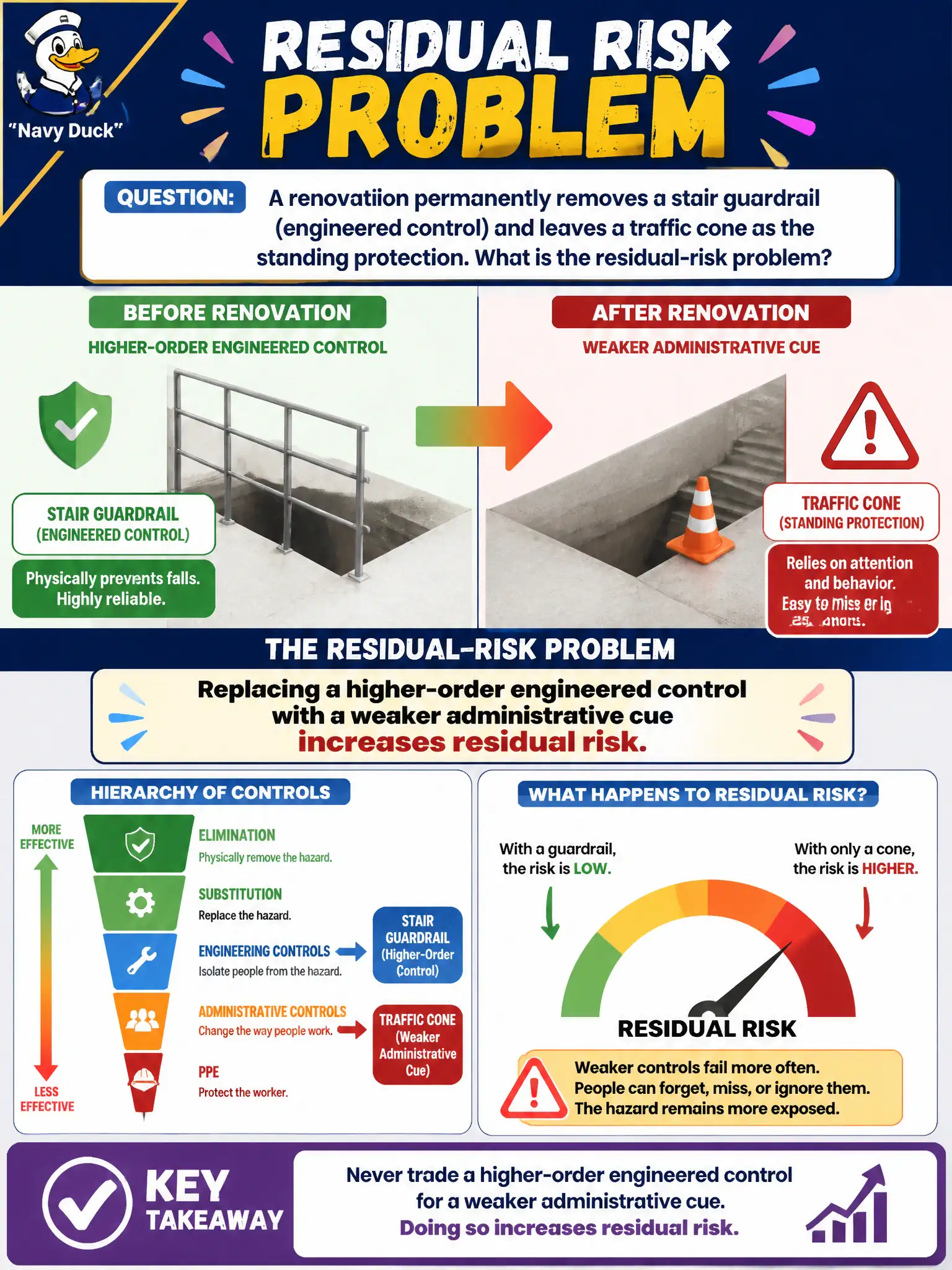
A renovation permanently removes a stair guardrail (engineered control) and leaves a traffic cone as the standing protection. What is the residual-risk problem?
Select an answer to reveal the explanation.
Short Explanation
Swapping a real guardrail for a cone is trading a fence for a sticky note. Weaker controls leave more leftover risk—do not downgrade casually.
Full Explanation
Replacing a higher-order engineered stair guardrail with a weaker administrative cue such as a standing traffic cone increases residual risk because control reliability drops from physical prevention of falls toward a temporary warning that people can ignore, kick aside, or relocate during deliveries. Cones are not engineered controls equal to guardrails when painted safety orange; color branding does not upgrade the control class in the hierarchy. Preferring permanent removal of guardrails because cones improve flexibility for deliveries prioritizes convenience over fall protection for staff and visitors in a civic building. Assuming any temporary renovation downgrade automatically becomes acceptable forever after work ends freezes a construction workaround as the new normal without reassessment or formal risk acceptance. Fall hazards at stairs demand durable engineered protection for ongoing occupancy, not indefinite cones. Temporary construction controls must be restored to permanent engineered standards at turnover. Exam caveat: hierarchy downgrades require explicit justification and are rarely justified as permanent by logistics convenience. Operational check: reinstall the guardrail before general occupancy, remove cone-only protection as the standing control, update the renovation punch list and risk assessment, brief facilities that convenience does not authorize hierarchy downgrades, and inspect similar projects for the same substitution pattern.