
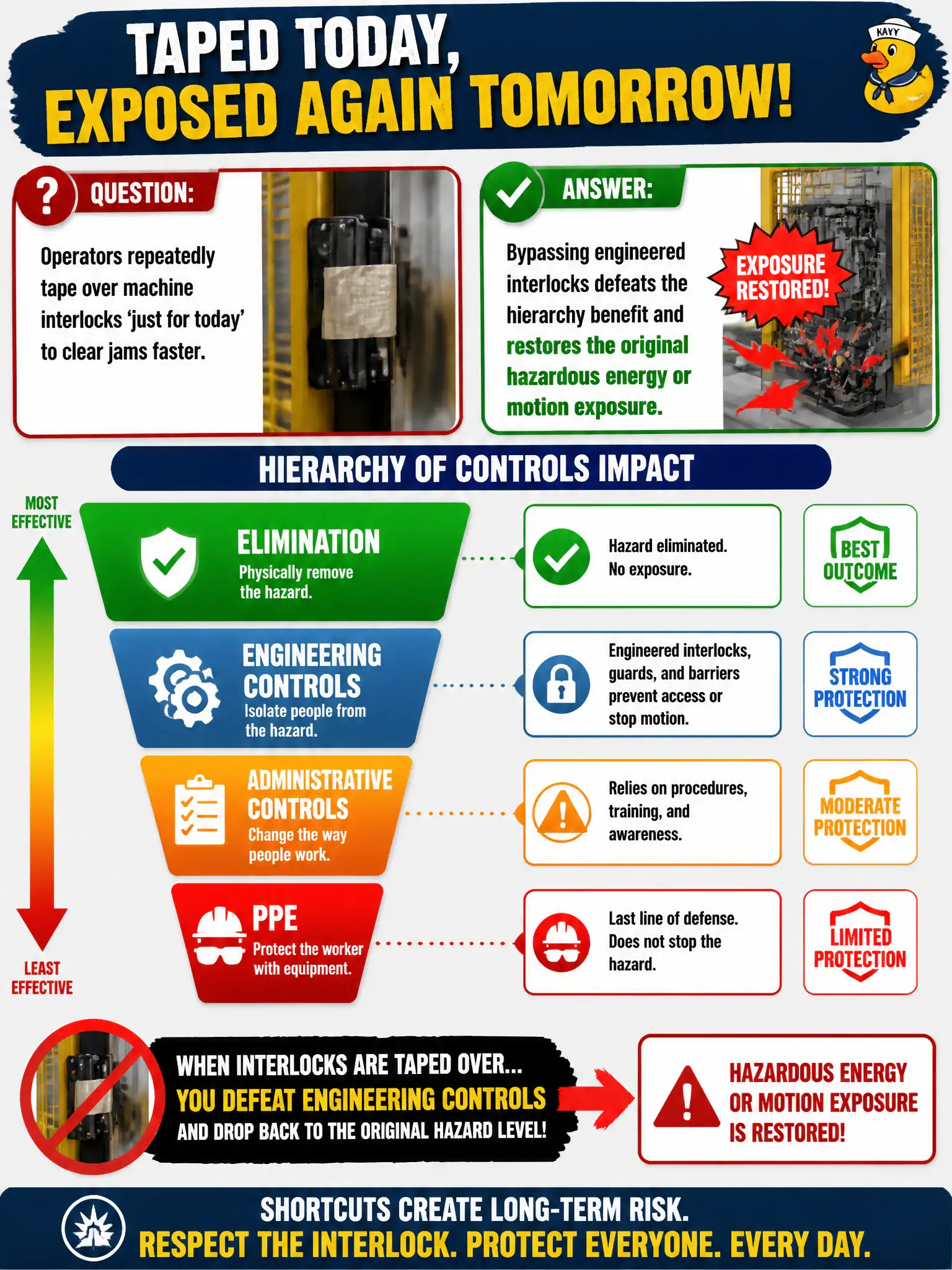
Operators repeatedly tape over machine interlocks 'just for today' to clear jams faster. What is the hierarchy impact?
Select an answer to reveal the explanation.
Short Explanation
Taping an interlock is like disconnecting the smoke alarm because toast burned. You just removed the engineered protection the hierarchy was counting on.
Full Explanation
Bypassing engineered interlocks with tape just for today defeats the hierarchy benefit and restores the original hazardous energy or motion exposure the interlock was designed to interrupt on civic production or maintenance equipment. Temporary tape bypasses are not administrative improvements that somehow strengthen engineered controls; they are unauthorized defeat of engineering and a classic path to crush, cut, or unexpected-start injuries. Interlocks do not become optional once workers pass annual awareness training; training cannot replace functioning engineering while energy or motion remains. Supervisor initials on a tape roll do not authorize defeating safeguards outside a formal, controlled secondary procedure that includes alternate protections, time limits, and restoration checks. Production pressure commonly drives short-duration bypasses that become normalized deviance across shifts. Formal lockout or managed temporary bypass procedures with compensating controls differ sharply from casual taping for jam clearance. Exam caveat: hierarchy gains from engineered interlocks exist only while the devices function as designed. Operational check: remove tape bypasses immediately, restore interlocks before restart, investigate why jams occur so the incentive to defeat safeguards drops, confront unauthorized bypass culture with clear accountability, and verify interlock function on a preventive maintenance route with recorded tests.