
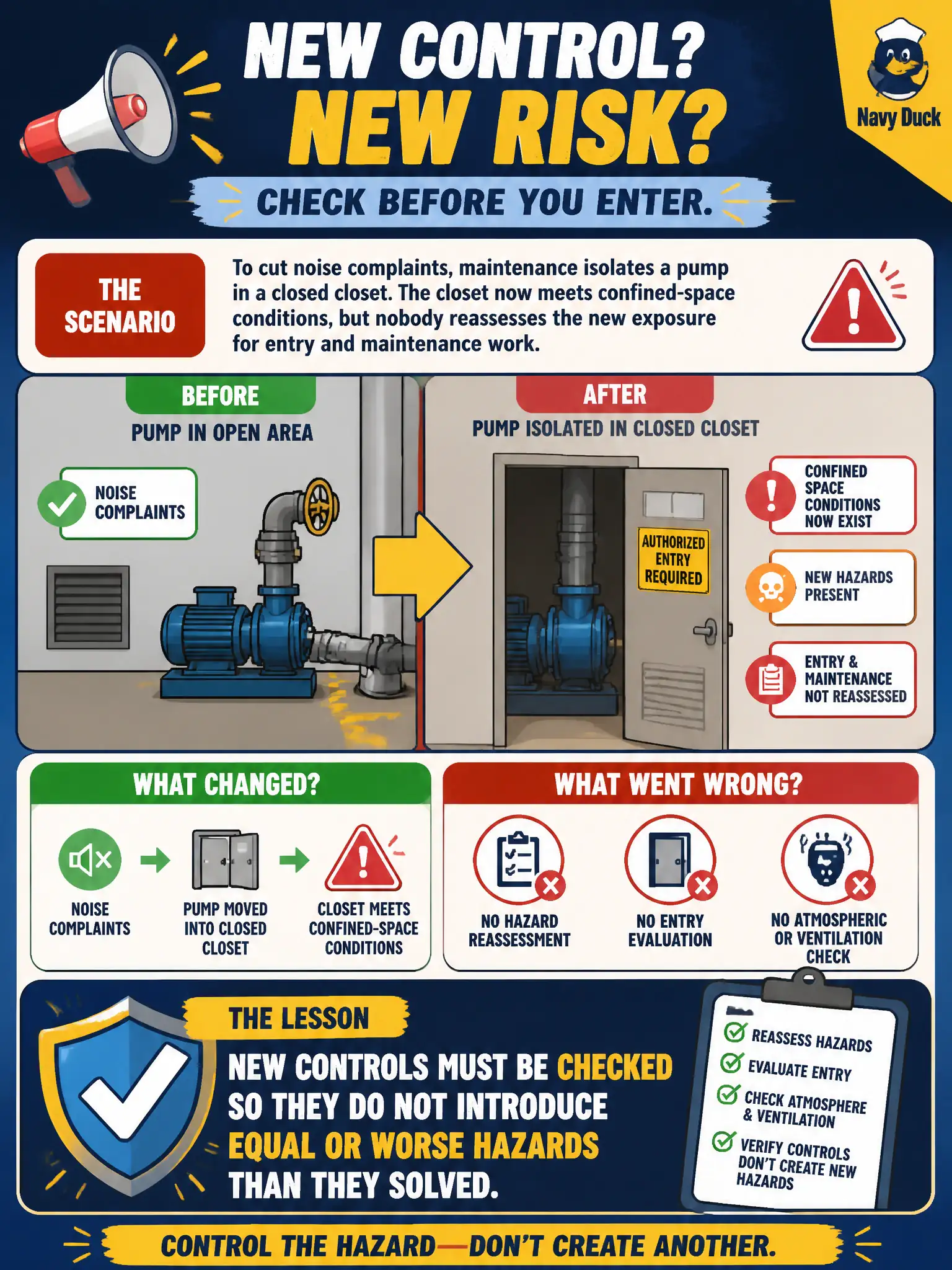
To cut noise complaints, maintenance isolates a pump in a closed closet. The closet now meets confined-space conditions, but nobody reassesses the new exposure for entry and maintenance work. What lesson applies?
Select an answer to reveal the explanation.
Short Explanation
Stuffing a noisy pump in a closet can trade ear risk for confined-space risk. Every new control deserves a fresh look so you did not invent a worse problem.
Full Explanation
New controls must be checked so they do not introduce equal or worse hazards than they solved; isolating a noisy pump in a closed closet that now meets confined-space conditions without reassessment illustrates secondary-risk creation. Noise isolation does not eliminate the need for further risk assessment when the control changes access, atmosphere, or energy hazards for maintainers. Confined-space rules can apply to equipment closets inside occupied buildings when criteria for limited entry and hazardous atmospheres or engulfment are met—location inside a building is not an automatic exemption. Monitoring only the original noise metric after installing a control misses new entry, lockout, and atmospheric risks created by the enclosure. Control selection is iterative: verify residual and introduced risks after implementation. Exam caveat: hierarchy progress on one hazard can still fail overall risk objectives if secondary hazards are ignored. Operational check: reassess the closet against confined-space criteria, implement entry permits and atmospheric testing if required, maintain noise benefits without unsafe entry norms, update procedures for pump maintenance, and record the secondary-risk review on the asset’s risk file.