
A yard posts a 5 mph speed policy in the employee handbook, but the yard has no signs, no enforcement, and drivers routinely ignore it. What makes this administrative control ineffective?
Select an answer to reveal the explanation.
Short Explanation
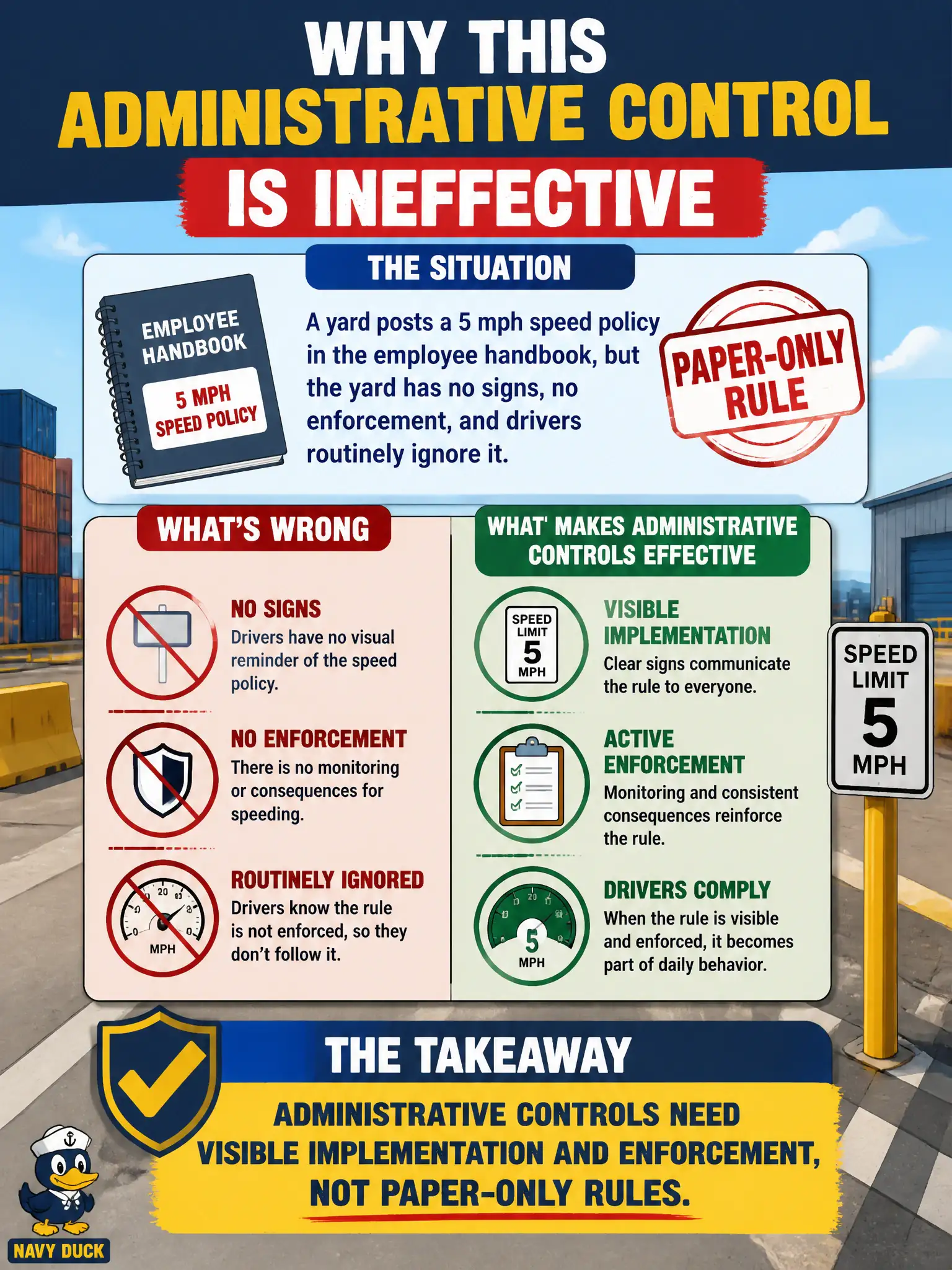
A speed limit nobody sees or enforces is a wish, not a control. Administrative rules need signs, coaching, and follow-through to actually change behavior.
Full Explanation
Administrative controls need visible implementation and enforcement, not paper-only rules; a 5 mph yard speed policy that lives only in the handbook without signs, monitoring, or consequences is ineffective against routine speeding. Handbook wording approved by legal does not automatically produce field behavior without communication and enforcement. Speed limits can be administrative controls; claiming they only work as engineering misunderstands control categories—engineering might add barriers or traffic calming, while policy and enforcement remain administrative. Unsigned or unenforced limits are not fine merely because insurance rates have not yet increased; lagging financial signals arrive after collisions. Effectiveness of administrative controls is an empirical question answered by observation and incident trends, not binder presence. Exam caveat: CRMC items often contrast documented policy with implemented control. Operational check: post speed limits in the yard, brief drivers, authorize supervisors to intervene, consider engineered calming if speeding persists, trend near misses and property damage, and update the risk register to show the administrative control’s actual status as implemented or ineffective.