
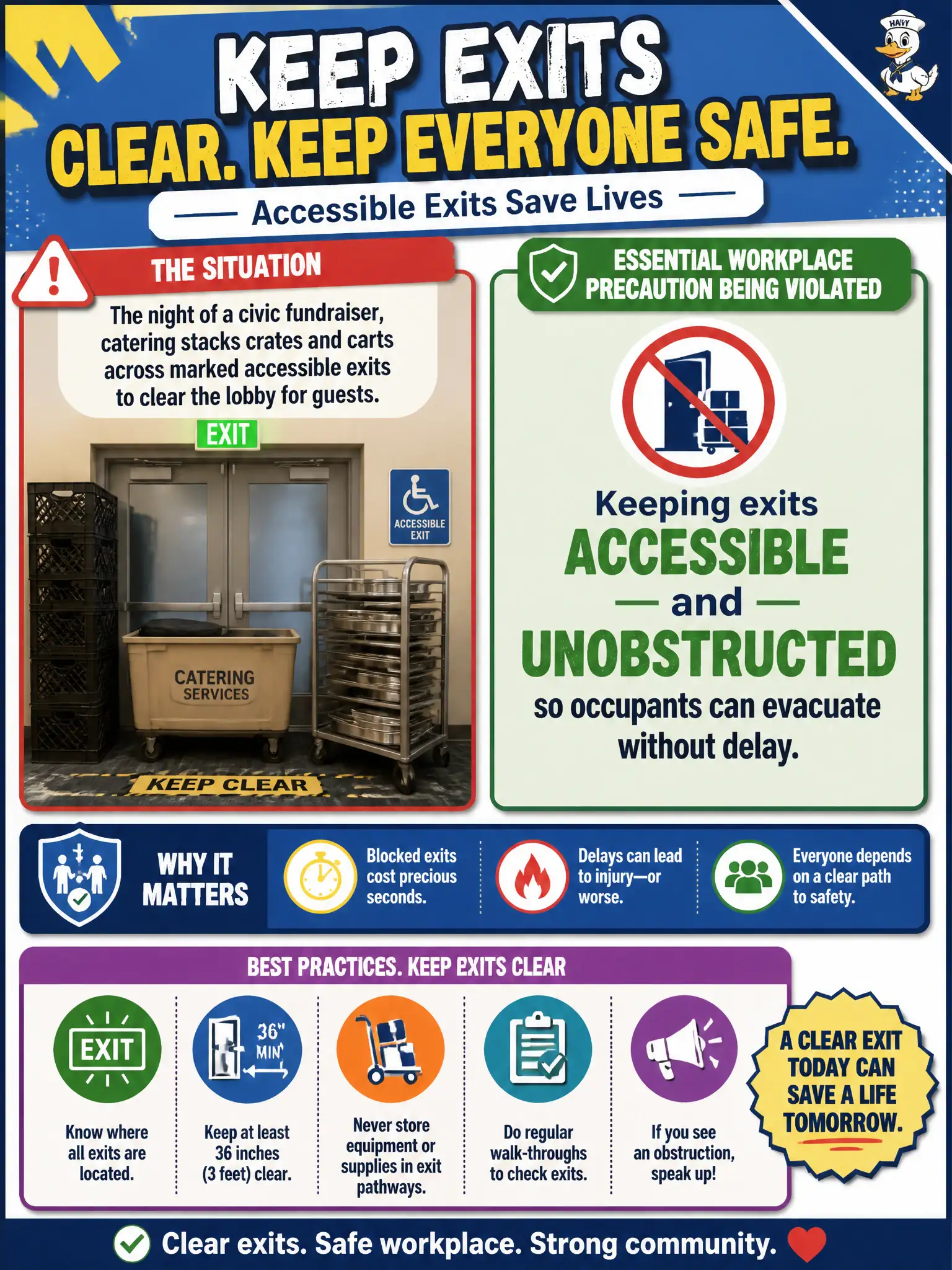
The night of a civic fundraiser, catering stacks crates and carts across marked accessible exits to clear the lobby for guests. What essential workplace precaution is being violated?
Select an answer to reveal the explanation.
Short Explanation
Exits are doors with a job: get people out. Blocking them with party crates turns an escape path into a storage closet—never OK, fundraiser or not.
Full Explanation
Keeping exits accessible and unobstructed so occupants can evacuate without delay is an essential workplace precaution; stacking crates and carts across marked accessible exits during a civic fundraiser to clear lobby space violates that duty for guests, staff, and volunteers. Posting the fundraiser agenda on exit doors so guests know the program order uses the egress path as a bulletin board and can obscure exit identity. Replacing exit signs with temporary event branding for the evening trades wayfinding for aesthetics during an occupied public event. Assigning only volunteers to watch exits while paid staff work the coat check does not legalize physical obstruction and fails if watchers leave their posts. Temporary events in civic buildings still require clear egress width, signage, and accessible routes under emergency conditions. Exam caveat: occupancy for special events often increases risk precisely when decorations and logistics tempt exit blockage. Operational check: walk all marked exits before doors open, remove storage from egress paths, restore exit signs, brief catering on no-block rules, keep a floor lead empowered to move carts immediately, and verify accessible exits remain usable for mobility devices throughout the event.