
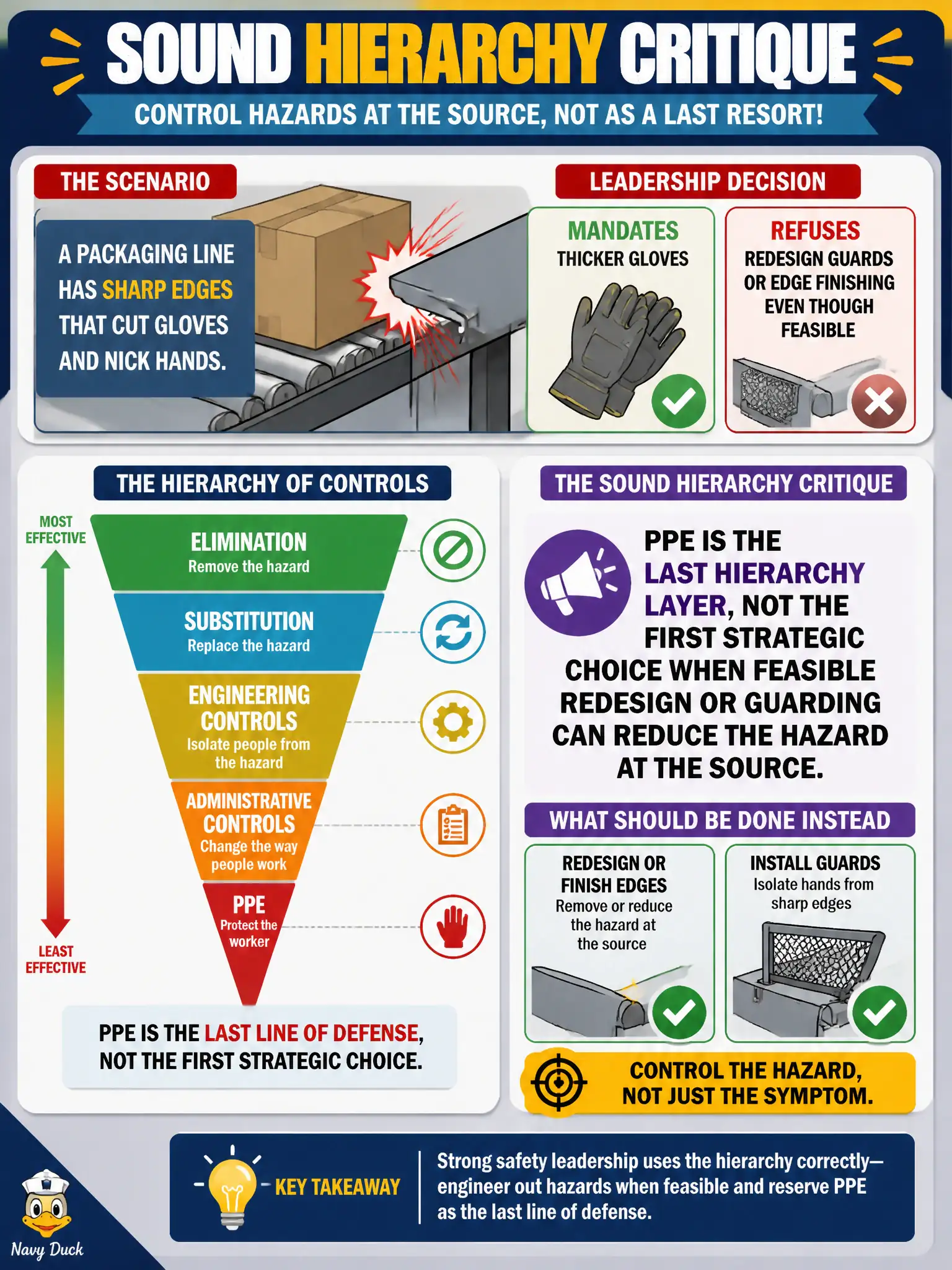
A packaging line has sharp edges that cut gloves and nick hands. Leadership mandates thicker gloves but refuses to redesign guards or edge finishing even though redesign is feasible. What is the sound hierarchy critique?
Select an answer to reveal the explanation.
Short Explanation
Gloves are the bandage after the cut. If you can redesign or guard the sharp edge, do that first—PPE is the last line, not the opening move.
Full Explanation
PPE is the last hierarchy layer, not the first strategic choice when feasible redesign or guarding can reduce sharp-edge hazards at the source on a packaging line. Mandating thicker gloves while refusing feasible edge finishing or guards leaves the energy and sharpness in place and accepts ongoing cuts as a consumable-glove problem. Calling mandatory gloves an engineering control that should be the first strategic choice misclassifies PPE and inverts hierarchy order. Preferring PPE over redesign because it costs less and supposedly proves workers are careful substitutes cheap receiver controls for source control and blames people for predictable contact injuries. Treating sharp-edge injuries as accepted residual risk once any gloves are issued skips both hierarchy analysis and formal risk acceptance criteria. Gloves remain useful as a backstop for residual hazard after engineering, but they should not block feasible higher controls. Exam caveat: cost is a treatment factor; it does not redefine PPE as engineering or justify skipping feasible source controls. Operational check: redesign edges or install guards where feasible, verify cut rates fall, retain appropriate gloves for residual risk, retrain line staff, record the hierarchy rationale in the risk file, and retire the gloves-first mandate as the primary strategy.