
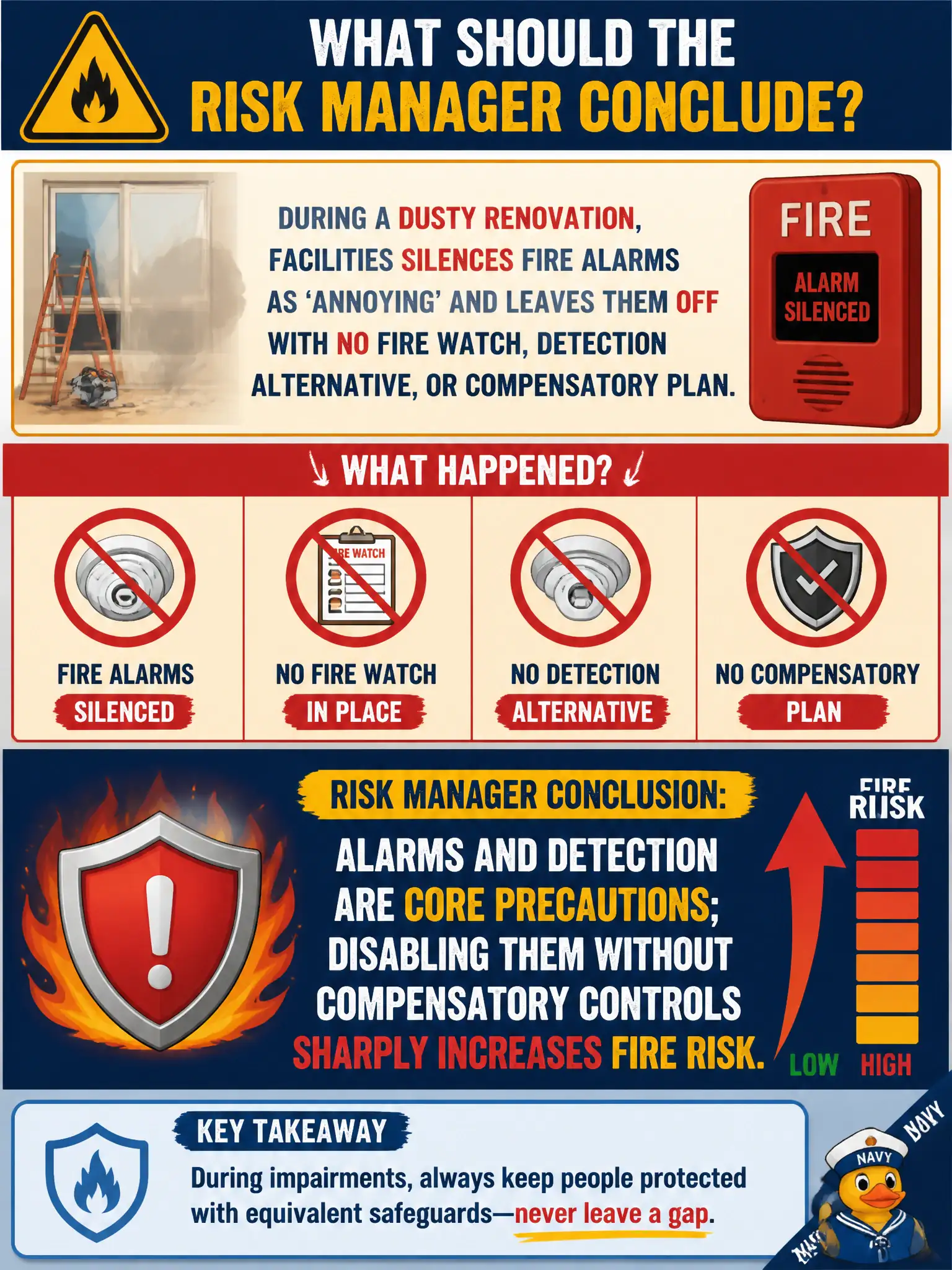
During a dusty renovation, facilities silences fire alarms as 'annoying' and leaves them off with no fire watch, detection alternative, or compensatory plan. What should the risk manager conclude?
Select an answer to reveal the explanation.
Short Explanation
Fire alarms are the building's early warning—not a construction annoyance switch. Kill them without a fire watch or backup detection and you are flying blind.
Full Explanation
Fire alarms and detection are core precautions; silencing them during a dusty renovation without fire watch, alternate detection, or a compensatory plan sharply increases fire risk for occupants and responders. Accepting silence whenever construction dust might cause nuisance trips ignores established impairment procedures that require compensating controls. Assuming dusty renovations automatically transfer all fire risk to the contractor’s insurance alone confuses risk financing with on-site life-safety management. Leaving alarms silenced after a single email that the system is offline provides notification without protection and can create alarm fatigue or disbelief later. Impairment of detection and notification systems demands time limits, permits, fire watches, hot-work controls, and restoration verification. Exam caveat: temporary impairments may be necessary for construction but are never uncontrolled or indefinite under sound corporate risk practice. Operational check: stop uncontrolled silencing, implement a written impairment plan with fire watch and communication to occupants, limit offline duration, restore and test detection before leaving the site, and log the impairment on the facilities risk and fire-safety records with a named owner.