
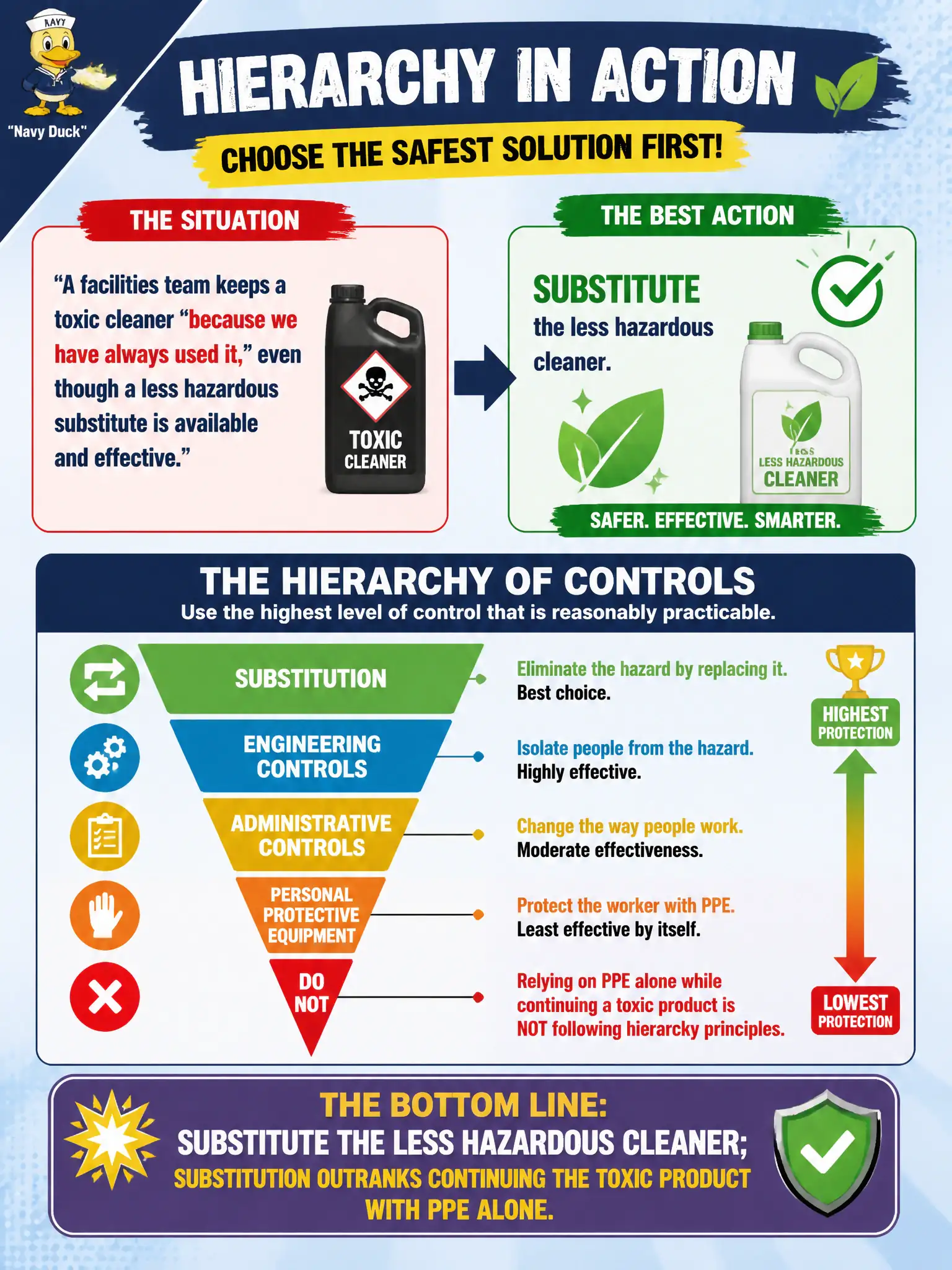
A facilities team keeps a toxic cleaner “because we have always used it,” even though a less hazardous substitute is available and effective. What control action best follows hierarchy principles?
Select an answer to reveal the explanation.
Short Explanation
“We have always used it” is not a risk control—it is nostalgia with a hazard label. If a safer cleaner does the job, swap it. Substitution beats hoping PPE covers a chemical you did not need to keep.
Full Explanation
When a less hazardous cleaner is available and effective, substituting it for a toxic product the facilities team keeps because we have always used it follows hierarchy principles: substitution outranks continuing a higher-hazard chemical managed only with PPE. Continuing the toxic cleaner while merely doubling mandatory glove brand logo size layers branding onto PPE and does not move up the hierarchy. Ignoring substitution because tradition automatically outweighs chemical hazard ratings elevates habit over risk science and safety data. Stocking both cleaners indefinitely without guidance so staff may choose by scent creates uncontrolled variability and likely continued use of the worse option under time pressure. Substitution decisions should verify cleaning efficacy, material compatibility, training, and that the replacement does not introduce equal or worse hazards such as flammability tradeoffs. Exam caveat: true substitution reduces intrinsic hazard; renaming or diluting marketing claims without chemistry change is not substitution. Operational check: approve the less hazardous cleaner, remove or quarantine the toxic product from active closets, update procedures and SDS access, train custodial staff, verify PPE for any residual hazards, and record the substitution as a hierarchy-aligned control in the chemical risk register with a review date.