
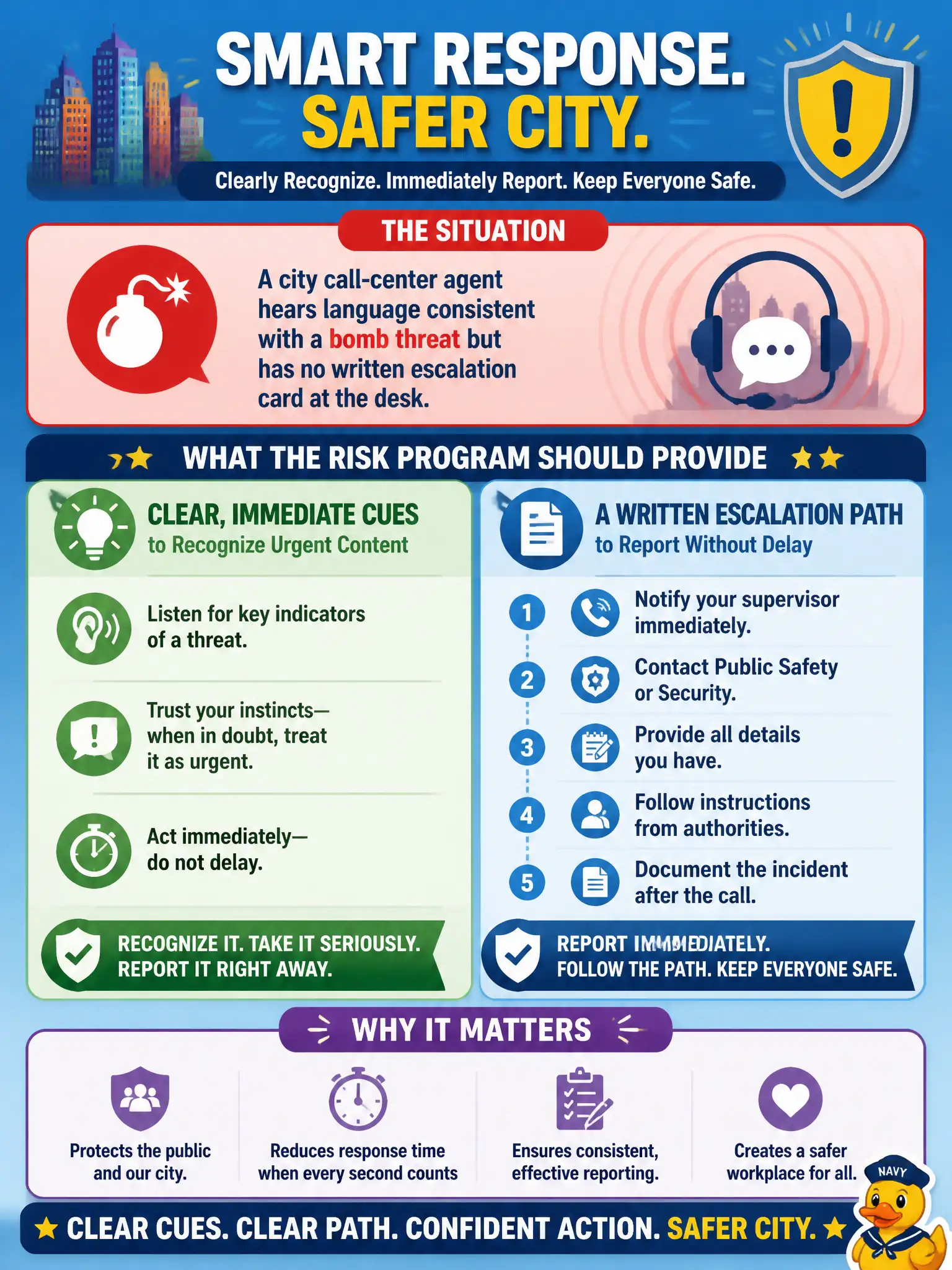
A city call-center agent hears language consistent with a bomb threat but has no written escalation card at the desk. What should the risk program provide?
Select an answer to reveal the explanation.
Short Explanation
Bomb-threat language is not a “take a message” moment. Agents need a card in hand: what counts as urgent, who to call, and what to capture. Clear cues beat hoping memory works under adrenaline.
Full Explanation
A city call-center agent who hears language consistent with a bomb threat needs clear, immediate cues and a written escalation path at the desk so urgent content is reported without delay, debate theater, or deletion. Instructions to debate the caller’s sincerity for ten minutes before involving anyone else waste critical time and are not a risk control. Policies that allow escalation only for threats on letterhead during business hours ignore how real threats arrive and when centers operate. Guidance to hang up quietly and delete call notes so the threat never enters an official record is concealment, not risk management, and may violate emergency protocols. Call-taking environments require job aids that reduce hesitation under stress. Exam caveat: exact law-enforcement protocols vary by jurisdiction; the CRMC teaching point is immediate, written, practiced escalation rather than improvisation or suppression. Operational check: place a bomb-threat checklist and escalation contacts at each station, train agents on keep-calm procedures and notification, prohibit deletion of threat-related notes, coordinate with public safety partners, and drill the path until time-to-notify meets the city’s emergency standard.