
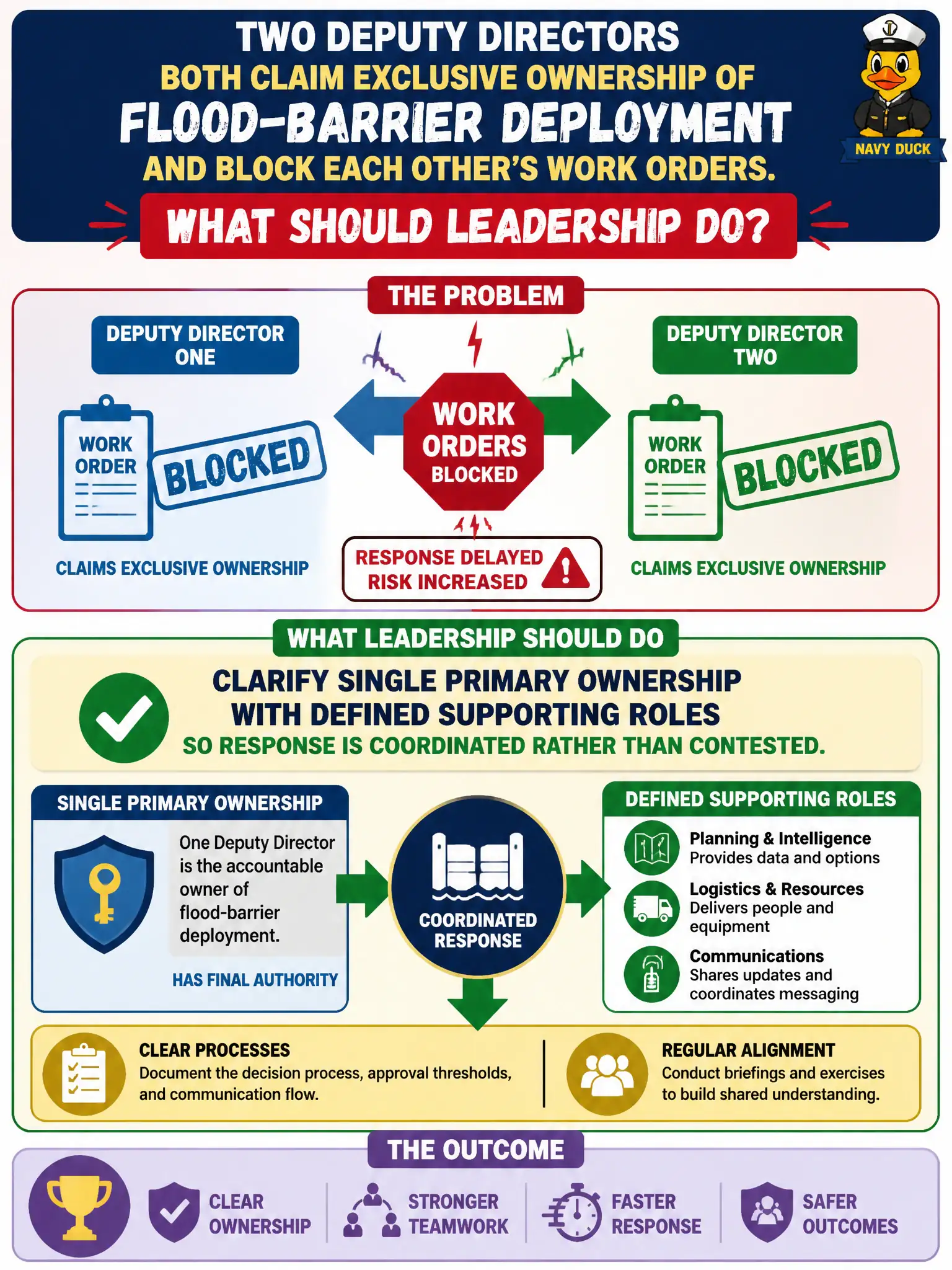
Two deputy directors both claim exclusive ownership of flood-barrier deployment and block each other’s work orders. What should leadership do?
Select an answer to reveal the explanation.
Short Explanation
Two exclusive owners is one too many when the river is rising. Ambiguous dual ownership turns mitigation into a turf war. Pick a primary owner, name the helpers, and let the work orders flow.
Full Explanation
When two deputy directors both claim exclusive ownership of flood-barrier deployment and block each other’s work orders, leadership should clarify single primary ownership with defined supporting roles so municipal flood response is coordinated rather than contested. Encouraging the conflict so the stronger personality eventually wins by attrition delays sandbags and barriers while water rises against civic assets. Removing flood barriers from all plans because dual claims supposedly prove the risk is theoretical mistakes a governance failure for nonexistence of flood exposure. Requiring both deputies to approve every sandbag personally before any bag may be filled adds procedural deadlock to an already contested operational control and slows field teams. Clear primary authority with documented support duties preserves speed and accountability during time-critical weather response. Dual approval can be useful for high-cost strategic purchases but is poor design for emergency deployment mechanics. Exam caveat: CRMC items often separate strategic consensus from operational command clarity during incidents. Operational check: designate one primary flood-barrier owner and a deputy, publish decision rights in the emergency plan, unlock work orders under that authority, run a deployment drill that measures time to first barrier in place, and brief both former claimants on the new model with an effective date.