
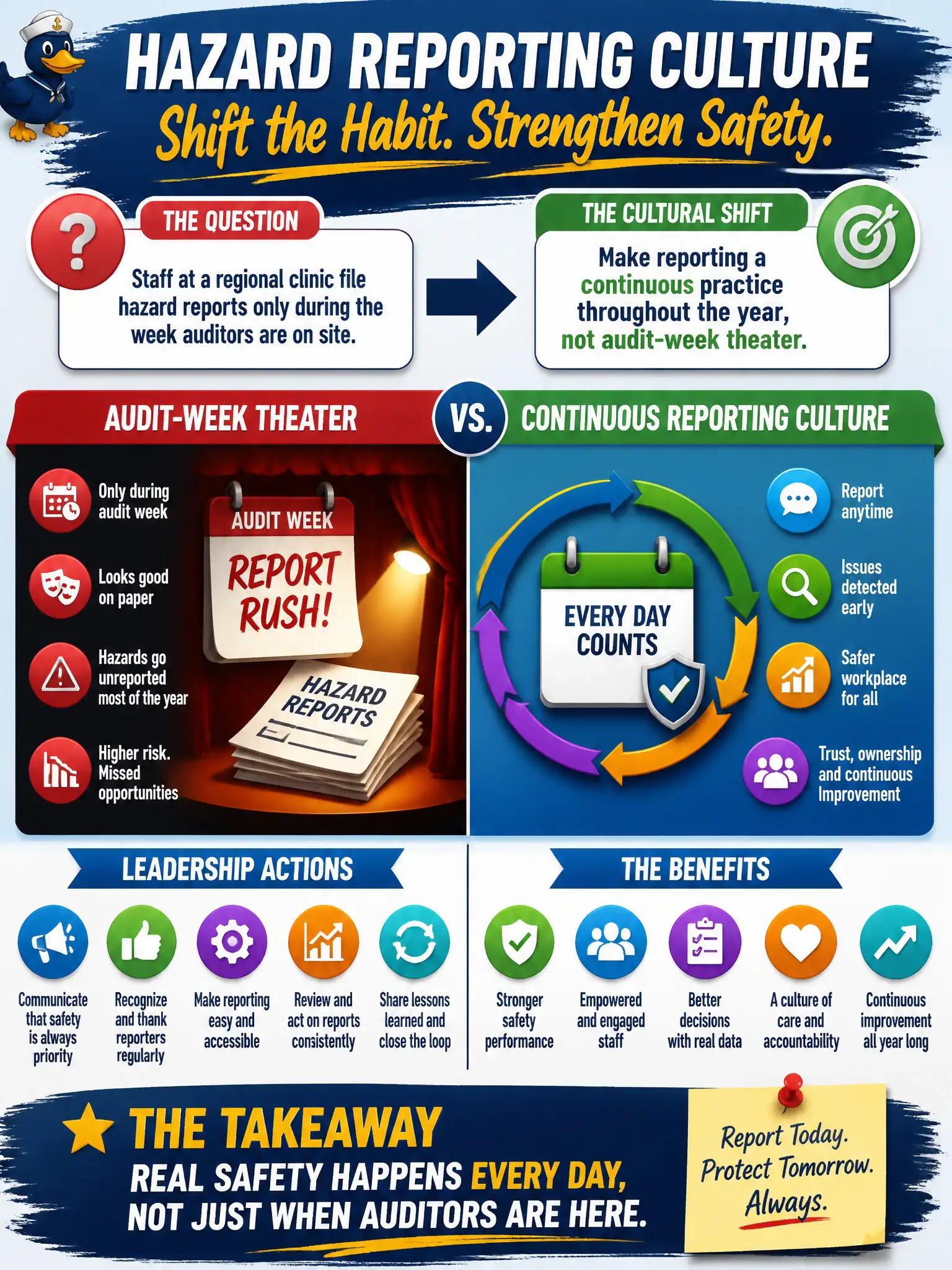
Staff at a regional clinic file hazard reports only during the week auditors are on site. What cultural shift should leadership drive?
Select an answer to reveal the explanation.
Short Explanation
If the only reports appear when auditors walk in, you have theater, not a safety culture. Real reporting is Tuesday-in-February boring—continuous and expected. Kill the “audit week only” habit before it becomes the brand.
Full Explanation
Leadership should drive hazard reporting as a continuous practice throughout the year at a regional clinic, not as audit-week theater when staff file reports only while auditors are on site. Celebrating audit-week spikes as proof that normal silence means zero risk misreads fear and performance signaling as safety excellence and leaves patients and staff exposed the other fifty weeks. Forbidding reports outside audit windows to keep binder volumes predictable institutionalizes blindness and teaches staff that paperwork optics outrank hazard control. Paying bonuses only for reports submitted while auditors watch the lobby incentivizes distortion rather than steady identification and fix-through. Continuous reporting supports trending, timely corrective actions, and credible assurance evidence that matches real clinical operations rather than staged compliance moments. Exam caveat: external audit sampling assumes an underlying live control environment; theater undermines both safety outcomes and assurance value. Operational check: communicate year-round reporting expectations in writing, remove incentives tied only to auditor presence, review monthly hazard trends with clinic managers, recognize timely reporting and closure of actions, and compare audit-week volumes to baseline months to detect and correct theater patterns.