
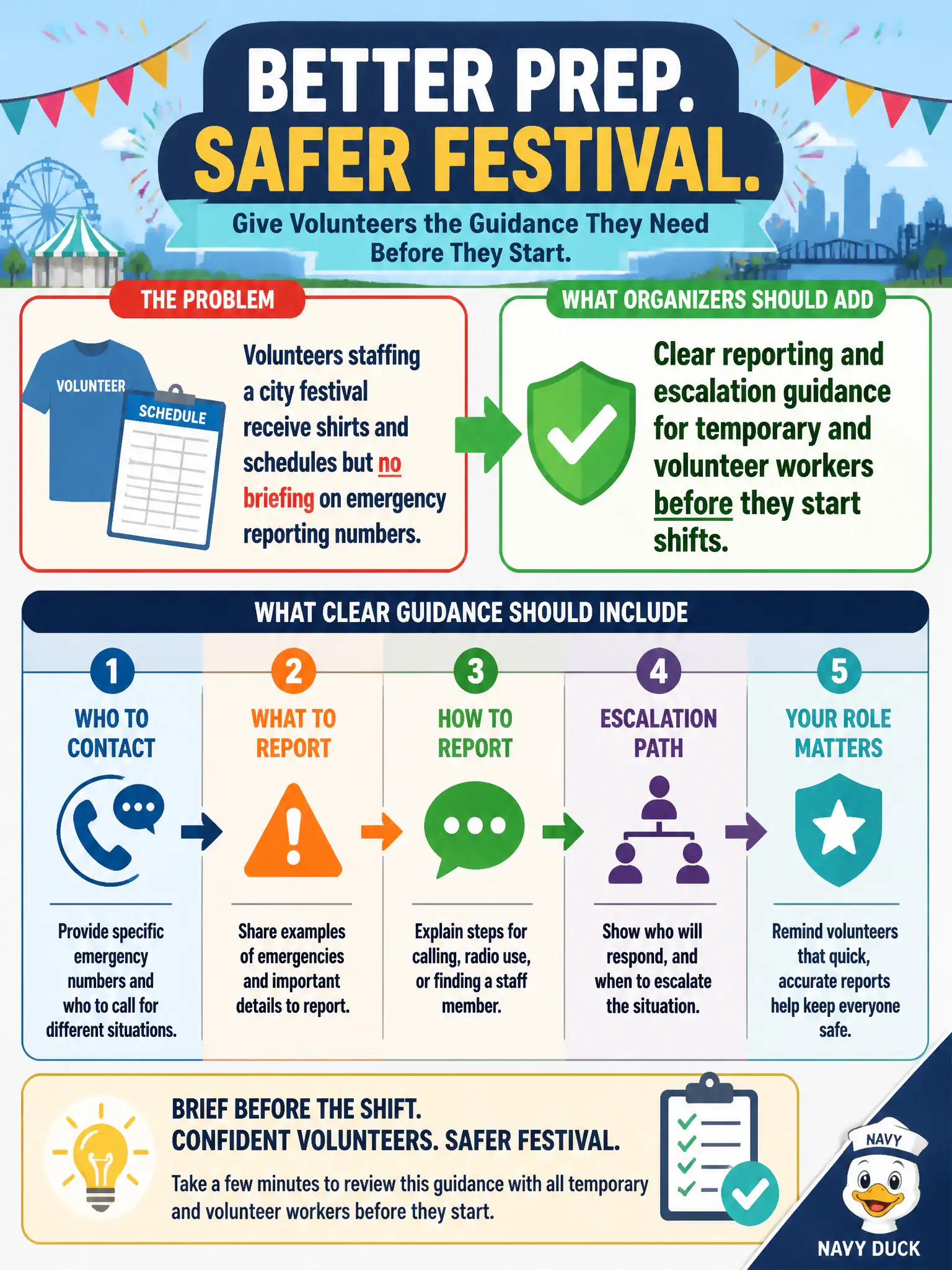
Volunteers staffing a city festival receive shirts and schedules but no briefing on emergency reporting numbers. What should organizers add?
Select an answer to reveal the explanation.
Short Explanation
Volunteers are the eyes on the crowd—until nobody told them who to call. Temporary workers need the same emergency reporting cues as employees. A two-minute briefing beats a beautiful shirt with no phone tree.
Full Explanation
Organizers should add clear reporting and escalation guidance for temporary and volunteer workers before they start shifts at a city festival, because shirts and schedules alone do not teach how to summon help when someone is injured, a fire starts, or a crowd hazard appears. Rules that volunteers may never dial emergency numbers because only salaried staff may call 911 create dangerous hesitation in life-safety moments and misunderstand public emergency access. Promising that festival radios will be explained after the closing ceremony delays critical knowledge until after exposures have already occurred throughout the event. Using a social-media hashtag as the sole channel for life-safety emergencies is too slow, too public, and too unreliable for immediate response and accountability. Temporary workforces with high turnover need brief, memorable escalation paths matched to the event’s risks and posted where people stand. Exam caveat: volunteer or unpaid status does not remove the organization’s duty to enable timely reporting and emergency action on civic sites. Operational check: include reporting and emergency numbers in volunteer orientation, post them at stations, confirm radio or phone coverage on site, run a short what-if briefing before gates open, and verify volunteers can demonstrate the escalation path during spot checks on opening day.