
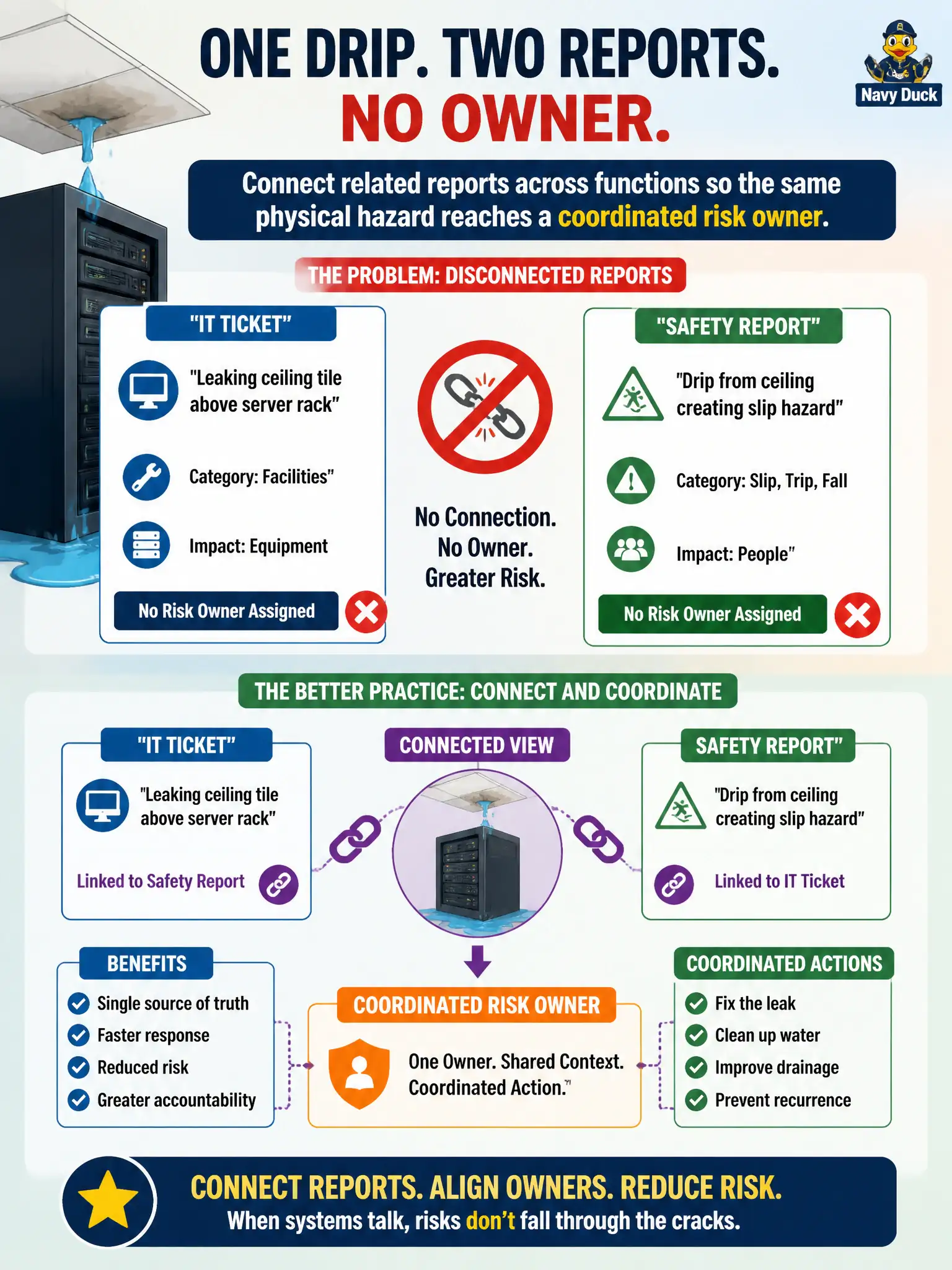
IT tickets describe a leaking ceiling tile above a server rack while safety reports note the same drip as a slip hazard, yet neither record points to a shared owner. What practice would improve risk response?
Select an answer to reveal the explanation.
Short Explanation
Same drip, two inboxes, zero owner—classic silo comedy. When IT and safety both see water in the server room, link the tickets and name who fixes it. Cross-channel awareness beats parallel paper trails that never meet.
Full Explanation
When IT tickets describe a leaking ceiling tile above a server rack and safety reports note the same drip as a slip hazard, connecting related reports across functions so the same physical hazard reaches a coordinated risk owner improves response. Keeping IT and safety systems fully isolated so each can deny ownership indefinitely guarantees unfinished work and recurring water damage. Closing both tickets as environment without naming anyone because moisture is a natural force abdicates control design. Allowing only the first system that receives a ticket to act and forbidding the second channel from recording it creates races and lost context. One water event can threaten information assets, electrical safety, and pedestrian slip risk simultaneously; fragmented intake must still converge. Exam caveat: multiple intake systems are acceptable if correlation and ownership rules exist. Operational check: implement cross-reference or intake triage that links facilities, IT, and safety tickets for the same location, name a primary owner for containment and repair, verify the server rack is protected, dry the walkway, and confirm both teams see closure evidence before tickets are archived.