
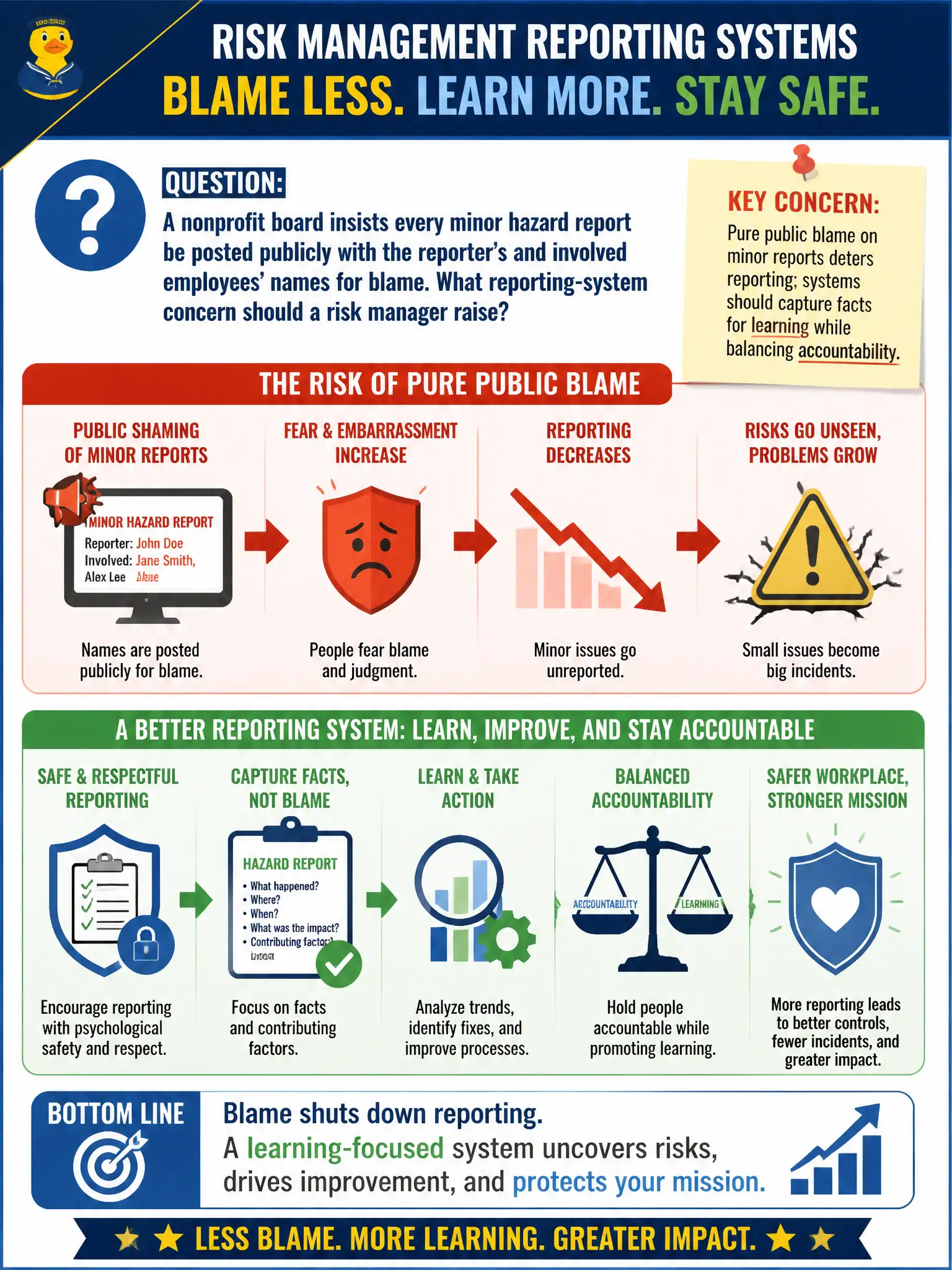
A nonprofit board insists every minor hazard report be posted publicly with the reporter’s and involved employees’ names for blame. What reporting-system concern should a risk manager raise?
Select an answer to reveal the explanation.
Short Explanation
Hang people on the lobby wall for a near-miss and watch the inbox go silent. Learning needs facts, not a public pillory for every minor hiccup. Balance accountability with a climate where people still raise their hand.
Full Explanation
Pure public blame on minor hazard reports deters reporting; systems should capture facts for learning while balancing accountability rather than posting every reporter’s and involved employees’ names on a public board for humiliation. Public naming does not reliably increase reports because employees enjoy recognition for mistakes; fear usually suppresses volume and honesty. Just culture does not require identical public sanctions for administrative typos and willful sabotage; proportionality and intent matter. Claiming anonymous learning is impossible so every report must include payroll IDs on a lobby screen confuses transparency theater with effective risk learning. Accountability for serious misconduct can proceed through proper channels without turning minor hazard intake into a spectacle. Exam caveat: regulatory disclosure duties differ from internal learning systems; do not confuse the two when designing municipal reporting. Operational check: redesign intake so facts and corrective actions are tracked, limit public posting of personal names for minor reports, communicate just-culture principles to the board, monitor reporting volume after the change, and reserve public accountability processes for defined serious cases with due process.