
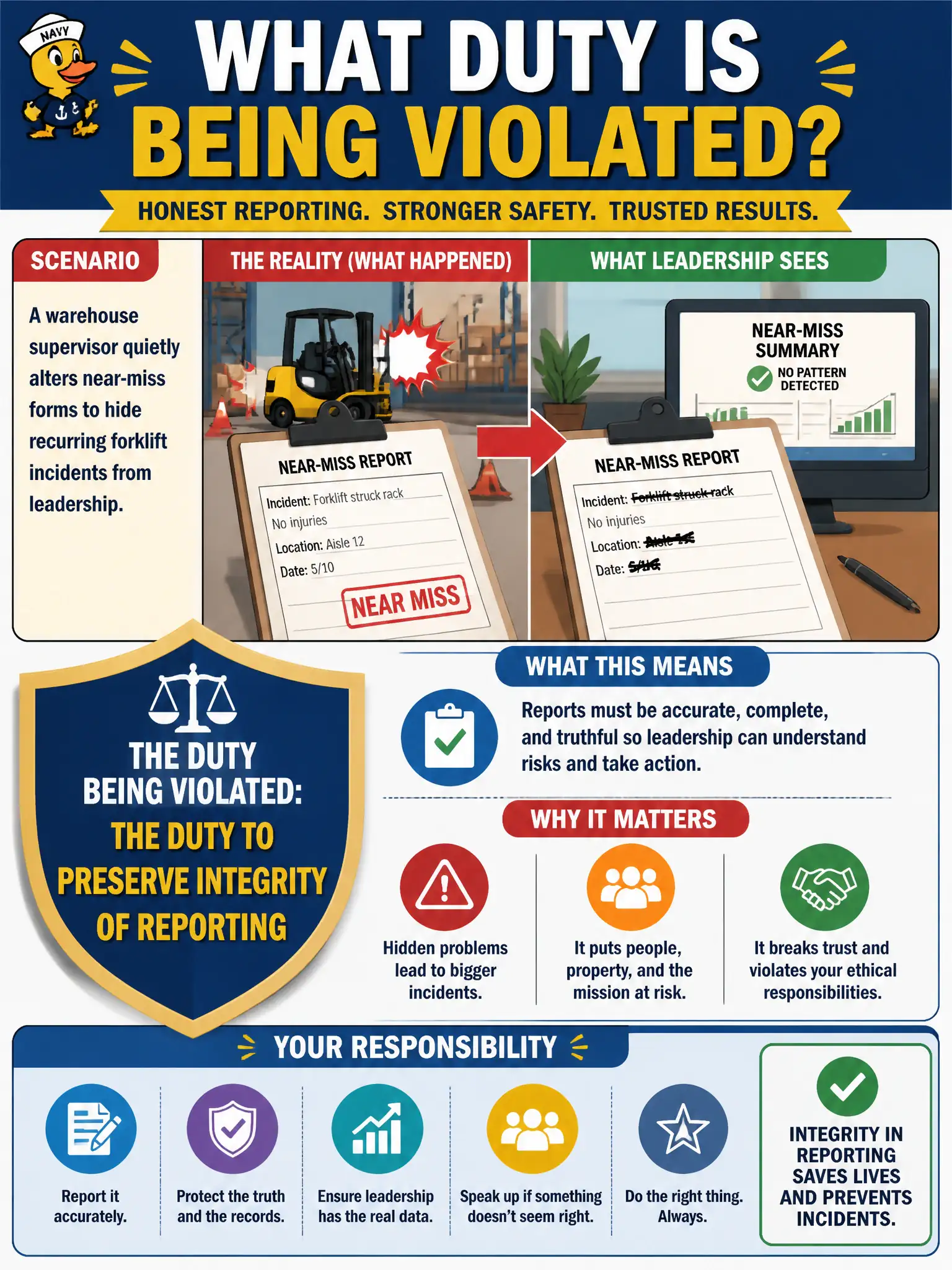
A warehouse supervisor quietly alters near-miss forms to hide recurring forklift incidents from leadership. What duty is being violated?
Select an answer to reveal the explanation.
Short Explanation
Editing out forklift near-misses is not “protecting the team”—it is hiding the iceberg. Leadership cannot fix what never reaches the dashboard. Integrity of the report matters as much as filing it in the first place.
Full Explanation
Quietly altering near-miss forms to hide recurring forklift incidents violates the duty to preserve integrity of reporting; suppressing or falsifying reports breaks responsibility and reporting obligations and blinds leadership to patterns that need engineering, layout, or administrative fixes. Keeping leadership calendars free of operational detail so strategy stays undisturbed is avoidance, not a recognized risk duty. Consolidating all near-misses into a single annual anecdote for a holiday party destroys timeliness, trending, and credible corrective action. Rewarding supervisors who reduce reported counts by any means available incentivizes concealment rather than hazard reduction and teaches the organization to game indicators. Data integrity is foundational because treatment decisions cannot be better than the reporting stream feeding them. Privacy redaction of names differs from alteration of facts about recurrence; learning systems may protect identities while preserving event truth. Exam caveat: performance metrics on report counts must never create perverse incentives to delete or rewrite near-misses. Operational check: prohibit alteration of near-miss substance, route independent review of recurring forklift themes, restore accurate counts to leadership dashboards, implement layout and behavior controls, and apply accountability for suppression separately from coaching on driving behavior.