
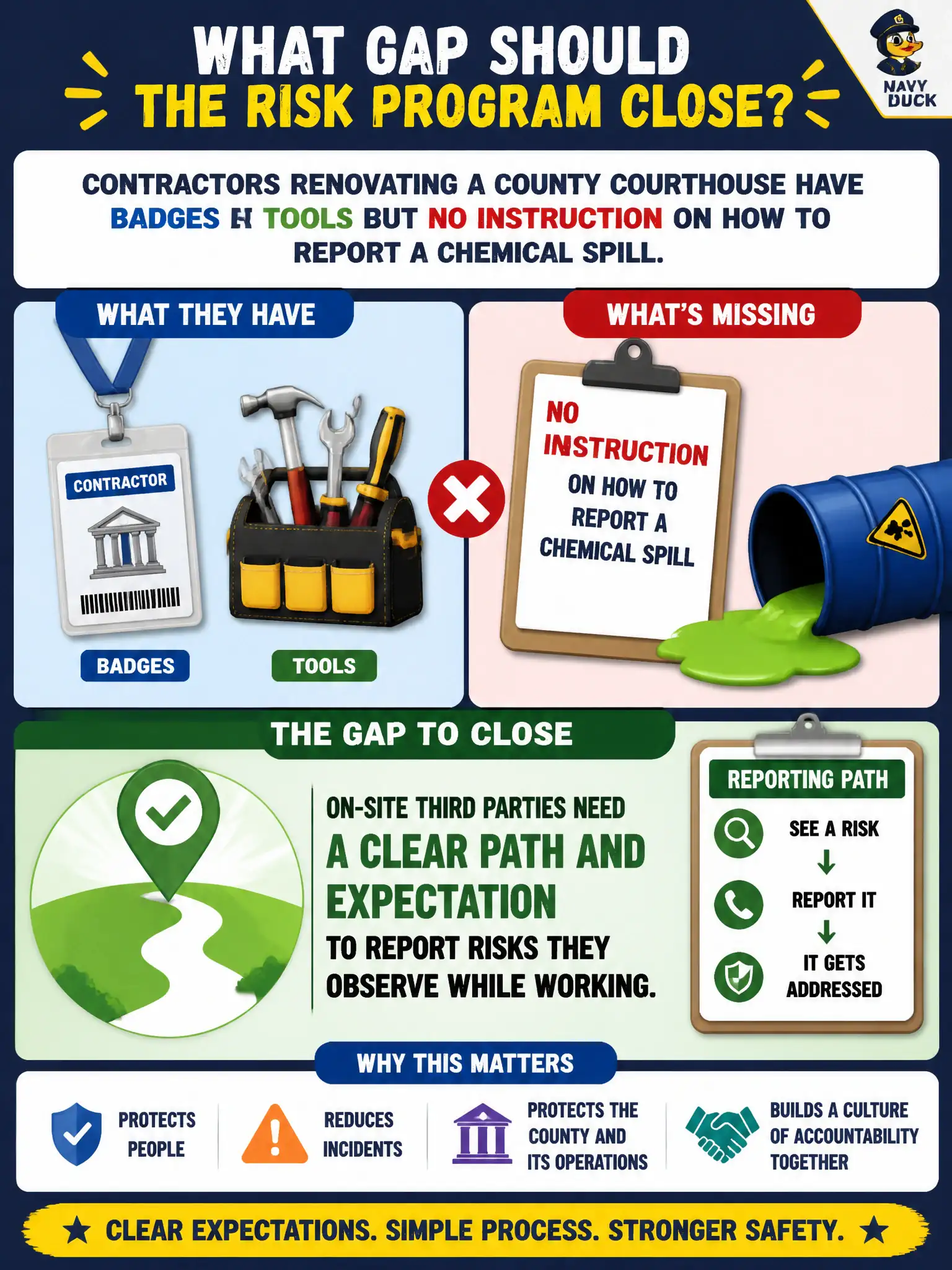
Contractors renovating a county courthouse have badges and tools but no instruction on how to report a chemical spill. What gap should the risk program close?
Select an answer to reveal the explanation.
Short Explanation
Contractors see spills too—and often first. If they have no number, no card, and no briefing, the spill sits while everyone assumes “not my paperwork.” Give third parties the same reporting path you expect staff to use.
Full Explanation
On-site third parties renovating a county courthouse need a clear path and expectation to report risks they observe while working, including chemical spills, even when they already have badges and tools. Badges authorize presence; they do not automatically convey emergency reporting knowledge. Policies that forbid contractors from reporting spills and reserve contact to permanent employees delay containment and can worsen exposure for occupants and workers. Waiting until the construction punch list is signed postpones spill response until after harm pathways have operated. Verbal jokes at the job-site trailer do not replace written reporting guidance for temporary labor with high turnover. Temporary workers are often first to see disturbed materials and unknowns in renovation zones. Exam caveat: contract clauses about insurance do not substitute for on-boarding that teaches how to escalate. Operational check: brief contractors on spill and emergency reporting numbers before work starts, post the escalation path at entrances and break areas, verify bilingual needs if relevant, include reporting expectations in site orientation sign-off, and test that a contractor can reach environmental services without a county employee intermediary during drills.