
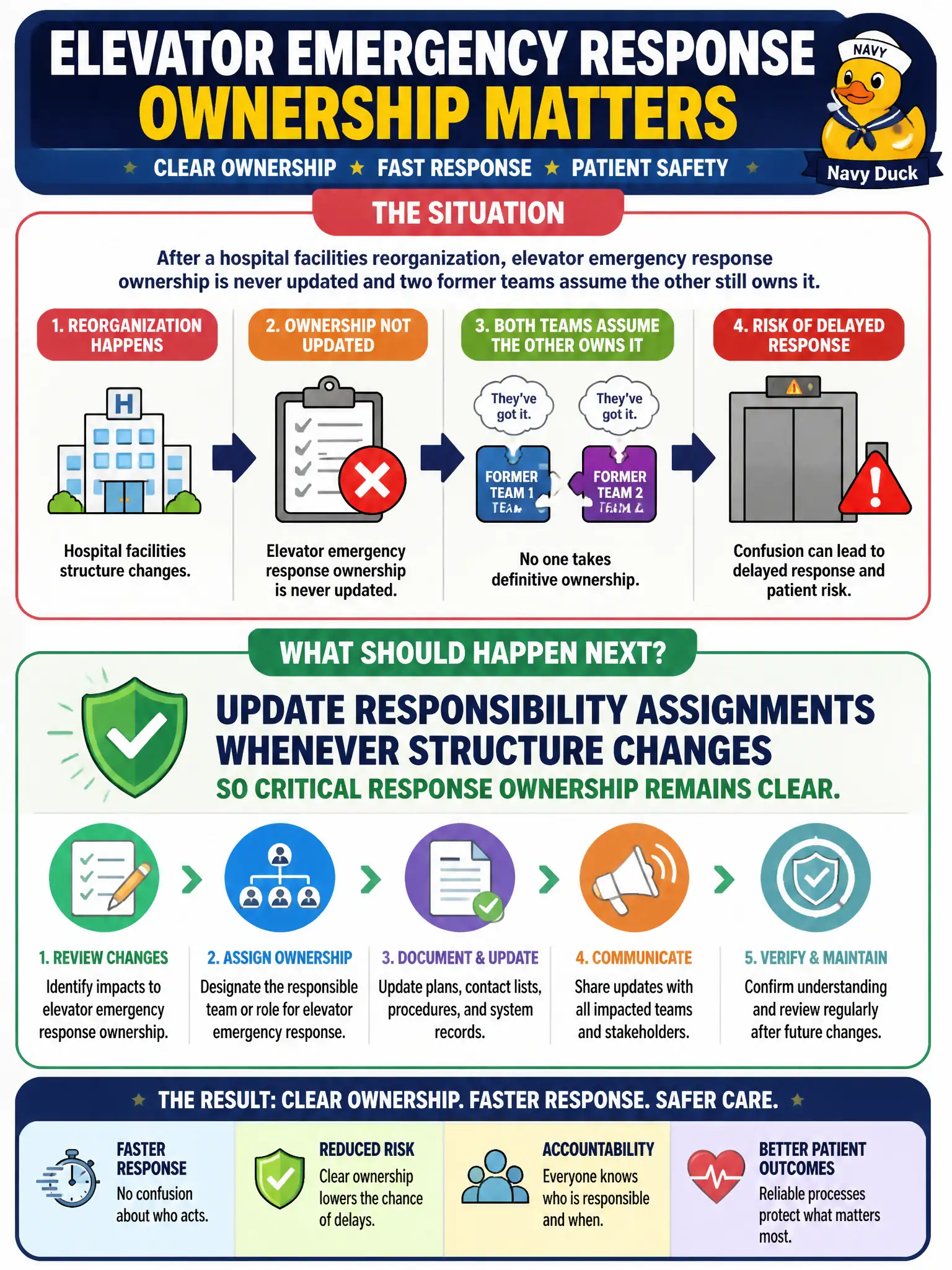
After a hospital facilities reorganization, elevator emergency response ownership is never updated and two former teams assume the other still owns it. What should happen next?
Select an answer to reveal the explanation.
Short Explanation
Reorgs orphan risks the way moving houses orphans houseplants—unless someone updates the list. Elevator emergencies cannot wait while two teams point at each other. Refresh ownership whenever boxes move on the org chart.
Full Explanation
After a hospital facilities reorganization, elevator emergency response ownership must be updated so critical response remains clear when two former teams each assume the other still owns it. Structural change without matrix updates creates orphan duties precisely for life-safety systems passengers rely on. Leaving the old chart frozen to preserve historical binder accuracy privileges documentation nostalgia over current accountability. Deleting elevator response from the matrix because reorganizations automatically cancel emergency duties invents a dangerous rule that change erases preparedness. Assigning elevator emergencies solely to visiting vendors who lack after-hours access fails nights, weekends, and lockdown conditions. Ownership documents are living controls; they must track the organization as it exists. Exam caveat: accreditation evidence should reflect current owners, not merely archived charts. Operational check: revise the responsibility matrix within a set time after reorganization, confirm a primary and backup elevator emergency owner with after-hours reachability, brief both former teams to stop assuming the other will act, run a quick notification drill, and store the updated matrix where command staff can retrieve it during an entrapment event.