
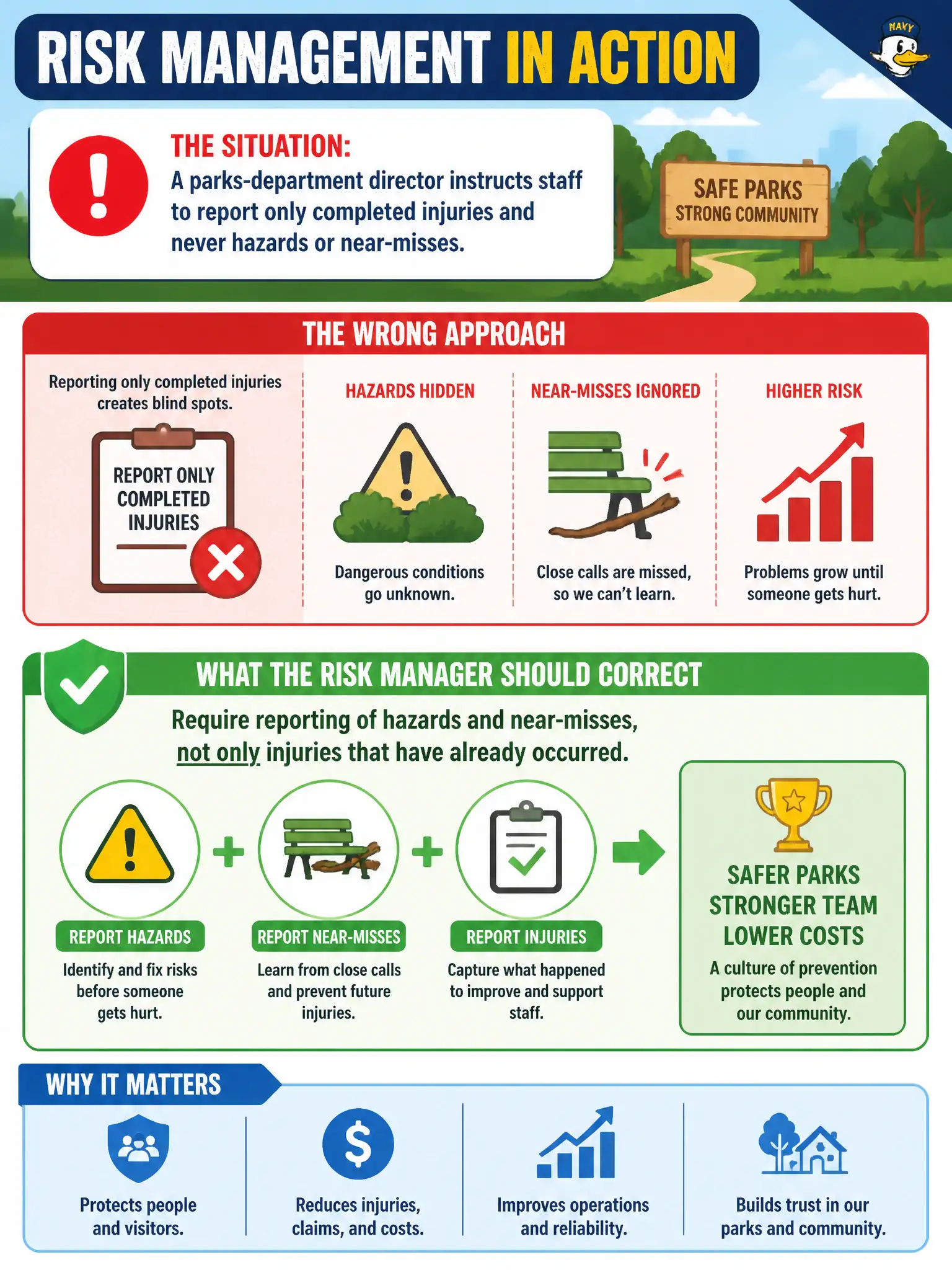
A parks-department director instructs staff to report only completed injuries and never hazards or near-misses. What should a risk manager correct?
Select an answer to reveal the explanation.
Short Explanation
Waiting for blood on the floor is a terrible dashboard. Hazards and near-misses are the early warning lights—report those and you often avoid the injury report altogether. A director who only wants the aftermath is flying without instruments.
Full Explanation
A parks-department policy that reports only completed injuries and never hazards or near-misses must be corrected to require reporting of hazards and near-misses, not only injuries that have already occurred. Leading indicators allow treatment before harm; injury-only systems are lagging by definition. Confirming the injury-only policy because near-misses supposedly create legal admissions misunderstands documentation of learning and often increases severity of later events. Replacing injury reports with anonymous rumor boards undermines verifiable corrective action. Limiting reports to injuries above a finance dollar threshold imports accounting into safety identification and hides high-severity low-cost events. Corporate risk reporting aims to reduce uncertainty about exposures that affect objectives, including those not yet realized as claims. Exam caveat: legal privilege strategies are specialized and do not justify a blanket ban on hazard and near-miss reporting in operational programs. Operational check: rewrite the parks policy to include hazards and near-misses, train supervisors on intake without ridicule, track leading indicators alongside injury rates, assign owners for corrective actions, and sample whether field crews actually file pre-injury reports after the change.