
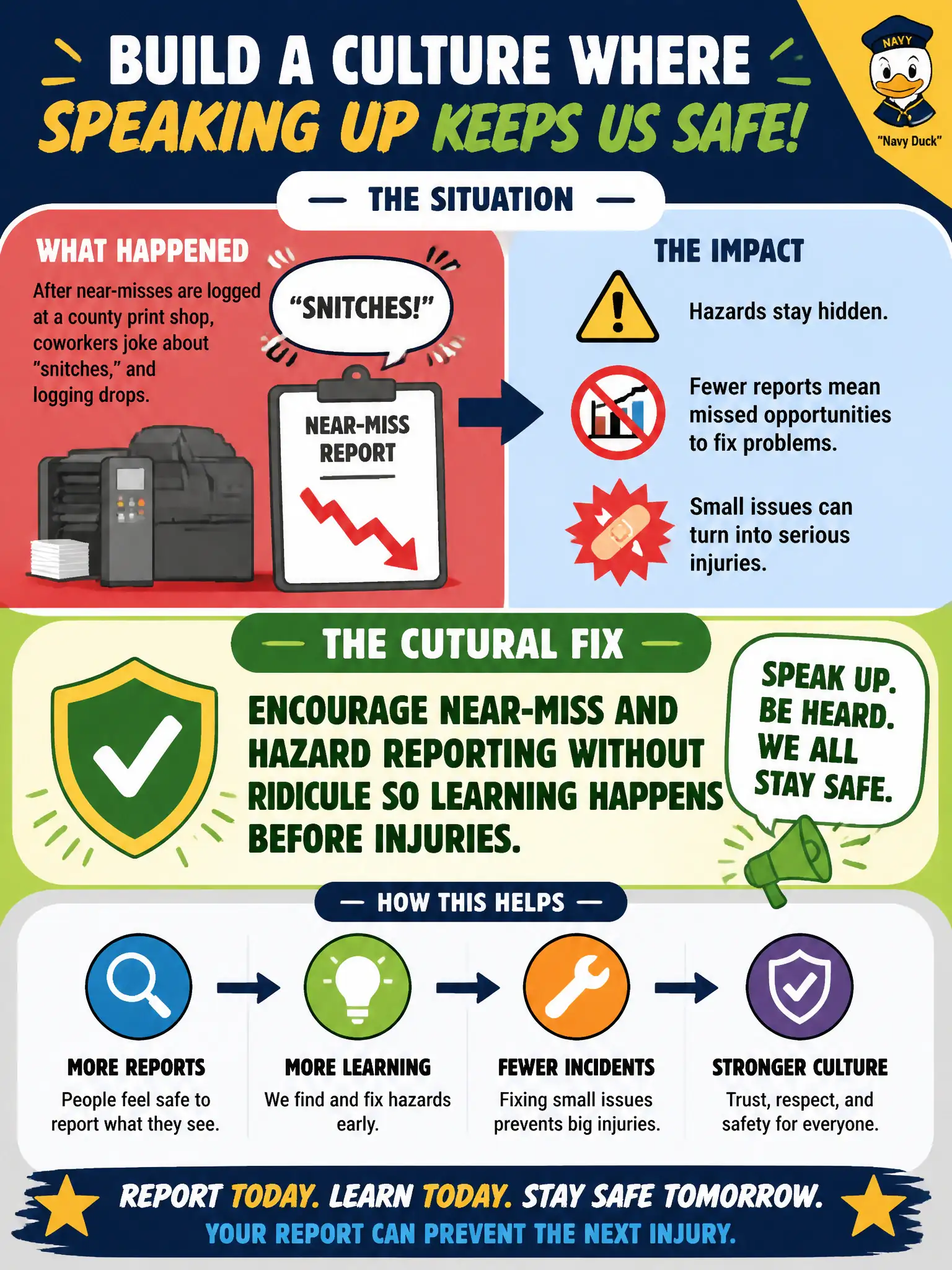
After near-misses are logged at a county print shop, coworkers joke about “snitches,” and logging drops. What cultural fix best supports healthy risk reporting?
Select an answer to reveal the explanation.
Short Explanation
Calling people snitches for logging a near-miss is how you buy tomorrow’s injury. A healthy shop treats early warnings like free coaching, not betrayal. Kill the ridicule and you get the reports that stop the next incident.
Full Explanation
Healthy risk reporting culture encourages near-miss and hazard reporting without ridicule so learning happens before injuries; when coworkers joke about snitches and logging drops at a county print shop, the cultural fix is psychological safety around reporting, not harsher blame. Publicly naming every reporter on a wall chart intensifies peer pressure and often reduces candor rather than improving compliance. Banning near-miss logs and recording only medically treated injuries discards leading indicators and waits for harm. Rewarding managers who keep near-miss counts at zero regardless of method incentivizes suppression and under-reporting. Just culture distinguishes honest mistakes and system weaknesses from willful misconduct without humiliating people who surface problems. Exam caveat: accountability for reckless acts can coexist with non-punitive near-miss learning; CRMC items stress the learning channel. Operational check: leadership states that good-faith near-miss reports are expected and protected, remove snitch humor from official settings, track reporting volume as a health metric without quotas that punish honesty, share sanitized lessons from near-misses, and verify logging rebounds after the cultural intervention.