
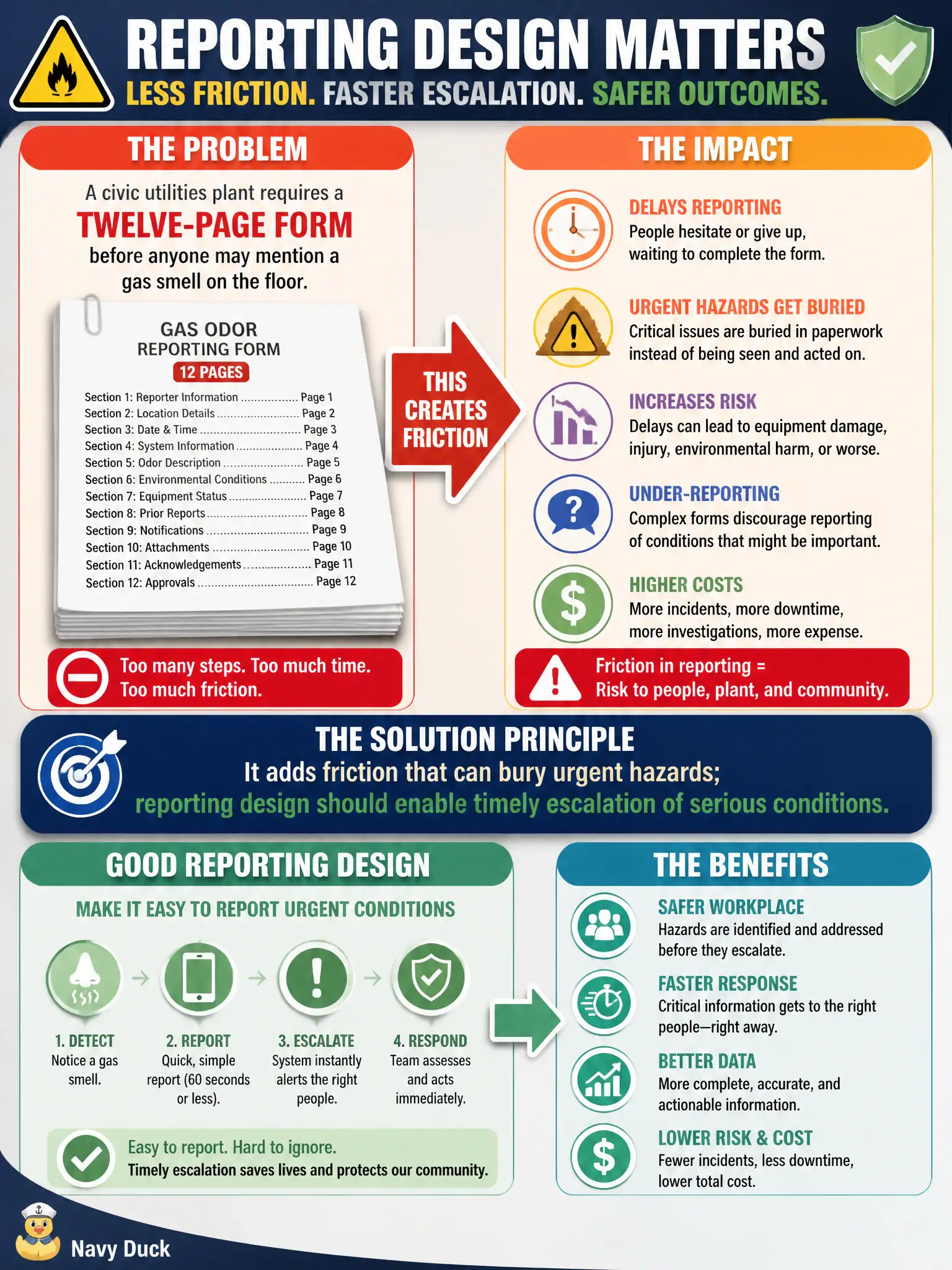
A civic utilities plant requires a twelve-page form before anyone may mention a gas smell on the floor. What reporting-design problem does this create?
Select an answer to reveal the explanation.
Short Explanation
When smelling gas, you do not need a novel—you need a fast path to the right people. A twelve-page gate before anyone can even say “gas” is bureaucracy fighting physics. Urgent hazards need lightweight, immediate reporting, with the long form catching up later if needed.
Full Explanation
Requiring a twelve-page form before anyone may mention a gas smell on the floor adds friction that can bury urgent hazards; reporting design should enable timely escalation of serious conditions while still capturing needed facts after immediate safety actions. Forcing exhaustive documentation before calling responders prioritizes paperwork completeness over life safety and can delay evacuation or shutdown. Correctly prioritizing forms over immediate hazard communication inverts corporate risk values for acute chemical or gas events. Ensuring gas odors are never reported until after a full root-cause investigation finishes guarantees late reporting by design. Urgent pathways should be short, practiced, and distinct from routine improvement suggestions. Exam caveat: thorough incident investigation remains important after people are safe; the design error is gating first mention on lengthy forms. Operational check: publish a one-step urgent escalation for gas odors and similar acute hazards, train plant staff to evacuate or isolate per procedure first, capture detailed documentation after immediate controls, time a drill from smell recognition to notification, and remove any policy language that forbids speaking up before forms are complete.