
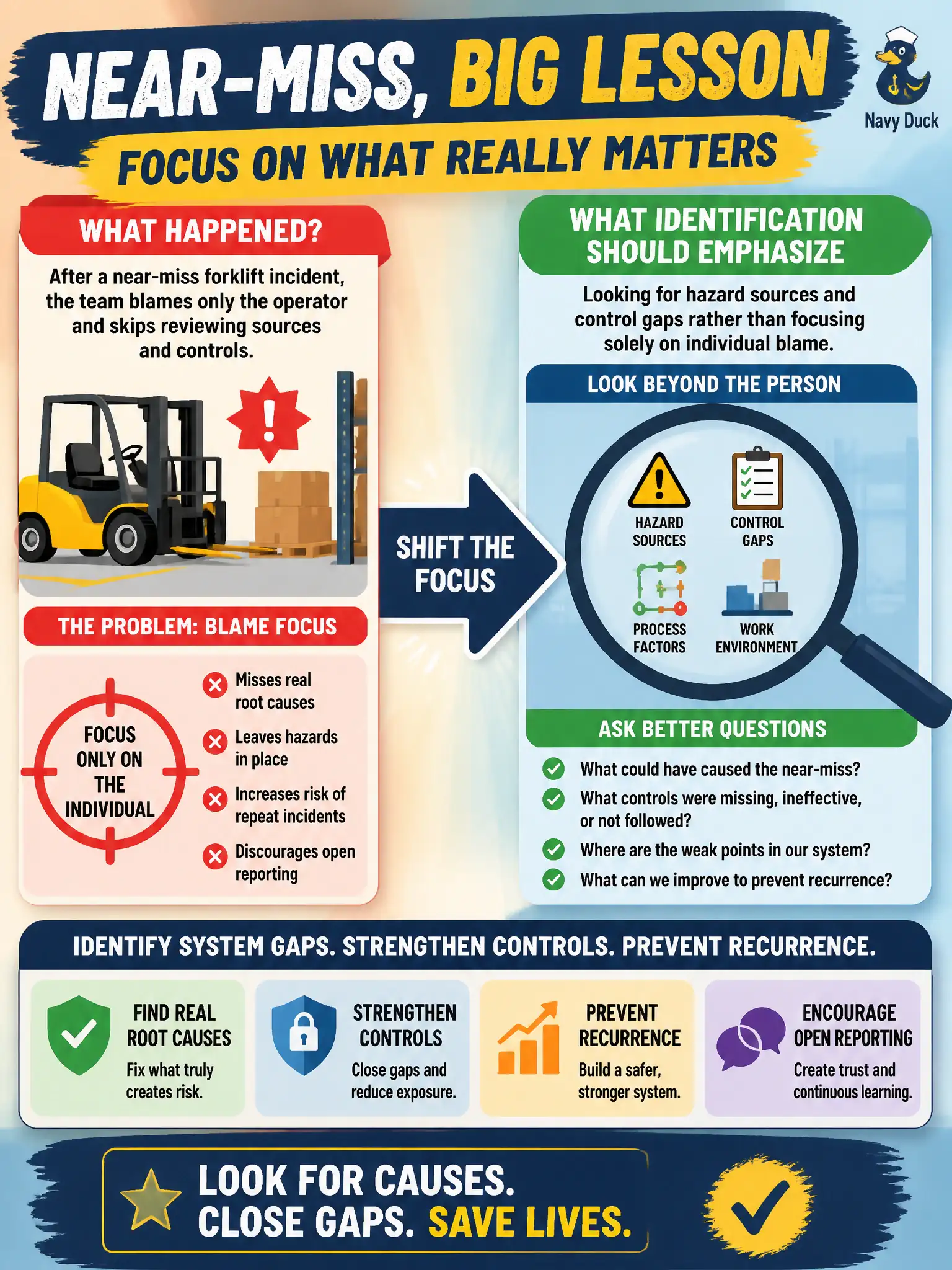
After a near-miss forklift incident, the team blames only the operator and skips reviewing sources and controls. What should identification emphasize instead?
Select an answer to reveal the explanation.
Short Explanation
Blaming only the driver after a near-miss is like yelling at the swimmer and never checking the missing life ring. Dig into sources and controls. People matter, but systems do too.
Full Explanation
After a near-miss forklift incident, identification should emphasize hazard sources and control gaps—layout, visibility, speed policy, pedestrian segregation, racking intrusion, maintenance—rather than focusing solely on individual blame. Blame-only responses miss systemic fixes, chill reporting, and leave the next operator exposed to the same conditions. Publishing the operator’s name as the sole corrective action turns learning into humiliation without improving the workplace. Closing the file because near-misses never require source analysis wastes a leading indicator that arrived without injury. Replacing all forklifts immediately without examining layout or procedures may spend capital while leaving process and design failures untouched. Accountability for reckless acts can coexist with systems learning; corporate risk practice stresses source and control analysis over scapegoating as the primary identification response. Exam caveat: personnel factors may be one source among several; they rarely justify skipping environmental and control review. Operational check: complete a near-miss review that lists sources and missing or failed controls, assign corrective actions with due dates, brief the floor on changes, verify pedestrian and forklift separation under real traffic, and confirm the near-miss remains visible in leading-indicator reporting.