
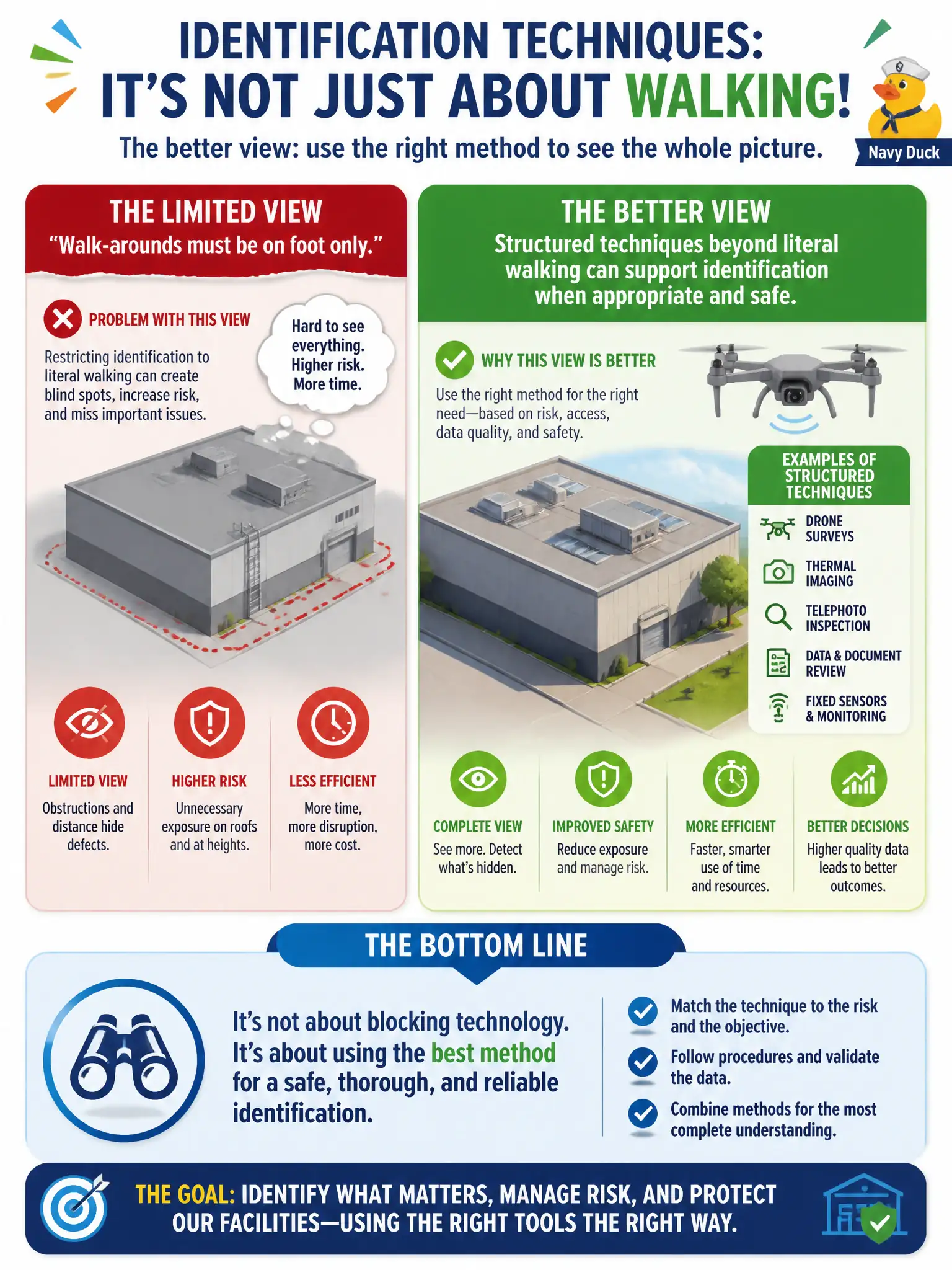
A facilities manager proposes a drone survey of a warehouse roof, but leadership rejects it because 'walk-arounds must be on foot only.' What is the better view of identification techniques?
Select an answer to reveal the explanation.
Short Explanation
A walk-around is a mindset—eyes on the hazard—not a rule that you must use only sneakers. A careful drone pass can see roof damage without sending someone into harm. Tools can support identification when they fit the job.
Full Explanation
Structured identification techniques beyond literal foot walk-arounds—such as an appropriate and safe drone survey of a warehouse roof—can support hazard discovery for areas that are hazardous, distant, or impractical to access on foot. Rejecting tool-assisted surveys because walk-arounds must be on foot only confuses one traditional technique with the entire identification toolkit and can leave roof membrane failures, ponding, and unsafe access undetected. Claiming roof conditions may never be assessed because roofs are always out of scope ignores common facility failure modes that threaten contents and continuity. Asserting that drones replace the need for any risk register or follow-up controls overclaims the method: surveys feed identification; they do not complete treatment. Method choice should fit safety, privacy, airspace, and competence constraints while still seeking adequate coverage of the asset. Exam caveat: expanding techniques does not abolish documentation, ownership, or control follow-through. Operational check: approve a competent drone roof survey under a flight and privacy brief, translate findings into register items with owners, schedule physical repairs or closer inspections where imagery shows defects, and record the survey date as an identification activity in the facilities risk file.