
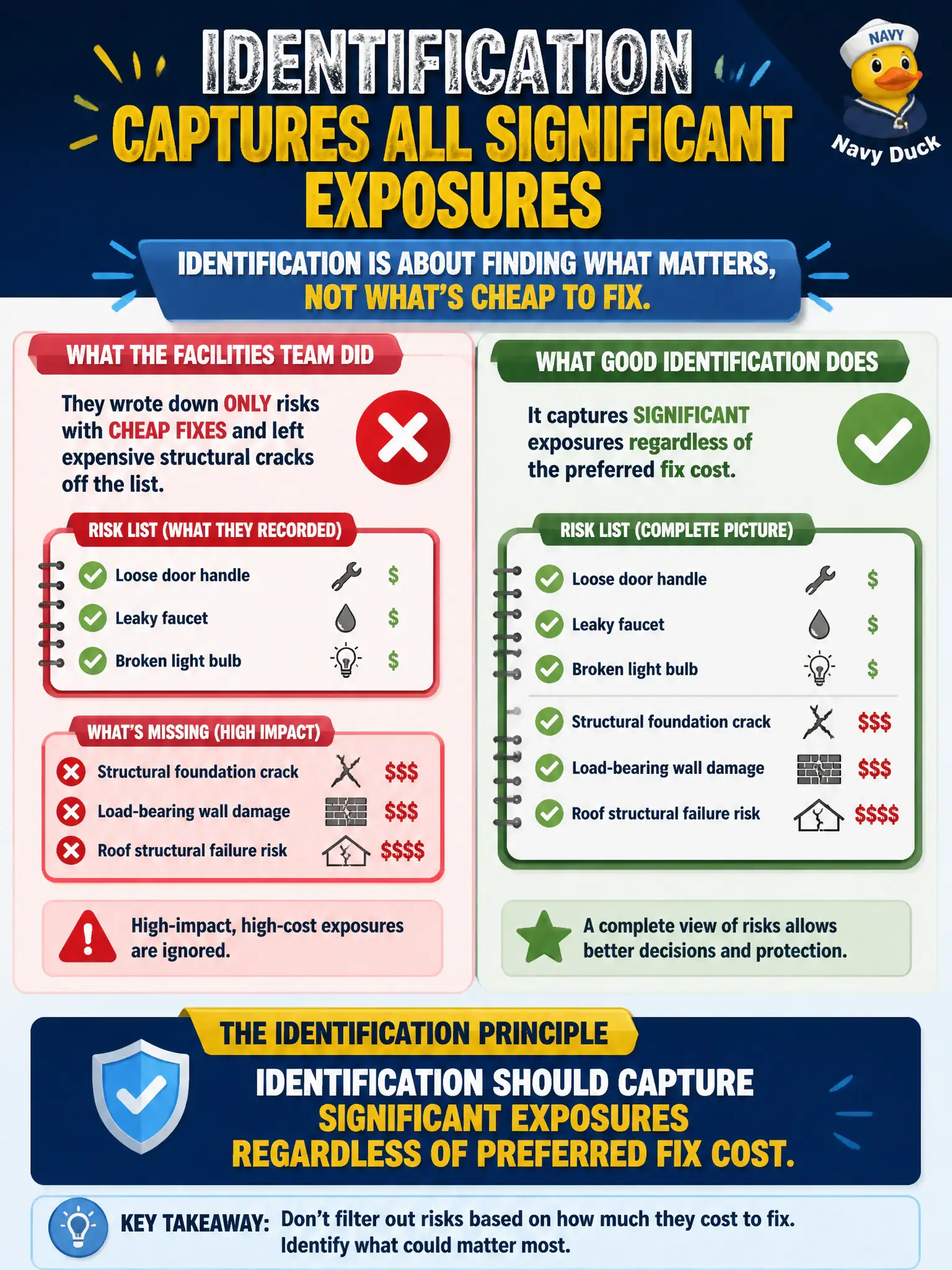
A facilities team writes down only risks with cheap fixes and leaves expensive structural cracks off the list. What identification principle does this violate?
Select an answer to reveal the explanation.
Short Explanation
Leaving cracks off the list because repairs are pricey is like ignoring a leaking dam because caulk is cheaper. Identification is about what can hurt you, not what is convenient to fund. Cost comes later in treatment choices.
Full Explanation
Identification should capture significant exposures regardless of preferred fix cost, including expensive structural cracks that threaten integrity, safety, and continuity. Writing down only risks with cheap fixes biases the register toward comfort projects and hides high-consequence issues leadership must see. Policies that allow only risks under a fixed dollar amount on corporate registers confuse treatment affordability with identification completeness. Exempting structural issues because repair quotes exceed budget inverts logic: cost shapes treatment options and formal acceptance, not whether the exposure is named. Ranking cheap cosmetic items above structural integrity on risk lists substitutes ease for consequence. Treatment selection, including deferral with documented risk acceptance, comes after identification; money constraints must not erase material risks from view. Exam caveat: CRMC items often test cost bias in identification—cheap visibility versus significant exposure. Operational check: log structural findings with consequence ratings, present options to leadership, document any formal risk acceptance with conditions and review dates, track interim protections such as load limits or barriers, and revisit funding at each budget cycle with the named owner.