
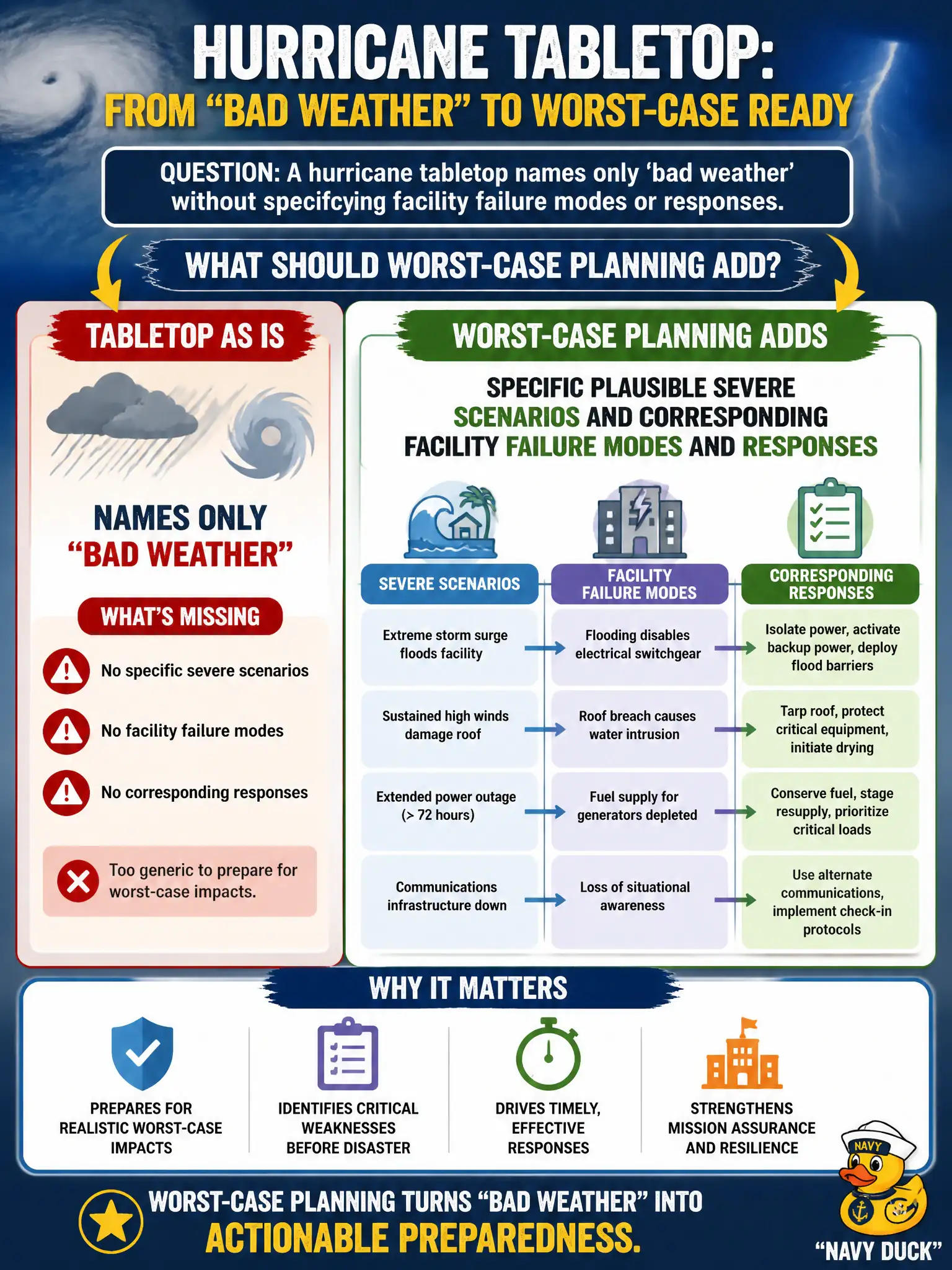
A hurricane tabletop names only 'bad weather' without specifying facility failure modes or responses. What should worst-case planning add?
Select an answer to reveal the explanation.
Short Explanation
'Bad weather' is a headline, not a plan—you need roof failure, flooding, power loss, and who does what. Specific scenarios make tabletops useful. Vague labels leave teams guessing in the dark.
Full Explanation
Hurricane tabletop exercises that name only bad weather without facility failure modes or responses are incomplete worst-case planning. Effective practice specifies plausible severe scenarios—wind-driven water intrusion, prolonged utility outage, roof breach, access roads blocked—and maps corresponding facility failures and concrete response actions with roles and decision points. Placing a generic weather emoji on an emergency binder cover adds no operable readiness. Promising to revisit the topic after the next decade’s storms delays preparedness through the very seasons of concern. Listing unrelated cafeteria vendors to call during wind events confuses food service contacts with facility failure response. Scenario planning must be specific enough to drive resources, roles, and continuity decisions; vagueness fails the teaching purpose of worst-case analysis. Exam caveat: severity without actionable facility modes and responses is not a complete worst-case plan under corporate risk practice. Operational check: rewrite the tabletop with named scenarios, map each to building systems and public services affected, assign response owners and alternate sites if needed, record gaps as risk-register items with due dates, and re-run a short drill after corrective actions close.