
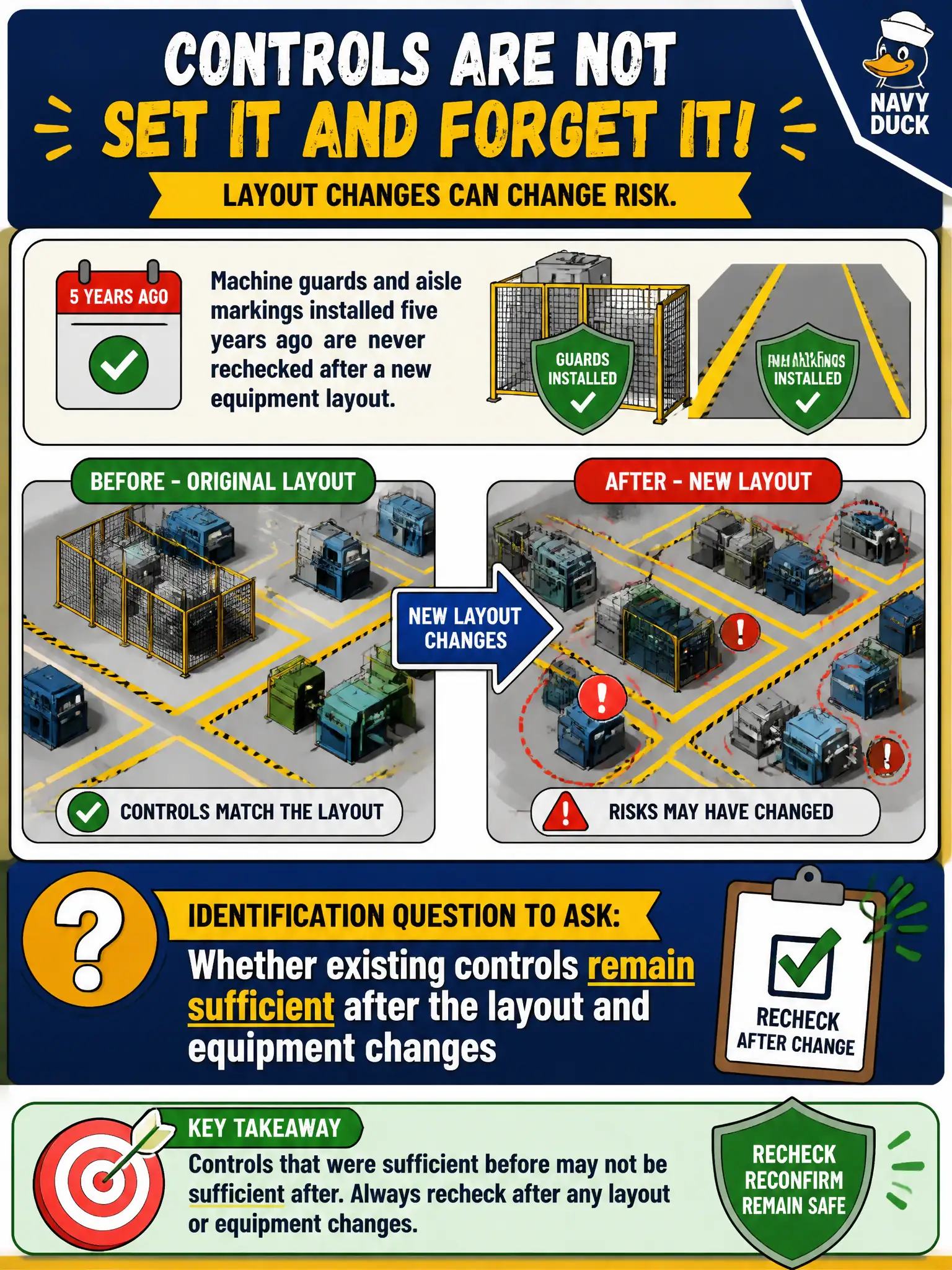
Machine guards and aisle markings installed five years ago are never rechecked after a new equipment layout. What identification question should be asked?
Select an answer to reveal the explanation.
Short Explanation
Moving machines without rechecking guards is like rearranging furniture and leaving the baby gate in the old doorway. Controls must still fit the new layout. Reassess after the change, not five years later by accident.
Full Explanation
After a new equipment layout, identification should ask whether machine guards and aisle markings installed years earlier remain sufficient under current traffic patterns and equipment geometry. Layout change is a classic trigger for control obsolescence because approach paths, clearances, and pedestrian interfaces shift even when old hardware stays bolted in place. Asking whether original purchase orders can be shredded to save storage answers a records question, not control adequacy. Debating whether marking paint remains fashionable confuses aesthetics with safety function. Considering whether vendors prefer the old layout for marketing photos prioritizes image over hazard control. Past installation is not perpetual fitness-for-purpose; change management should reopen identification and control evaluation when equipment moves. Exam caveat: time since installation is not evidence of ongoing effectiveness after material workplace change. Operational check: compare current aisle widths and approach paths to guard and marking placement, correct gaps before production ramps, update the risk register entry with the layout-change date, include guards and markings on the next inspection checklist, and verify workers were briefed on new pedestrian routes.