
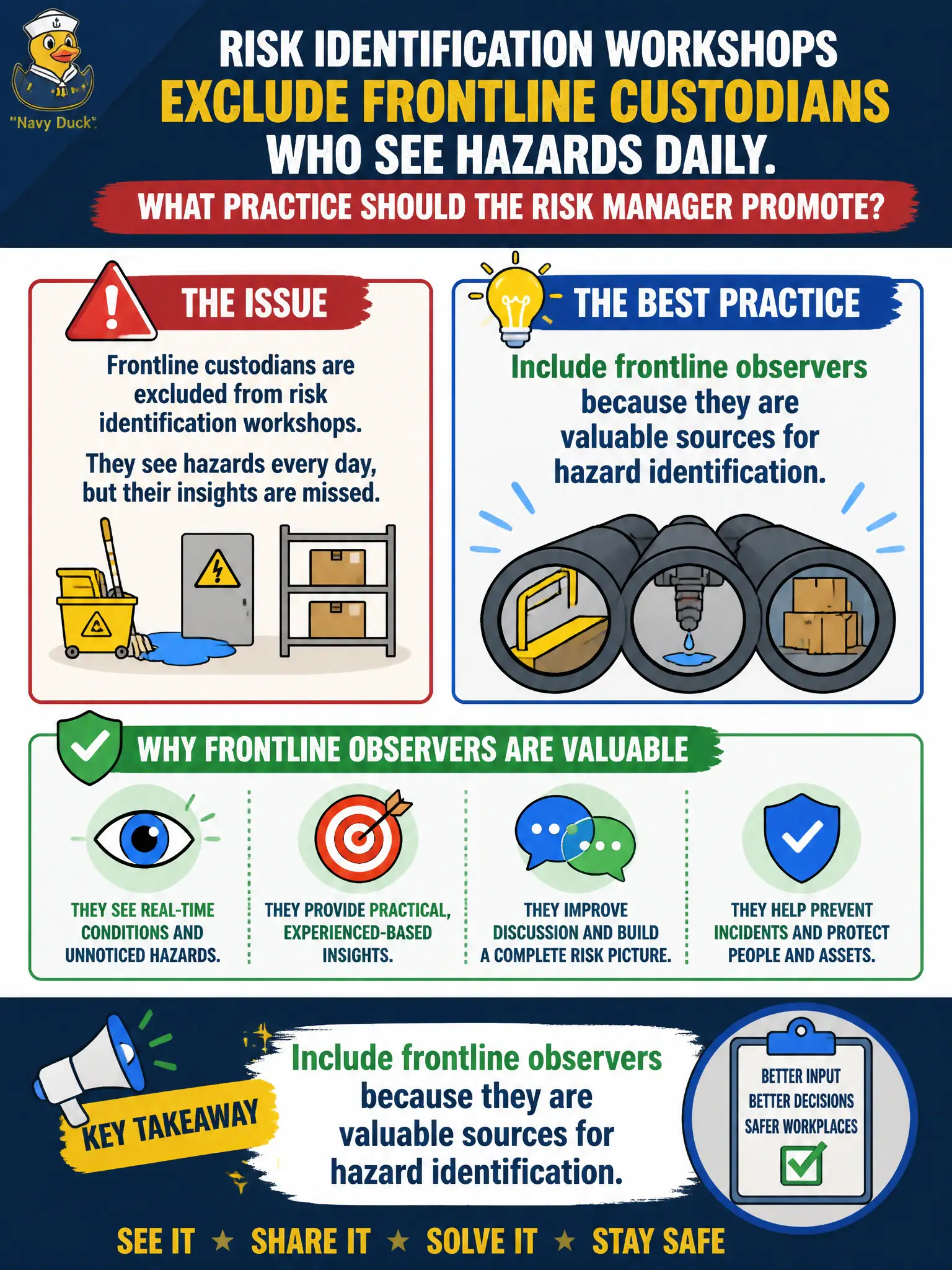
Risk identification workshops exclude frontline custodians who see hazards daily. What practice should the risk manager promote?
Select an answer to reveal the explanation.
Short Explanation
Custodians see the wet corner and the broken latch before the boardroom does. Frontline eyes are gold for identification. Leaving them out is like mapping a city without talking to the bus drivers.
Full Explanation
Risk identification workshops should include frontline custodians and similar observers because they see daily hazards that executives and remote consultants often miss, including leaks, blocked exits, improvised storage, worn flooring, and recurring near-miss patterns. Limiting workshops to executives so frontline input does not dilute strategy discards high-value leading indicators and signals that only hierarchy may name risk. Replacing workshops with anonymous vendor catalogs that never visit the site imports marketing literature instead of local conditions. Asking only remote consultants who have never walked the floors privileges abstraction over evidence and can miss site-specific realities. Broad participation improves completeness of identification; it does not replace management accountability for prioritization, treatment decisions, and resource allocation. Exam caveat: inclusion of frontline voices is an identification method strength, not a substitute for a maintained risk register and owners. Operational check: invite frontline representatives to identification sessions, capture their items in the register with owners and due dates, validate a sample of workshop findings with a joint floor walk within two weeks, and report themes to leadership without retaliating against reporters.