
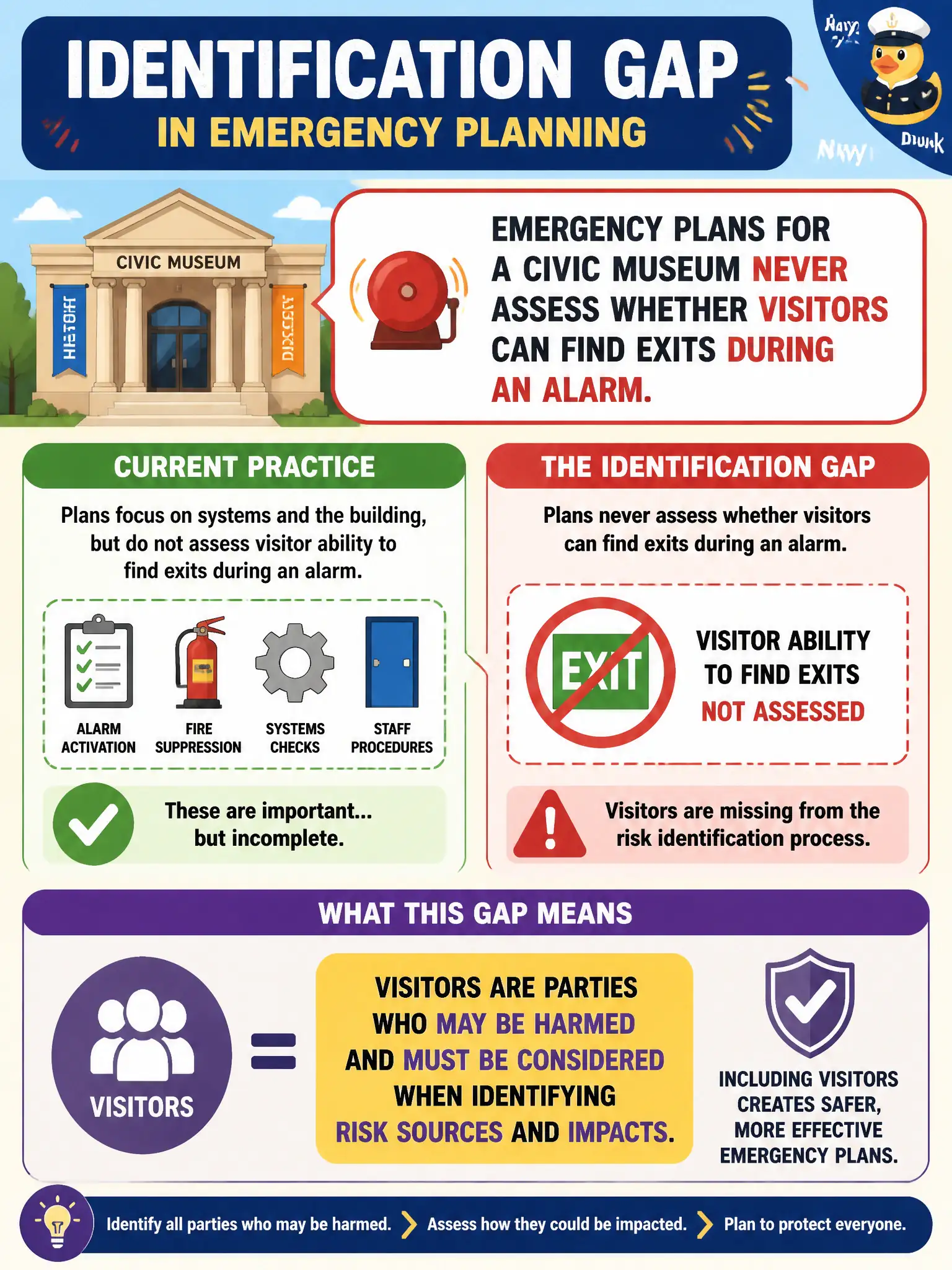
Emergency plans for a civic museum never assess whether visitors can find exits during an alarm. What identification gap does this create?
Select an answer to reveal the explanation.
Short Explanation
Visitors do not live in your building map—they follow signs or get stuck. If exits are confusing, guests are people who can be harmed. Identification has to include them, not just badge holders.
Full Explanation
Emergency plans for a civic museum that never assess whether visitors can find exits during an alarm omit parties who may be harmed and must be considered when identifying risk sources and impacts. Visitors are in-scope because real occupancy includes the public, not only badge-holding employees, and wayfinding failures under alarm conditions are life-safety issues. Claiming only permanent employees need egress assessment because visitors signed liability waivers confuses private risk transfer paperwork with identification completeness. Treating wayfinding failures as aesthetic issues for the gift shop misses emergency function. Limiting emergency identification to staff while excluding temporary guests creates a predictable gap during public hours and special events. Who-is-affected analysis must match actual occupancy patterns, including patrons, school groups, and contractors. Exam caveat: waivers and guest status do not remove visitors from harm pathways that the risk program must identify and treat. Operational check: walk public routes under simulated alarm conditions, verify exit signage and alternate paths during dense exhibits, brief floor staff on visitor assistance roles, and update the emergency plan with visitor-impact assumptions plus scheduled drills that include public-hour scenarios.