
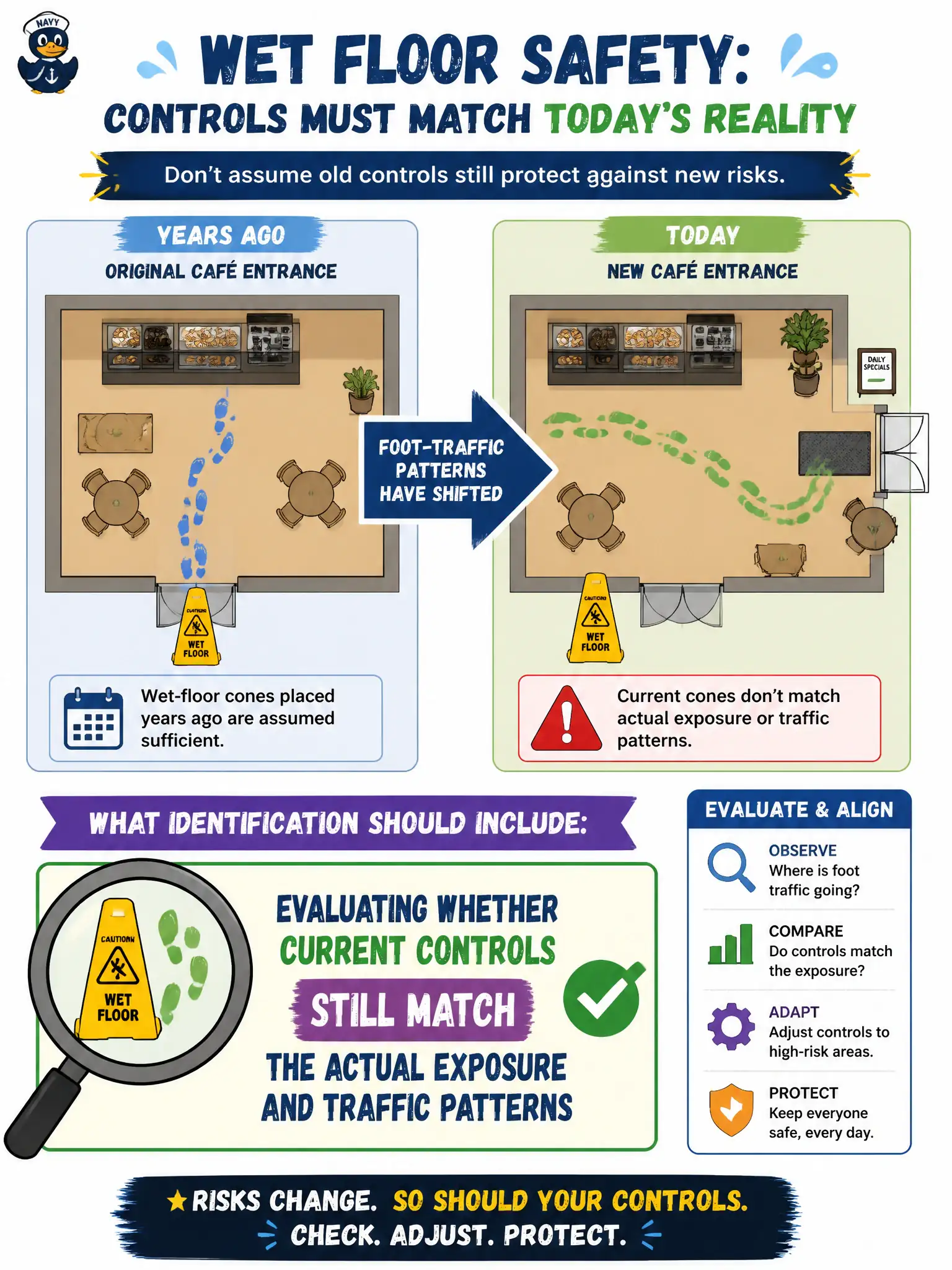
Wet-floor cones placed years ago are assumed sufficient even though foot-traffic patterns have shifted toward a new café entrance. What should identification include?
Select an answer to reveal the explanation.
Short Explanation
Old cones in the wrong doorway are like a stop sign left on a closed road. Controls have to match where people actually walk now. Check exposure against the café traffic, not the map from five years ago.
Full Explanation
Wet-floor cones placed years ago are not automatically sufficient when foot-traffic patterns shift toward a new café entrance; identification must evaluate whether current controls still match actual exposure and traffic. Controls lose effectiveness when context changes even if the hardware remains physically present. Removing all cones because café customers prefer unmarked floors trades aesthetics for unmanaged slip risk and confuses preference with risk treatment. Treating cone placement as a one-time purchase that never needs review freezes a past control decision as permanent truth despite layout change. Replacing slip controls with a quarterly press release about floor polish substitutes communication for physical risk treatment. Residual risk rises when traffic volume, flooring, weather tracking, or entrance geometry change without reassessment of barriers, mats, and warnings. Exam caveat: installed controls require periodic fitness-for-purpose checks after material operational changes, not only after injuries. Operational check: observe peak traffic at the new entrance, relocate or add barriers, mats, and signage where water accumulates, assign a facilities owner for daily checks during wet weather, and record the reassessment date on the slip-risk register entry.