
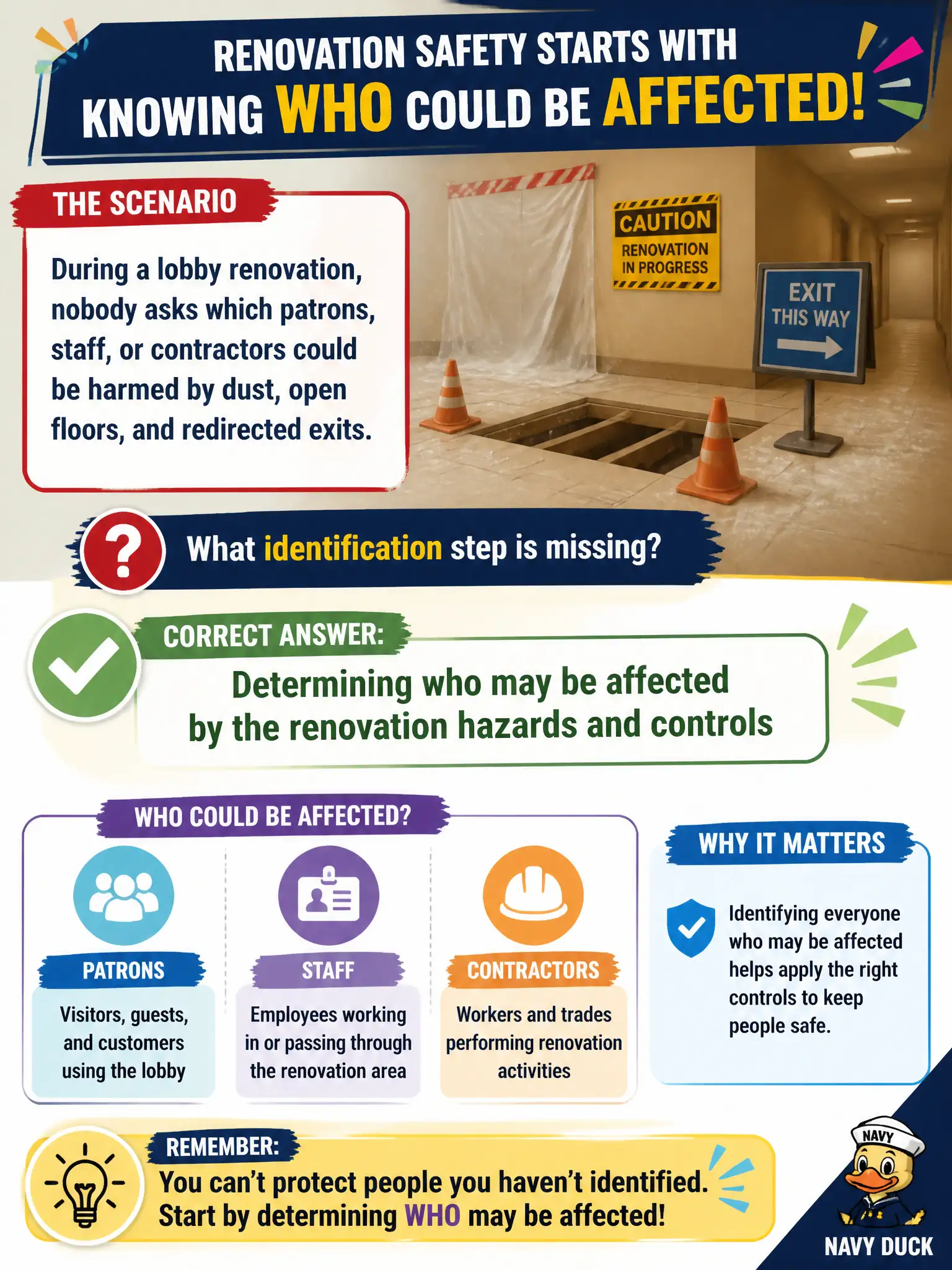
During a lobby renovation, nobody asks which patrons, staff, or contractors could be harmed by dust, open floors, and redirected exits. What identification step is missing?
Select an answer to reveal the explanation.
Short Explanation
If you renovate a lobby and never ask who walks through it, you are painting around the people. Identification includes naming patrons, staff, and contractors who could be hurt. Who is affected is not optional paperwork.
Full Explanation
During a lobby renovation, determining who may be affected—patrons, staff, contractors, and other occupants—is a required identification step because dust, open floors, and redirected exits create different pathways of harm for different populations and duty-of-care relationships. Skipping affected-party analysis yields controls that protect schedules and budgets while under-protecting people who actually use the space. Counting paint cans purchased measures procurement volume, not exposure or consequence. Scheduling a logo redesign before assessing physical hazards prioritizes branding over safety identification. Outsourcing the entire risk list to a social-media sentiment tool confuses public mood analytics with physical hazard and occupancy mapping. Identification aligned with corporate risk frameworks asks what can happen, where, and to whom; omitting who undercuts consequence analysis, communication planning, and temporary control design. Exam caveat: liability waivers or contractor clauses do not remove the need to identify affected parties during public-facing renovations. Operational check: list affected groups for the renovation, map each group’s exposure for egress, air quality, and slip or trip hazards, assign owners for temporary controls and wayfinding, and brief contractors plus public-facing staff before work phases that change exit paths.