
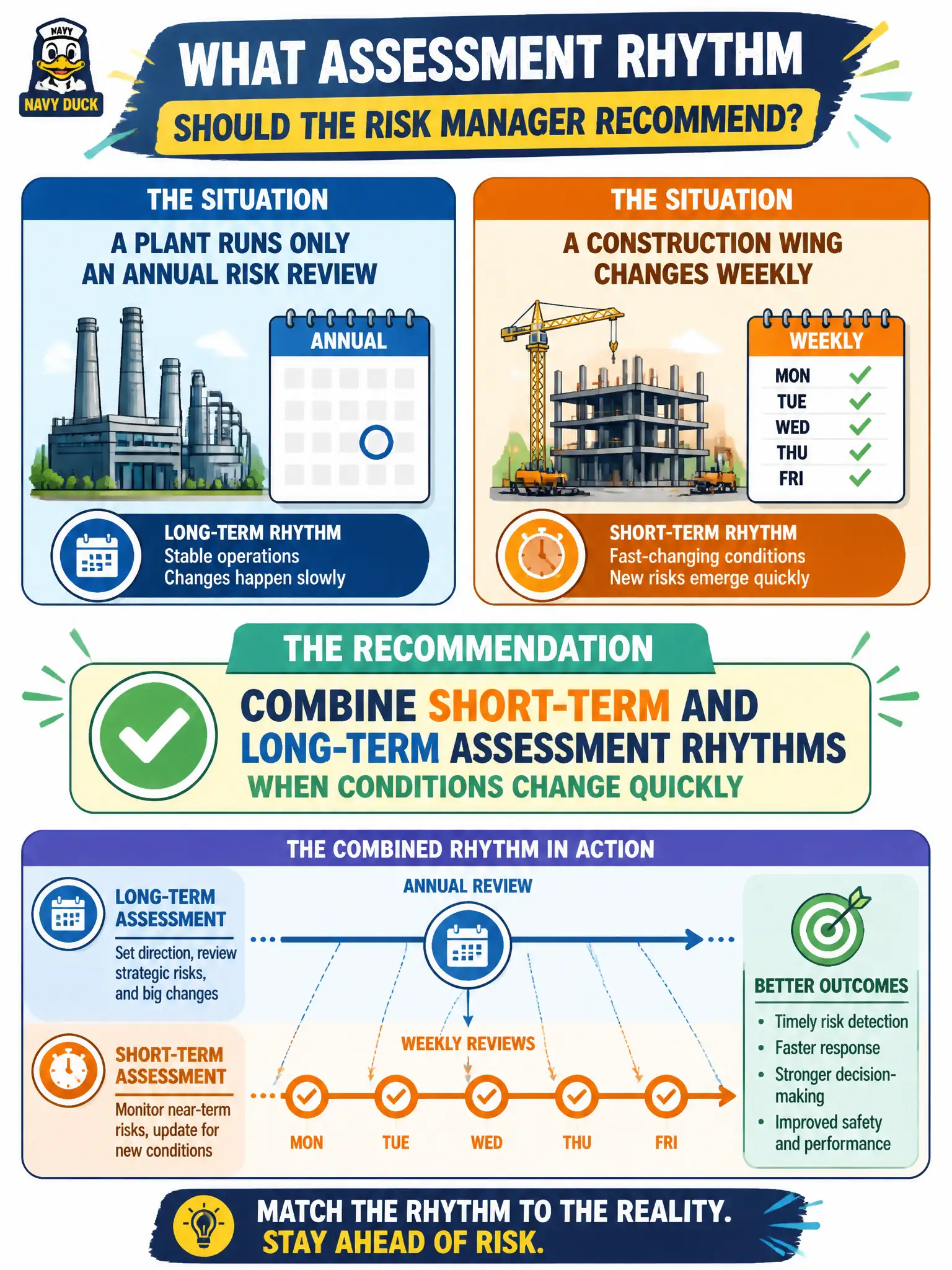
A plant runs only an annual risk review while a construction wing changes weekly. What assessment rhythm should the risk manager recommend?
Select an answer to reveal the explanation.
Short Explanation
An annual review during a weekly-changing wing is like checking the weather once a year during hurricane season. Pair the long-term cycle with short-term lookovers while things move. Construction does not wait for the calendar.
Full Explanation
When a plant’s construction wing changes weekly while the formal risk review runs only annually, the risk manager should combine short-term and long-term assessment rhythms so dynamic areas receive timely identification without abandoning strategic enterprise cycles. Static annual-only reviews leave temporary openings, new contractors, shifting layouts, and changing egress paths unassessed during the highest-change period. Canceling all reviews until construction ends creates a deliberate blind interval exactly when exposures peak. Relying solely on the prior year’s annual report for the active construction zone treats outdated conditions as current truth. Assessing only corporate headquarters while ignoring renovating plant wings orphans the locations under active change. Assessment frequency should match the rate of change in context rather than a one-size calendar chosen for convenience. Exam caveat: short-term focused reviews complement, rather than replace, long-term assessments; the exam point is integration when conditions move quickly. Operational check: keep the annual enterprise review, add time-boxed construction-zone reassessments such as weekly or biweekly walks, update the register after material layout changes, and verify temporary controls before each major phase gate with a named site owner.