
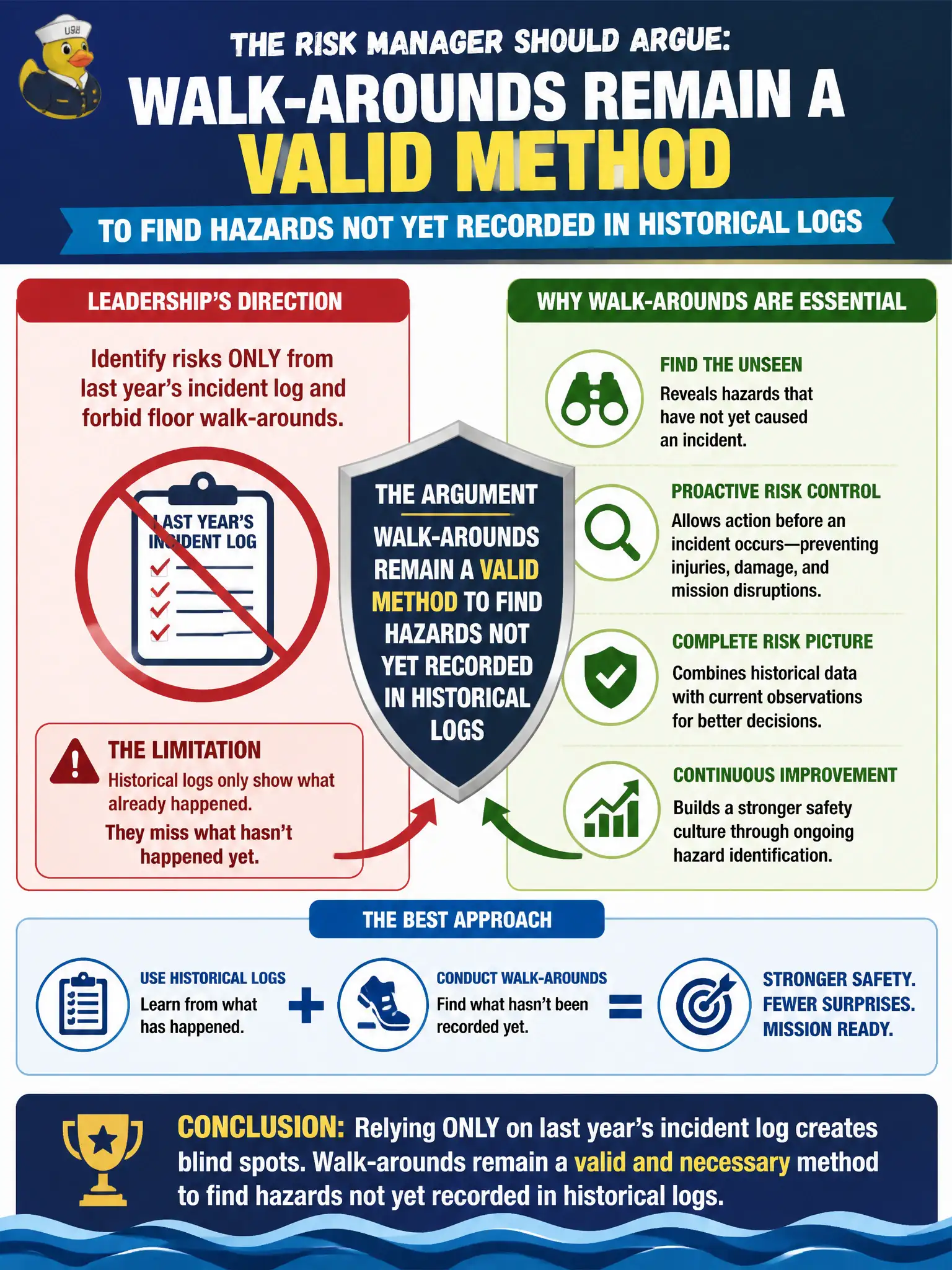
Leadership wants risks identified only from last year's incident log and forbids floor walk-arounds. What should the risk manager argue?
Select an answer to reveal the explanation.
Short Explanation
Logs are rear-view mirrors; walk-arounds are looking through the windshield. Stuff that has not crashed yet still shows up on the floor. You need both history and eyes on the work.
Full Explanation
Risk identification that relies only on last year’s incident log systematically misses hazards that have not yet produced a recorded loss. Floor walk-arounds and other observational methods remain valid ways to find latent conditions—blocked exits, new contractor setups, improvised storage, worn cords—before they enter history. Claiming historical logs always capture every future hazard confuses lagging indicators with complete foresight and freezes the program in rear-view analysis. Restricting workplace observation to insurance adjusters after a claim delays learning until after harm and outsources day-to-day diligence. Asserting that walk-arounds replace all documentation overshoots: observation should feed the risk register and corrective actions, not abolish records or formal assessment. Mature corporate risk practice combines multiple identification inputs rather than crowning a single exclusive source. Exam caveat: CRMC-style questions often contrast lagging incident data with leading observational methods; both are useful, and forbidding walk-arounds is the error. Operational check: schedule periodic site walks with frontline participation, enter new findings into the register with owners and dates, reconcile walk-around items against incident trends, and verify that leadership has not quietly banned observational methods in favor of last year’s log alone.