
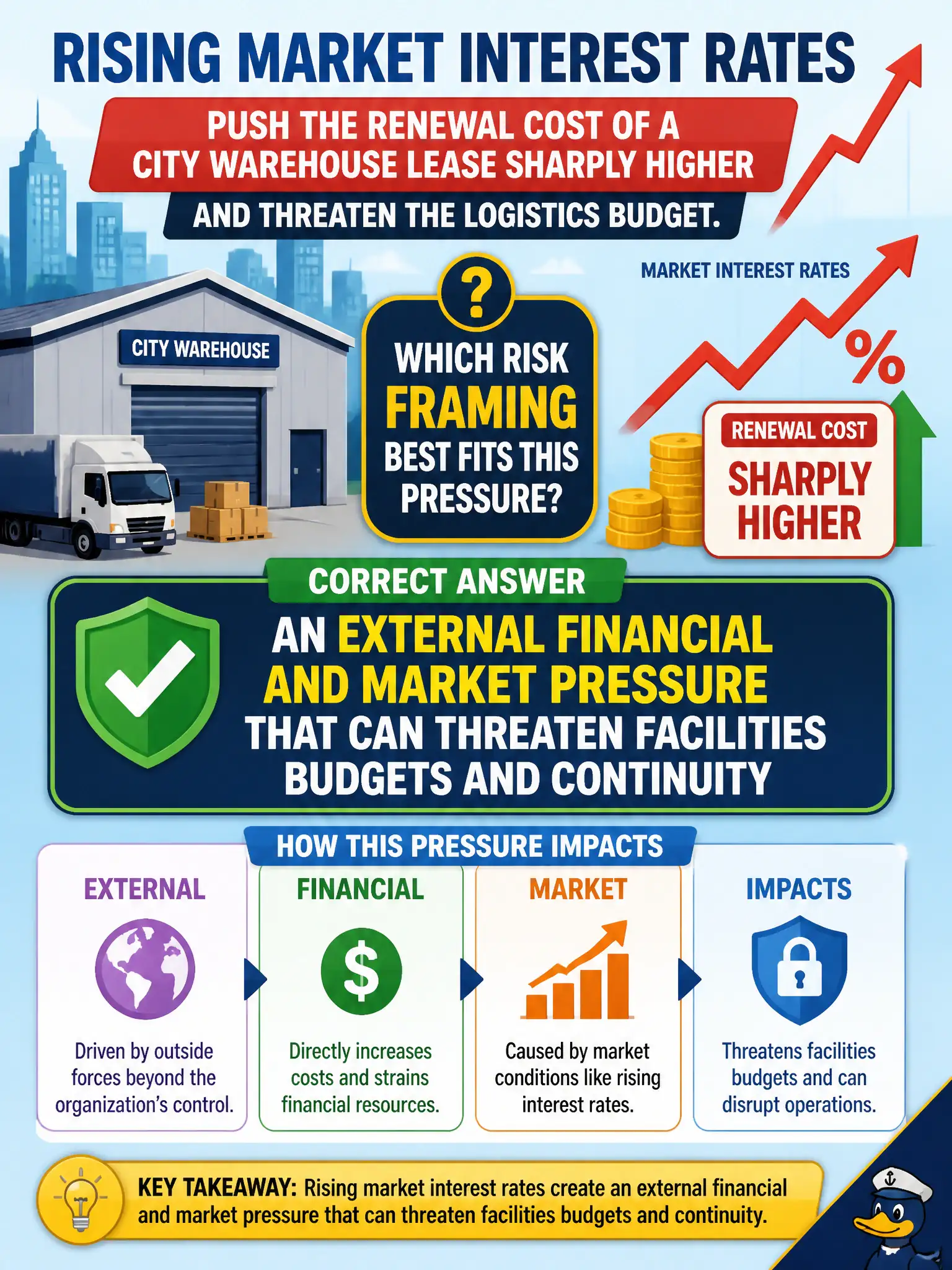
Rising market interest rates push the renewal cost of a city warehouse lease sharply higher and threaten the logistics budget. Which risk framing best fits this pressure?
Select an answer to reveal the explanation.
Short Explanation
Think of the lease like a toll bridge that just raised rates—your trucks still need the crossing. External market and financial pressures can squeeze facilities budgets and continuity. This is not an indoor housekeeping quirk.
Full Explanation
Sharply higher renewal costs for a city warehouse lease driven by rising market interest rates are best framed as an external financial and market pressure that can threaten facilities budgets and continuity of logistics that support civic services. External market moves change the cost of capital and lease pricing outside day-to-day operations, yet they remain in scope for corporate risk identification because they can force relocation, service cuts, or reserve drawdowns. Keyboard-layout preference for warehouse clerks is an irrelevant internal ergonomics distraction that does not explain lease finance pressure. Drone hobbyists at recreational parks across town are a different physical technology source and do not address market-driven rent resets. Cafeteria menu risk with food-service vendors is a separate supplier category. Financial and market risks are frequently external in origin while still fully inside municipal enterprise risk management. Exam caveat: external origin is not the same as out-of-scope; CRMC items often test whether candidates misfile market pressure as pure facilities housekeeping or as non-risk noise. Operational check: quantify lease-reset exposure against budget and continuity thresholds, document treatment options such as renegotiation, relocation, contractual transfer terms, or acceptance with reserves, assign a facilities and finance owner, and calendar a pre-renewal reassessment tied to rate and market indicators.