
Mold in a records basement is labeled only as personnel discomfort, ignoring damage to paper and digital media archives. What consequence should also be recognized?
Select an answer to reveal the explanation.
Short Explanation
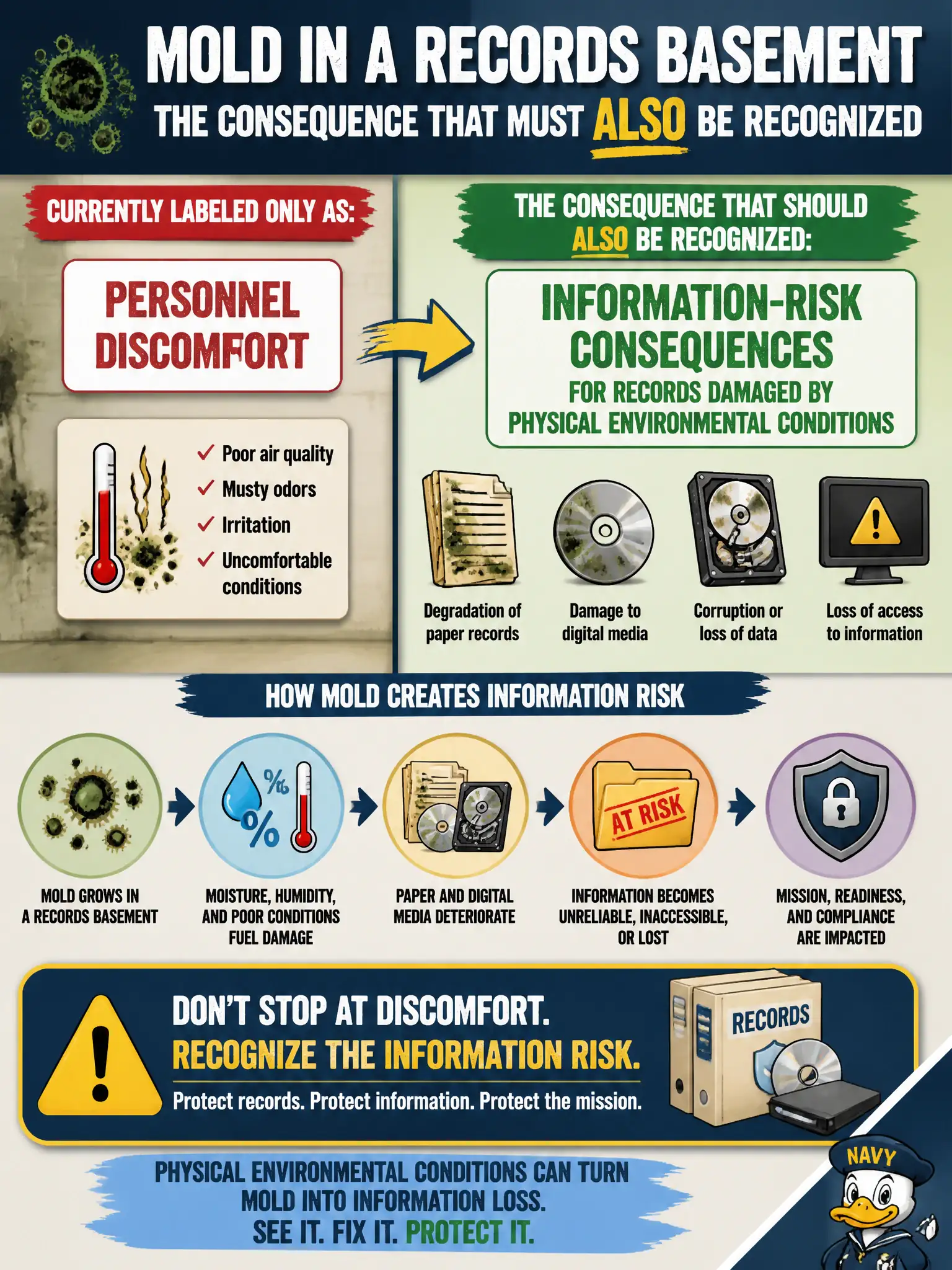
Mold is nasty for lungs, but it also eats archives. Physical basement conditions can wipe out information assets—do not stop at comfort complaints.
Full Explanation
Mold in a records basement creates information-risk consequences when paper and digital media archives are damaged or made inaccessible—not only personnel discomfort. Market risk from nearby theater ticket prices is unrelated. Supplier invoice timing for remediators is secondary commercial detail. Dehumidifier brand preference is not the overlooked consequence class. Exam caveat: physical environmental conditions can produce information asset consequences that must be scored and treated. Operational check: classify dual impacts (occupant health and records integrity), relocate or protect critical series, begin remediation with proper containment, and update the information/records risk row with consequence reflecting archive loss potential. Engage the records officer and facilities together for the civic basement until humidity and mold are controlled. In municipal practice, record the rationale in the risk procedure or committee minutes so future staff apply the same rule under budget pressure. Re-validate after the next seasonal peak or org-chart change to confirm the civic control still holds as designed for residents and staff. In municipal practice, record the rationale in the risk procedure or committee minutes so future staff apply the same rule under budget pressure. Re-validate after the next seasonal peak or org-chart change to confirm the civic control still holds as designed for residents and staff.