
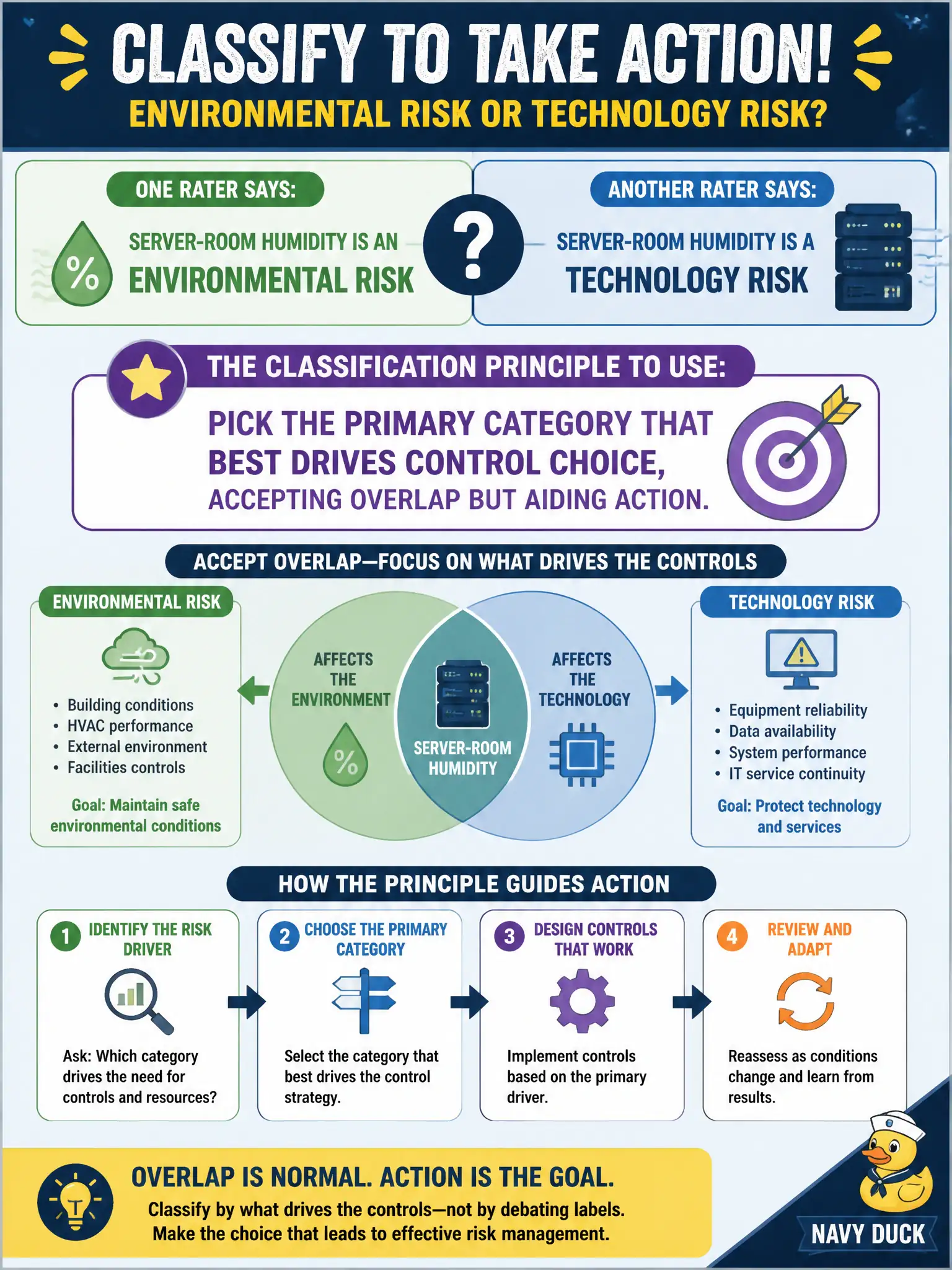
One rater calls server-room humidity an environmental risk; another calls it technology risk. What classification principle should guide the choice?
Select an answer to reveal the explanation.
Short Explanation
Humidity can look green (environment) and silicon (tech) at the same time. Choose the label that points to the controls you will actually run—overlap is fine; indecision is not.
Full Explanation
When one rater calls server-room humidity environmental and another calls it technology risk, choose the primary category that best drives control choice, accepting overlap while aiding action. Entering both as separate identical risks with identical treatments and owners doubles noise. Deleting the item until everyone uses the identical word stalls treatment. Defaulting every humidity issue to personnel risk avoids debate without aiding controls. Exam caveat: primary classification should enable the right owner and treatments; overlap is normal. Operational check: pick technology or facilities/environmental as primary based on whether HVAC control or IT hardening dominates, name one owner, list humidity thresholds and response steps, and note secondary stakeholders. Review after the next excursion whether the chosen primary category produced timely civic action. In municipal practice, record the rationale in the risk procedure or committee minutes so future staff apply the same rule under budget pressure. Re-validate after the next seasonal peak or org-chart change to confirm the civic control still holds as designed for residents and staff. In municipal practice, record the rationale in the risk procedure or committee minutes so future staff apply the same rule under budget pressure. Re-validate after the next seasonal peak or org-chart change to confirm the civic control still holds as designed for residents and staff.