
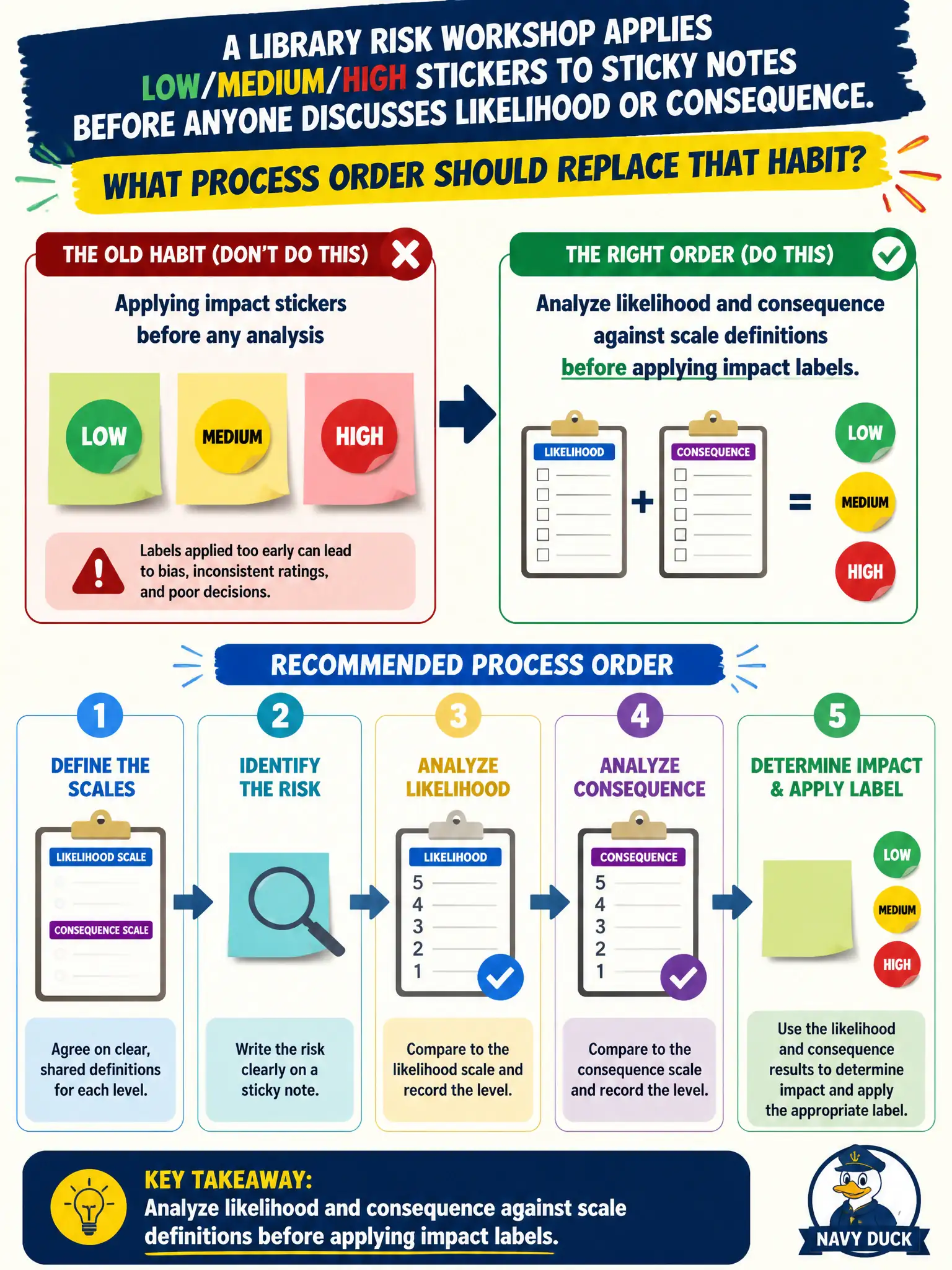
A library risk workshop applies low/medium/high stickers to sticky notes before anyone discusses likelihood or consequence. What process order should replace that habit?
Select an answer to reveal the explanation.
Short Explanation
Stickers before analysis is guessing with stationery. Walk likelihood and consequence first, then the label falls out of the scale. Gut colors are decoration, not risk work.
Full Explanation
Impact labels should follow analysis of likelihood and consequence against scale definitions—not precede them. Applying low/medium/high stickers in a library workshop before discussing the axes produces decoration without evaluation. Assigning owners first and inventing ratings only if insurance declines coverage reverses risk logic. Printing last year's stickers without opening today's scenarios freezes outdated judgment. Voting on colors first so analysis can be skipped when time is short institutionalizes shortcut bias. Exam caveat: analyze then label, using the official definitions. Operational check: change the workshop agenda to open legends, score likelihood and consequence with notes, then apply the resulting matrix cell or summary label. Facilitate one library scenario end-to-end and keep the worksheet as a training exemplar for civic staff. In municipal practice, record the rationale in the risk procedure or committee minutes so future staff apply the same rule under budget pressure. Re-validate after the next seasonal peak or org-chart change to confirm the civic control still holds as designed for residents and staff. In municipal practice, record the rationale in the risk procedure or committee minutes so future staff apply the same rule under budget pressure. Re-validate after the next seasonal peak or org-chart change to confirm the civic control still holds as designed for residents and staff.