
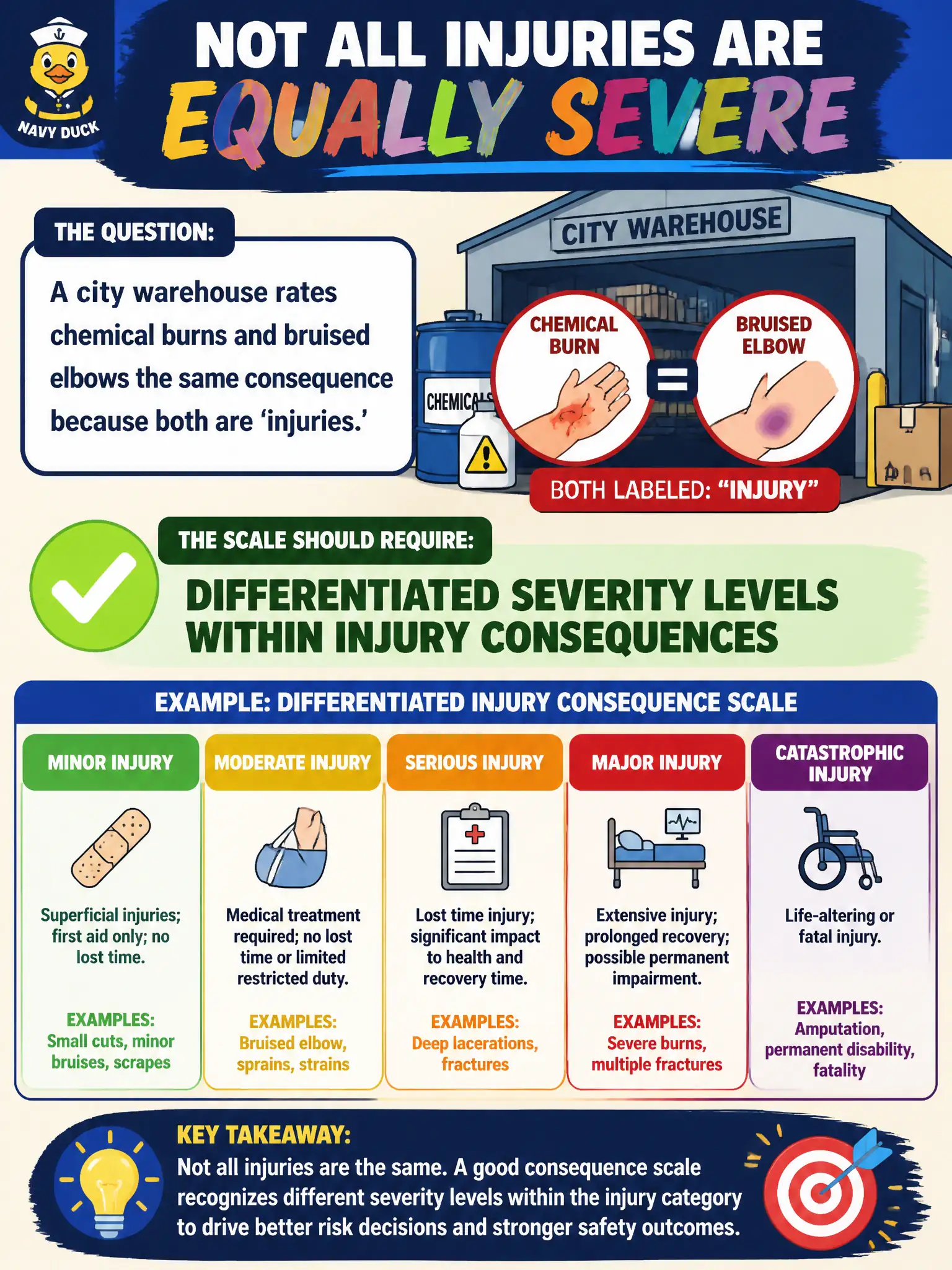
A city warehouse rates chemical burns and bruised elbows the same consequence because both are 'injuries.' What should the consequence scale require?
Select an answer to reveal the explanation.
Short Explanation
A bruise and a chemical burn are both injuries, but they are not the same size of problem. Good scales carve severity inside the injury family so treatment matches harm.
Full Explanation
Consequence scales must differentiate severity within injury outcomes rather than scoring chemical burns and bruised elbows the same because both are "injuries." Catch-all injury scores hide prioritization between life-threatening and minor harm in municipal operations. Restricting the register to lost-time injuries only hides important precursors. Equal consequence scores for every injury to avoid supervisor debates sacrifice discrimination for false peace. Removing personnel harm from operations consequence scales leaves people invisible in enterprise ranking. Exam caveat: graduated injury severity is required for meaningful consequence. Operational check: add clear injury-severity bands (first aid, medical treatment, lost time, fatality/multiple) to the city scale, rescore the chemical-burn versus bruise examples, and confirm different treatment urgency. Align with OSHA or local recordkeeping categories where helpful without letting compliance taxonomy replace risk prioritization entirely. In municipal practice, record the rationale in the risk procedure or committee minutes so future staff apply the same rule under budget pressure. Re-validate after the next seasonal peak or org-chart change to confirm the civic control still holds as designed for residents and staff.