
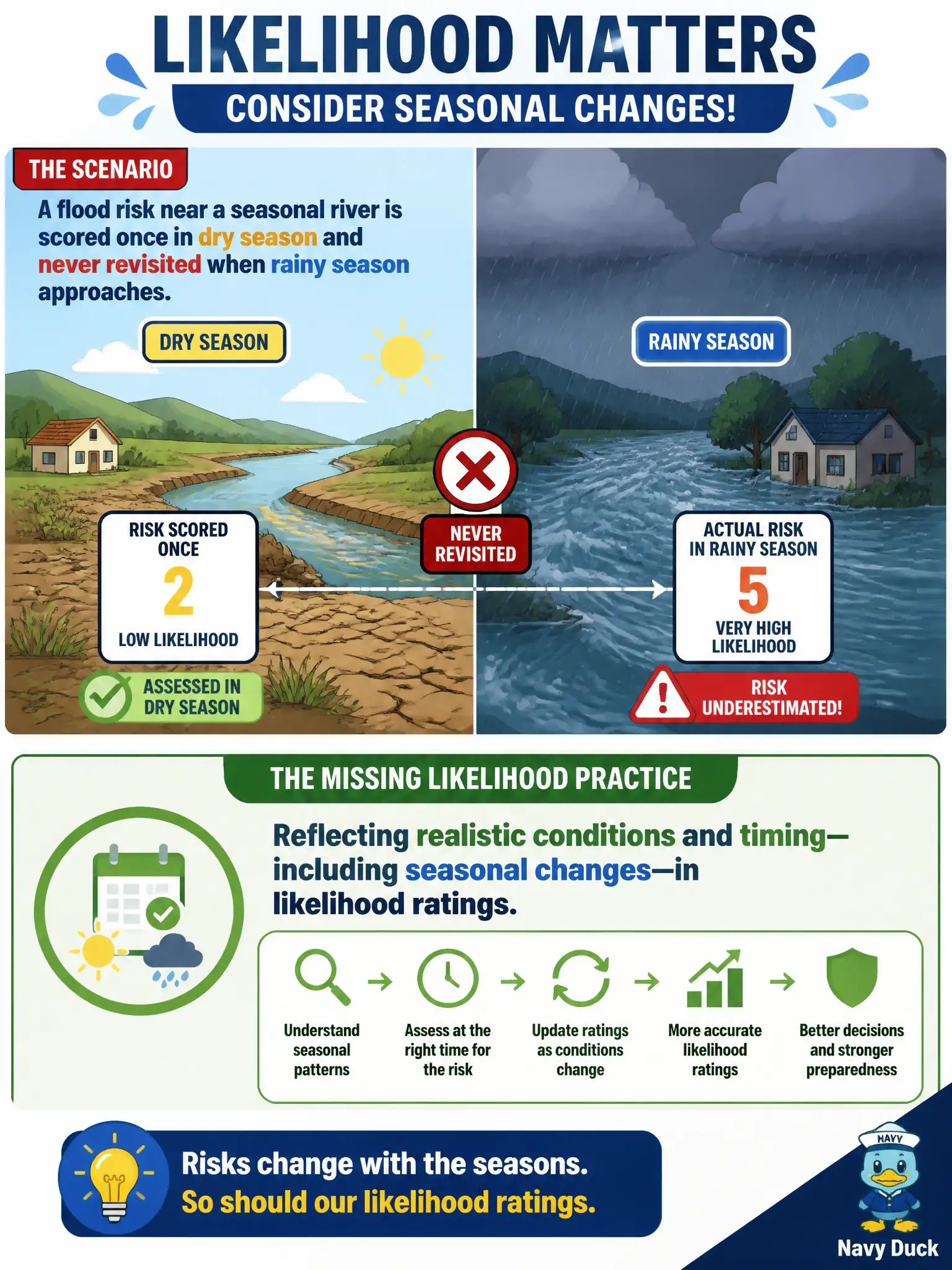
A flood risk near a seasonal river is scored once in dry season and never revisited when rainy season approaches. What likelihood practice is missing?
Select an answer to reveal the explanation.
Short Explanation
Likelihood is not a museum plaque. A river that swells every spring is not the same bet in August as in April. Update ratings when conditions and timing change.
Full Explanation
Likelihood ratings should reflect realistic conditions and timing, including seasonal changes. Scoring flood risk near a seasonal river once in dry season and never revisiting as rainy season approaches freezes an unrepresentative probability. Permanently freezing all likelihood scores after the first workshop blocks learning. Raising every outdoor risk to maximum year-round abandons discrimination. Scoring flood risk only after flooding has begun is reactive. Exam caveat: dynamic, condition-aware likelihood—including seasonality—is part of sound evaluation. Operational check: calendar a pre-rainy-season review of flood-related civic risks, adjust likelihood with stage, forecast, and mitigation status, and update treatments (temporary barriers, staffing, messaging) accordingly. Store both dry-season and wet-season notes so auditors see the timing logic. In municipal practice, record the rationale in the risk procedure or committee minutes so future staff apply the same rule under budget pressure. Re-validate after the next seasonal peak or org-chart change to confirm the civic control still holds as designed for residents and staff. In municipal practice, record the rationale in the risk procedure or committee minutes so future staff apply the same rule under budget pressure. Re-validate after the next seasonal peak or org-chart change to confirm the civic control still holds as designed for residents and staff.