
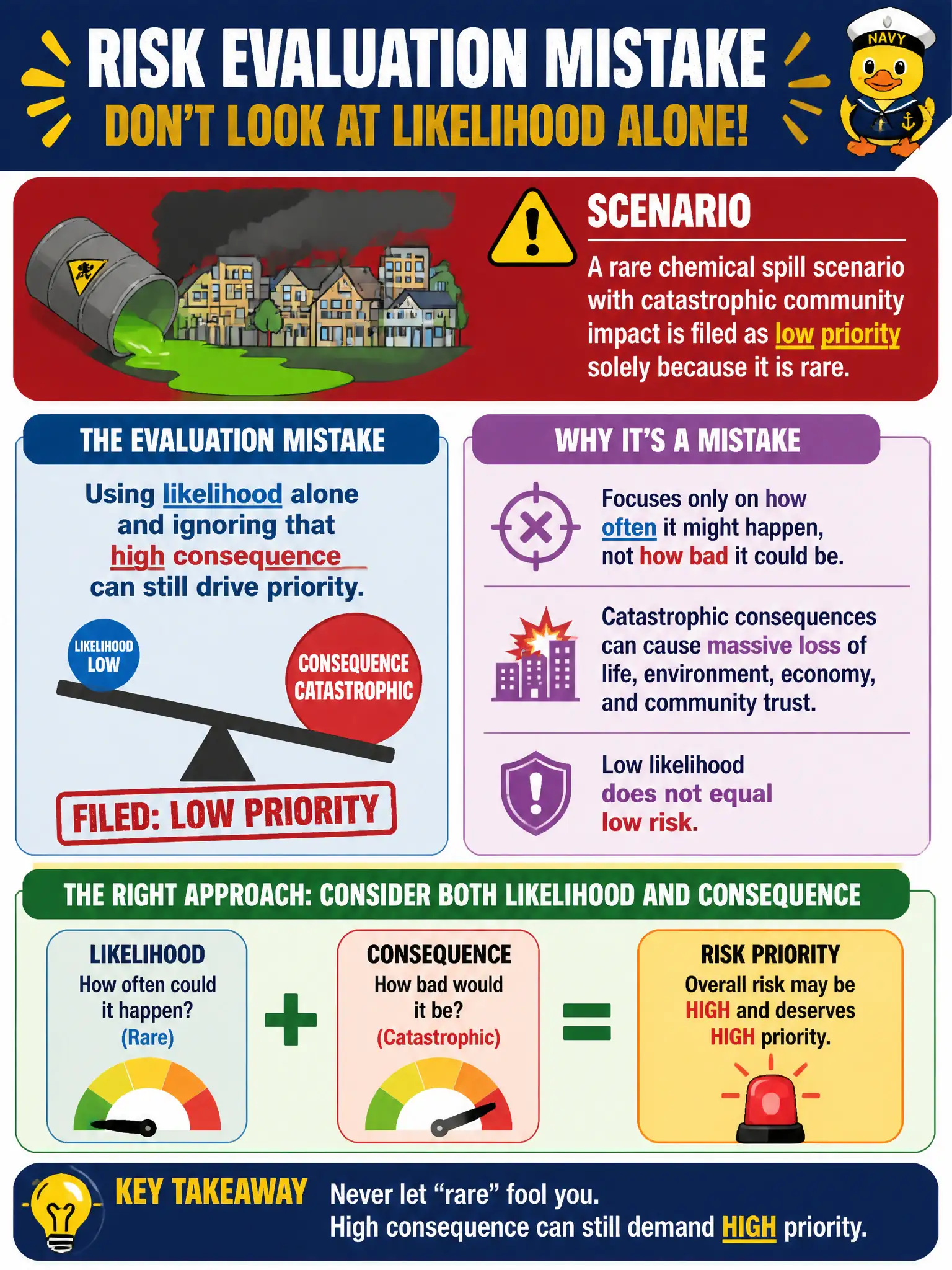
A rare chemical spill scenario with catastrophic community impact is filed as low priority solely because it is rare. What evaluation mistake is this?
Select an answer to reveal the explanation.
Short Explanation
Rare and harmless are not twins. A long-shot catastrophe can still deserve serious attention. Do not let 'it almost never happens' erase how bad it would be if it did.
Full Explanation
Priority must consider both likelihood and consequence. Filing a rare chemical spill with catastrophic community impact as low priority solely because it is rare ignores how high consequence can still drive planning, controls, and contingency for civic preparedness. Over-weighting impact while claiming rare events never need planning is the opposite error; here likelihood-only thinking is the mistake. Treating every rare event as maximum priority regardless of consequence also misuses the matrix. Refusing to score chemical risks until a spill occurs abandons foresight. Exam caveat: low likelihood × high consequence can still be a high priority risk requiring treatment or contingency. Operational check: plot the rare catastrophic spill on the city matrix using both axes, document why consequence elevates priority, and assign at least one preventive or preparedness control plus a recovery outline. Brief emergency management and environmental health on the shared rating. In municipal practice, record the rationale in the risk procedure or committee minutes so future staff apply the same rule under budget pressure. Re-validate after the next seasonal peak or org-chart change to confirm the civic control still holds as designed for residents and staff.