
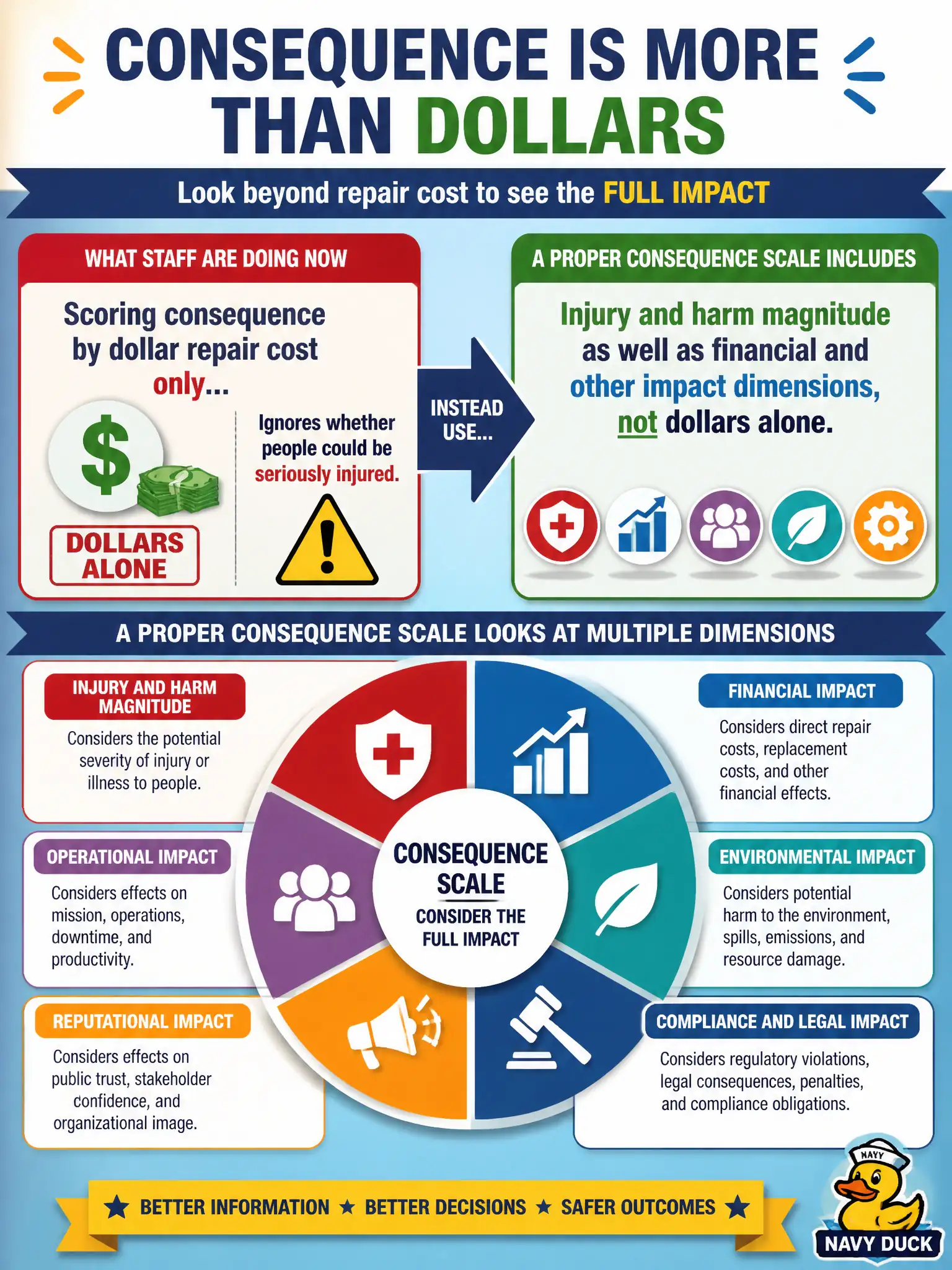
Staff score consequence only by dollar repair cost and ignore whether people could be seriously injured. What does a proper consequence scale include?
Select an answer to reveal the explanation.
Short Explanation
Cheap to fix is not the same as no big deal if someone gets hurt. Consequence is about how bad the hit is—including people—not just the invoice. Dollars are one slice, not the whole pie.
Full Explanation
A proper consequence scale includes injury and harm magnitude as well as financial, service, environmental, and other impact dimensions—not dollar repair cost alone. Scoring only by repair invoices understates events that seriously injure people even when property damage is cheap. Restricting consequence to insured financial loss treats uninsured and human harm as storytelling. Using only reputational headlines while parking injuries in HR splits what governance must see together. Counting only emails received measures noise, not severity. Exam caveat: multi-dimensional consequence—including people harm—is expected. Operational check: revise the city consequence rubric to include people-harm tiers beside financial and service-disruption tiers, rescore one slip and one property-only event, and present both to the risk committee. Ensure workers' compensation and public liability owners review people-harm ratings for consistency. In municipal practice, record the rationale in the risk procedure or committee minutes so future staff apply the same rule under budget pressure. Re-validate after the next seasonal peak or org-chart change to confirm the civic control still holds as designed for residents and staff.