
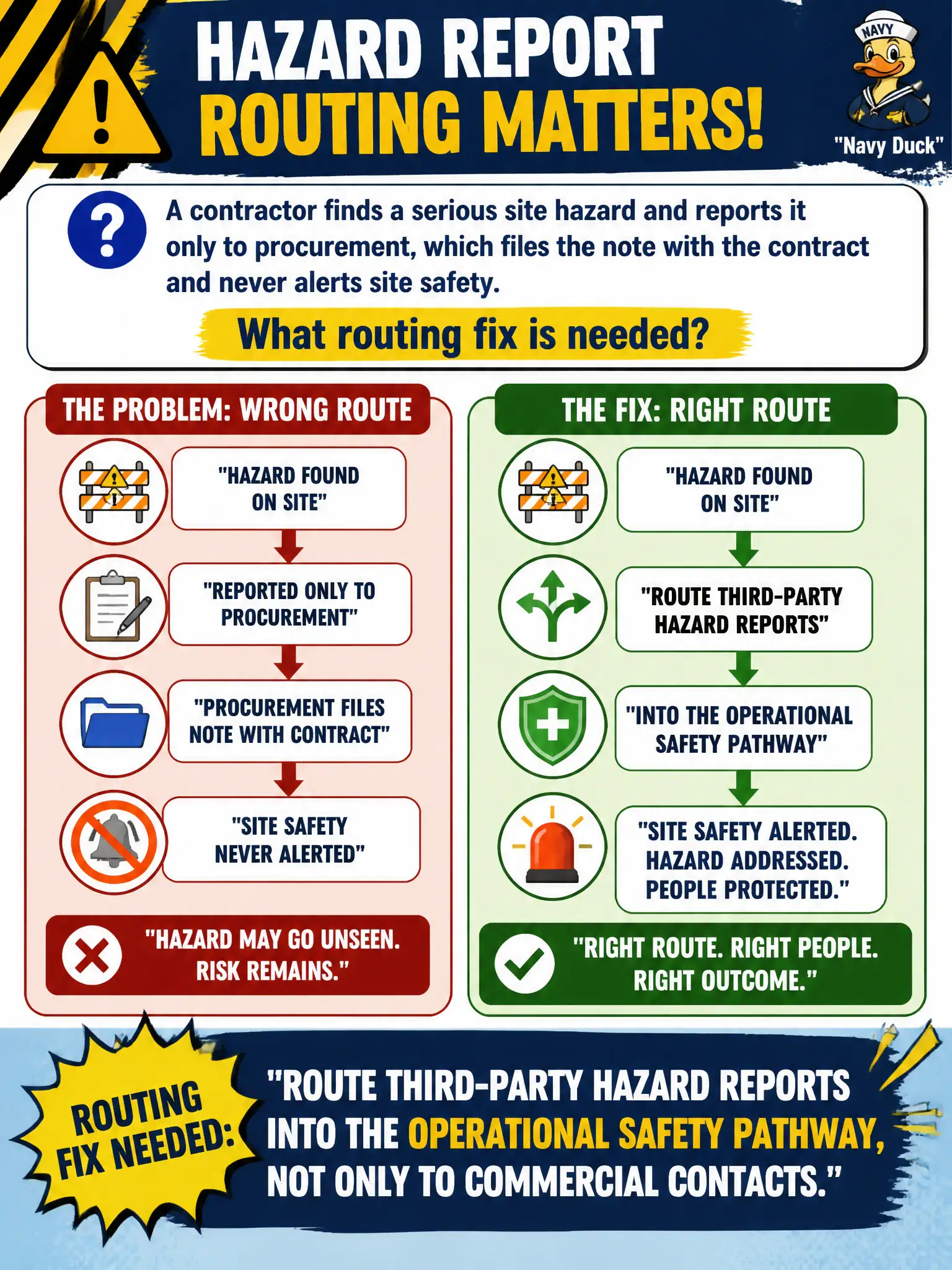
A contractor finds a serious site hazard and reports it only to procurement, which files the note with the contract and never alerts site safety. What routing fix is needed?
Select an answer to reveal the explanation.
Short Explanation
Procurement is great for invoices, not for shutting down a bad scaffold. Third-party hazard finds need the safety path, not just a contract folder. Get operational eyes on the danger fast.
Full Explanation
Third-party hazard reports must enter the operational safety pathway, not stop at procurement filing. When a contractor reports a serious site hazard only to procurement and the note sits with the contract, site safety never treats the exposure. Keeping contractor hazards inside procurement to protect commercial relationships prioritizes comfort over people. Asking contractors to post on public review sites substitutes reputation systems for internal control. Accepting hazards only if paired with a discounted change order monetizes safety reporting and deters good-faith alerts. Exam caveat: commercial contacts are not a substitute for safety routing of third-party findings. Operational check: require procurement to forward contractor hazard notices into the safety or facilities ticket system within a defined SLA, copy the site supervisor, and verify closure evidence before the next payment milestone. Train vendors at kickoff on the civic hazard reporting number, not only the contracts inbox. In municipal practice, record the rationale in the risk procedure or committee minutes so future staff apply the same rule under budget pressure. Re-validate the control after the next seasonal peak or org-chart change to confirm the civic pathway still works as designed.