
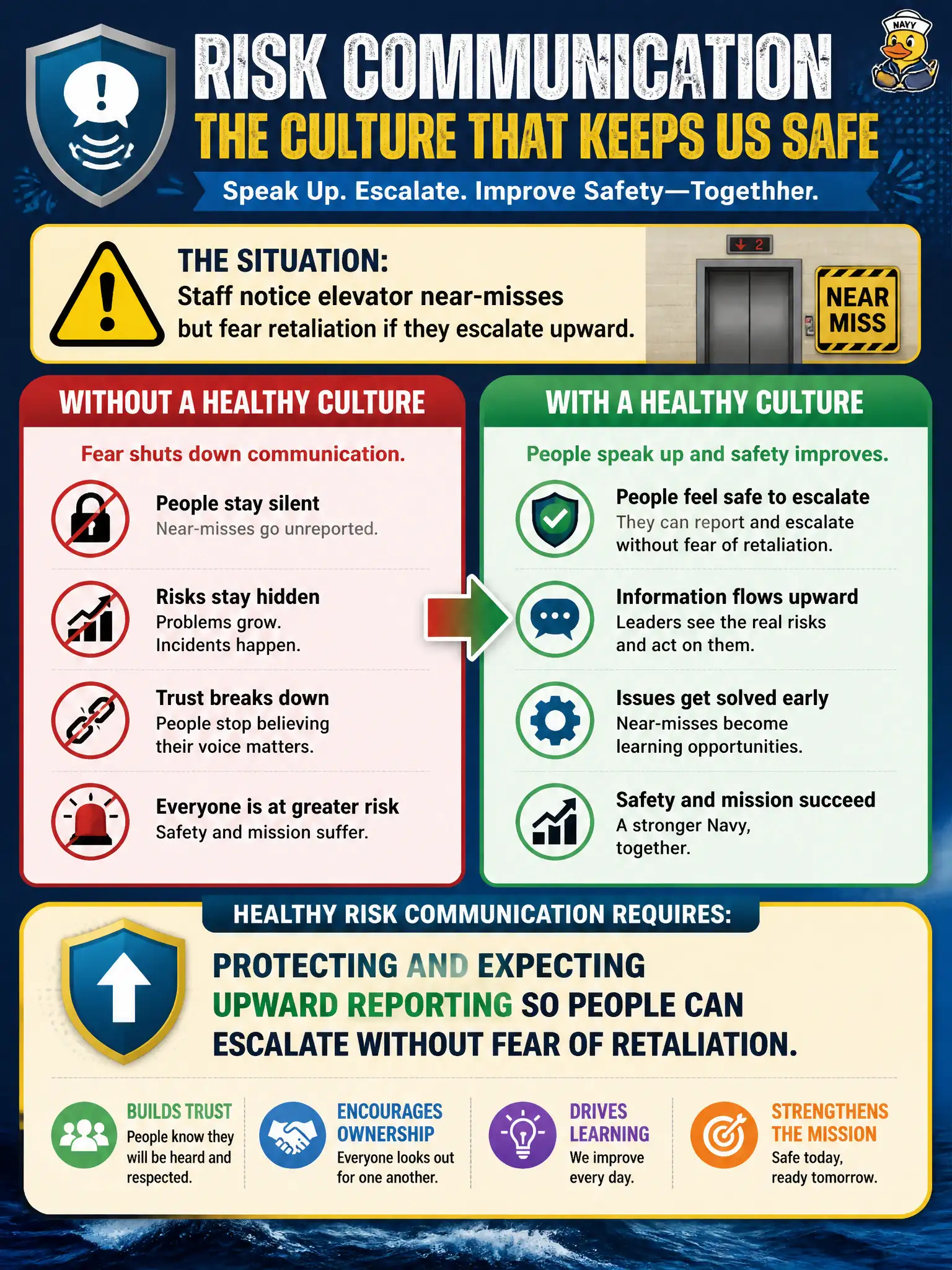
Staff notice elevator near-misses but fear retaliation if they escalate upward. What cultural condition does healthy risk communication require?
Select an answer to reveal the explanation.
Short Explanation
If speaking up gets you in trouble, the org just bought silence—and silence is expensive. Near-misses are free warnings. Make upward reporting protected and expected, not a career risk.
Full Explanation
Healthy risk communication requires protecting and expecting upward reporting so staff can escalate near-misses without fear of retaliation. Elevator near-misses that go unreported because workers fear punishment leave civic buildings exposed. Punishing reporters to discourage "negativity" destroys leading indicators. Allowing escalation only after injury proves the near-miss mattered waits for harm. Limiting reports to anonymous boxes reviewed yearly is too slow and optionalizes real-time action. Exam caveat: non-retaliation plus expected reporting is the cultural condition items look for. Operational check: publish a non-retaliation statement in the city safety policy, train supervisors on constructive response to bad news, track near-miss volume as a positive leading metric, and investigate any claim of retaliation through HR with leadership visibility. Recognize teams that escalate early on elevators, fleets, or public spaces. In municipal practice, record the rationale in the risk procedure or committee minutes so future staff apply the same rule under budget pressure. Re-validate the control after the next seasonal peak or org-chart change to confirm the civic pathway still works as designed.