
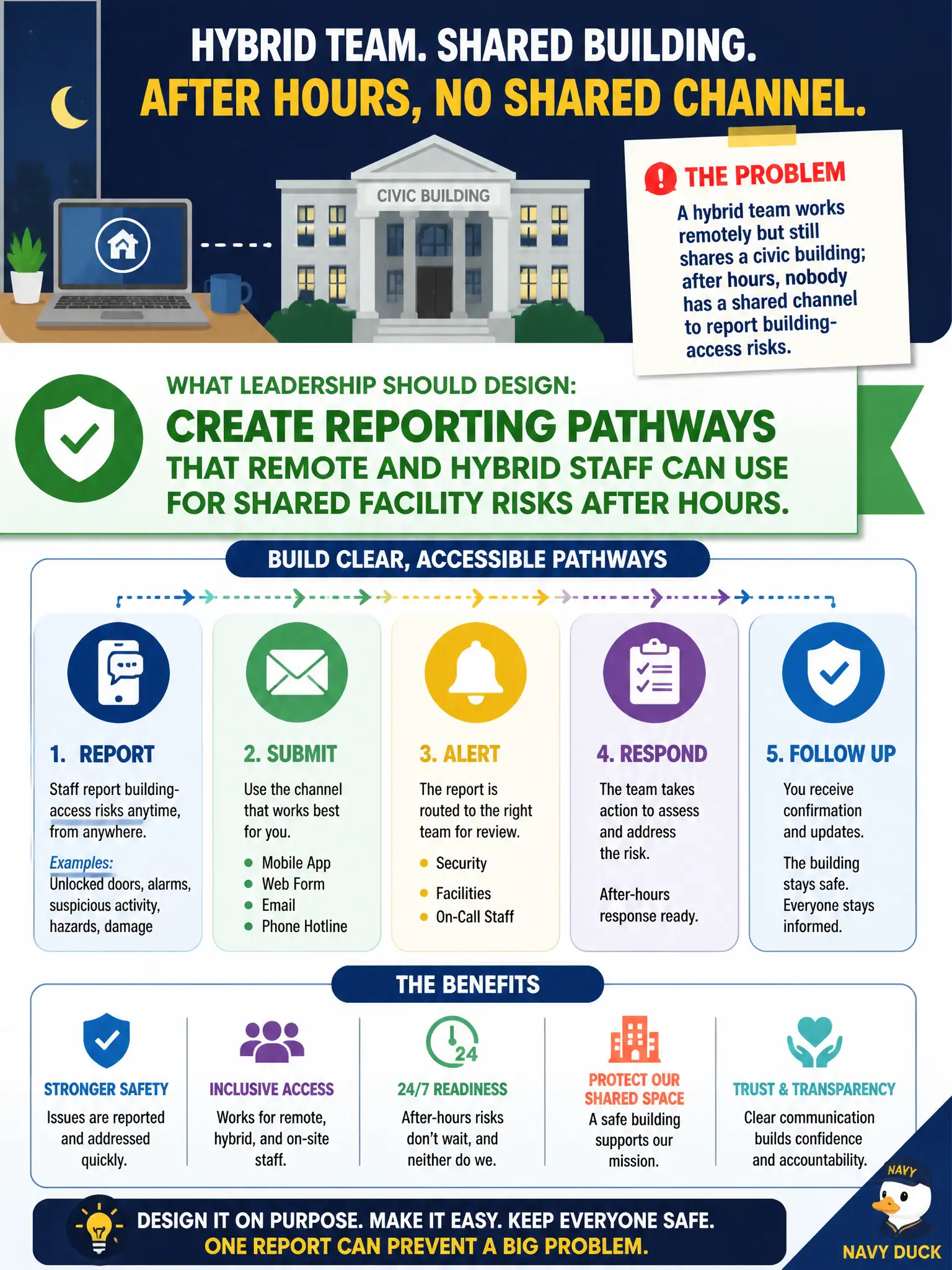
A hybrid team works remotely but still shares a civic building; after hours, nobody has a shared channel to report building-access risks. What should leadership design?
Select an answer to reveal the explanation.
Short Explanation
Hybrid work does not erase shared buildings. If someone notices a propped door at 9 p.m., they still need a working channel. Design pathways that travel with the workforce, not only with the cubicle.
Full Explanation
Hybrid and remote staff who still share a civic building need reporting pathways for facility and access risks after hours—not only daytime desk processes. Assuming remote staff never need facility pathways because they "usually" work from home leaves badge, door, and building hazards unreported when they do on-site work. Requiring an in-person visit to a daytime desk before any after-hours issue can be logged blocks timely reporting. Limiting building-access reports to security vendors and excluding employees removes the people who notice problems first. Exam caveat: pathway design must include hybrid and remote users of shared facilities. Operational check: deploy a mobile or after-hours form for building-access and facility hazards, list it in hybrid onboarding, test with an off-hours door or lighting report, and confirm facilities or security receive it. Publish expected response times so civic staff know the path is live. In municipal practice, record the rationale in the risk procedure or committee minutes so future staff apply the same rule under budget pressure. Re-validate the control after the next seasonal peak or org-chart change to confirm the civic pathway still works as designed.