
A risk committee updates the register with new control requirements, but the department that must implement those controls never hears the decision. What communication step is missing?
Select an answer to reveal the explanation.
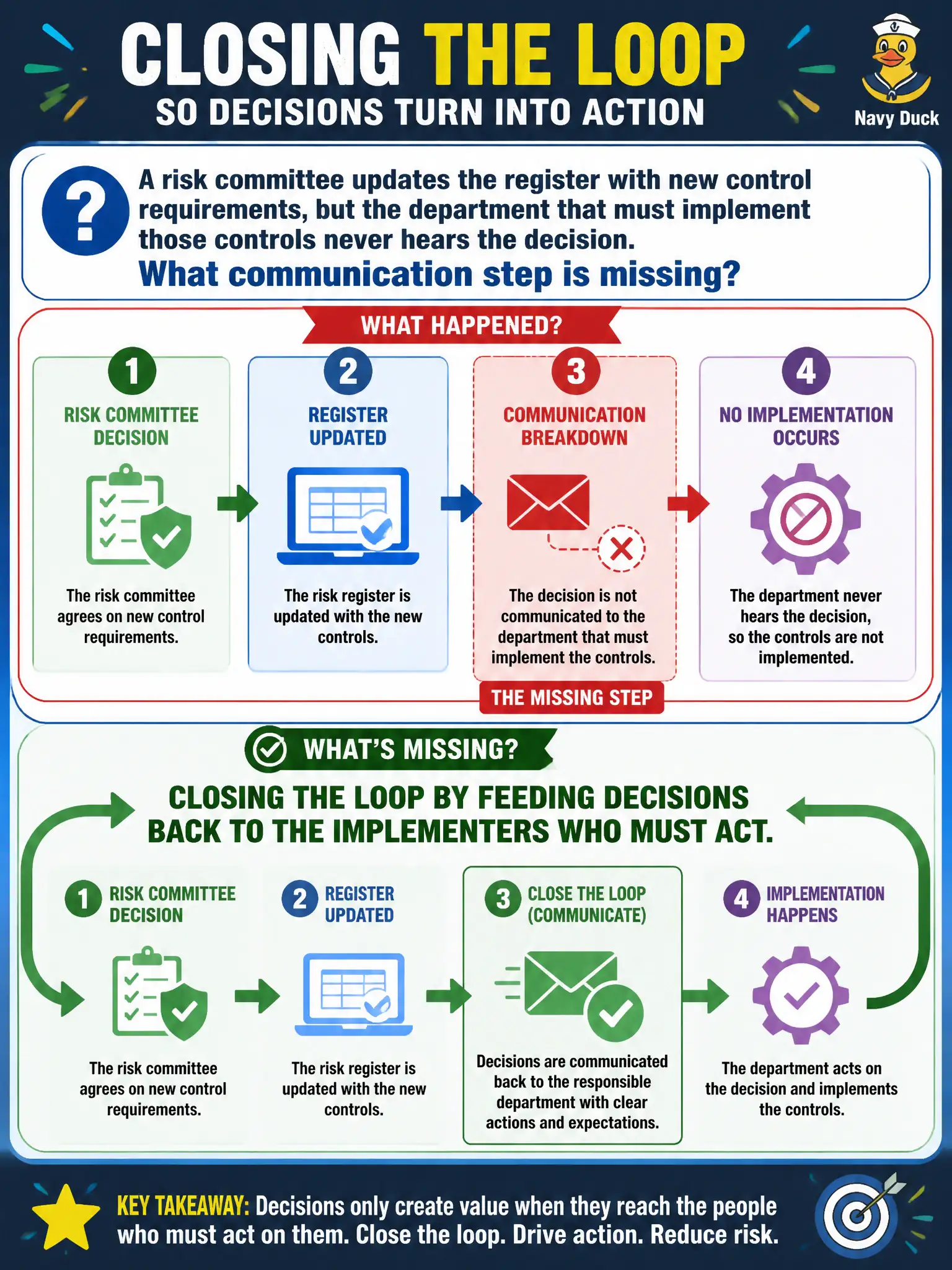
Short Explanation
Consultation is a two-way street. Updating a register and not telling the crew who must build the guardrail is like changing a flight plan and never telling the pilot. Close the loop so implementers get the decision.
Full Explanation
When a risk committee updates the register with new control requirements, implementers in the affected department must receive the decision—closing the loop. Updating records without feeding decisions back leaves controls unimplemented while dashboards look current. Publishing only on an executive dashboard nobody else can open fails operational communication. Waiting for implementers to discover changes at the annual audit is too late. Assuming silence means the department already knows abdicates confirmation. Exam caveat: decision feedback to those who must act is a core consultation step. Operational check: after each committee vote that assigns controls, send a task with owner, due date, and success criteria to the implementing civic unit, require acknowledgment, and track completion on the next agenda. Spot-check one recent control change to confirm the field supervisor can describe the new requirement without opening the executive-only view. In municipal practice, record the rationale in the risk procedure or committee minutes so future staff apply the same rule under budget pressure. Re-validate the control after the next seasonal peak or org-chart change to confirm the civic pathway still works as designed.