
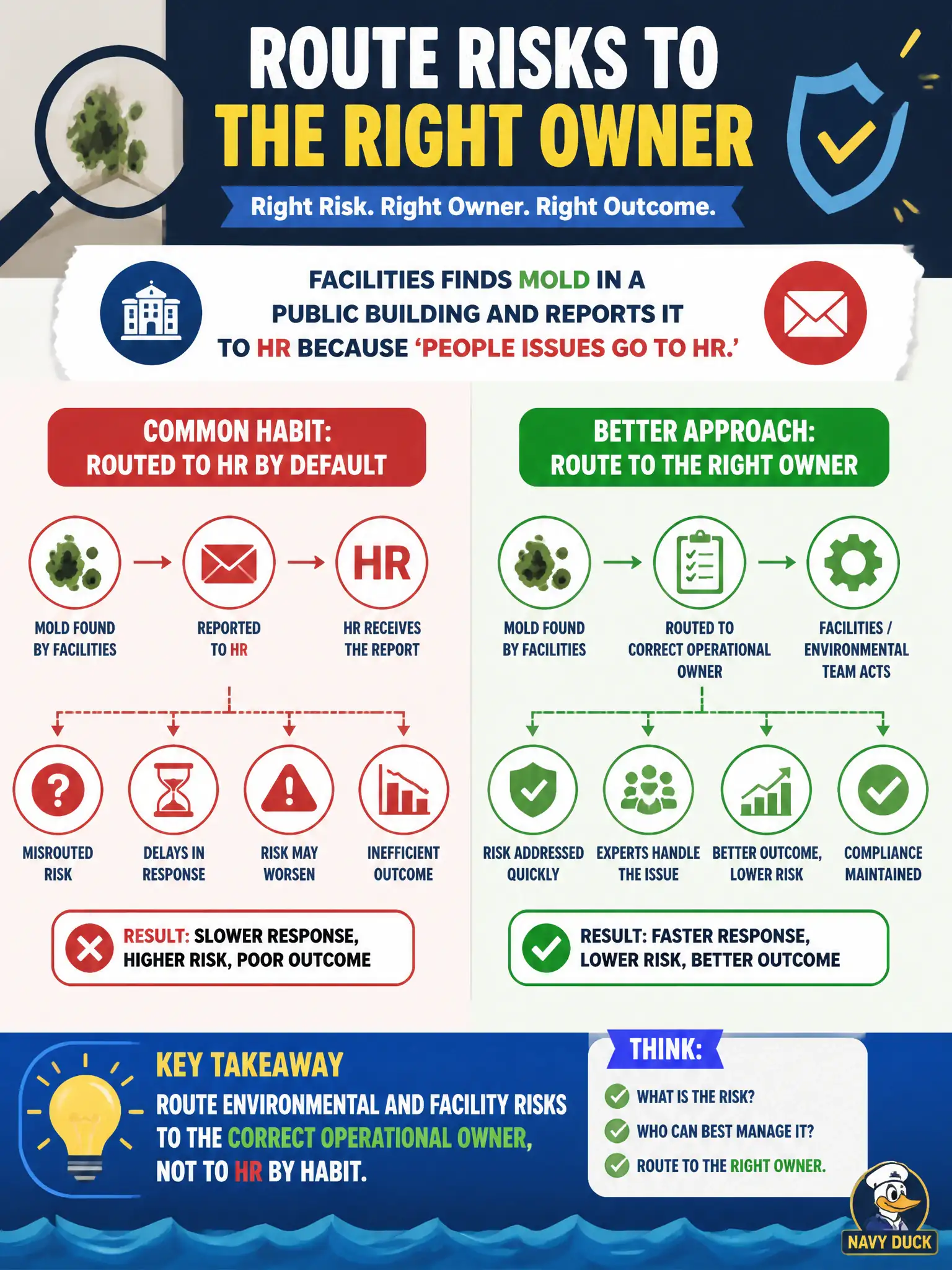
Facilities finds mold in a public building and reports it to HR because 'people issues go to HR.' What is the better routing approach?
Select an answer to reveal the explanation.
Short Explanation
Mold is a facilities and environmental problem, not a paycheck problem. Sending it to HR because 'people' sound involved is like mailing a gas leak to the receptionist. Aim the report at the operational owner who can actually fix the space.
Full Explanation
Environmental and facility risks such as mold in a public building must route to the correct operational owner—typically facilities, environmental health, or a designated building lead—not to HR by habit because "people issues go to HR." Misrouting delays remediation and can worsen occupant exposure. Always sending mold reports to payroll prioritizes cost coding over hazard control. Filing only with marketing to protect image suppresses operational truth. Ignoring mold until an employee files a formal HR complaint waits for harm and conflates grievance process with environmental response. Exam caveat: correct operational routing by risk type beats habit-based HR dumping. Operational check: update the intake decision tree so mold/IAQ goes to facilities or environmental health with HR consulted only for occupancy or accommodation aspects, open a work order the same day, and notify occupants per public-building protocol. Verify the risk register owner matches the operational owner, not payroll or marketing. In municipal practice, record the rationale in the risk procedure or committee minutes so future staff apply the same rule under budget pressure. Re-validate the control after the next seasonal peak or org-chart change to confirm the civic pathway still works as designed.