
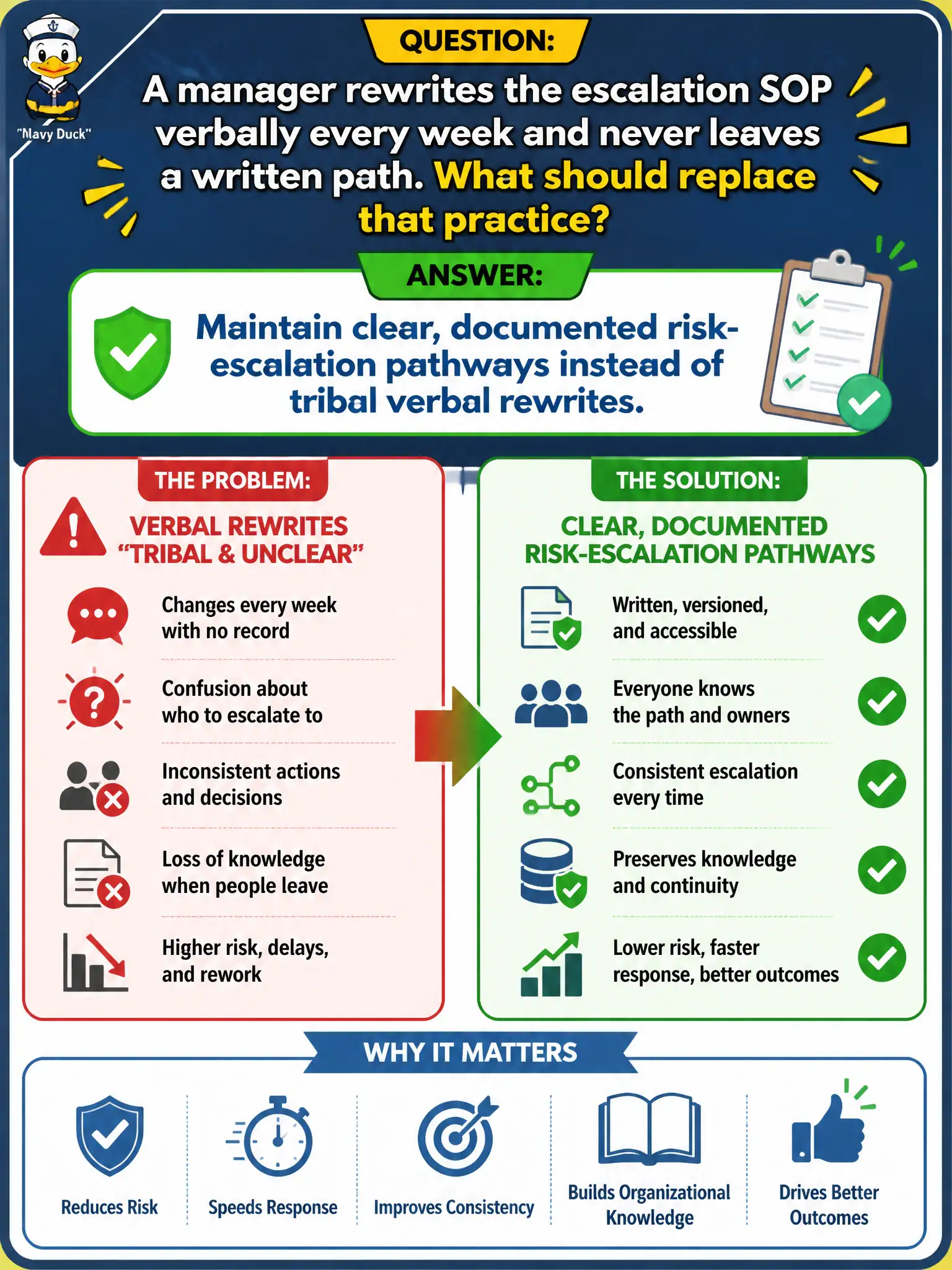
A manager rewrites the escalation SOP verbally every week and never leaves a written path. What should replace that practice?
Select an answer to reveal the explanation.
Short Explanation
Verbal SOPs that change weekly are like a treasure map redrawn in sand every tide. New folks and night crews cannot follow what was never written. Document the path and keep it stable enough to use.
Full Explanation
Risk-escalation pathways must be clear and documented. Rewriting the escalation SOP verbally every week without a written path creates tribal knowledge, inconsistent routing, and failure when the verbal author is absent. Encouraging each team to invent its own escalation story maximizes confusion. Relying on long-tenured staff memory as the official system fails under turnover. Recording escalations only in private chats deleted after thirty days destroys accountability and learning. Exam caveat: documented pathways beat verbal tribal rewrites on communication items. Operational check: freeze a controlled written escalation SOP versioned on the intranet, train supervisors to the document—not to hallway variants—and require ticket fields that mirror the written path. Audit monthly for verbal workarounds in civic departments and correct them back to the controlled procedure. In municipal practice, record the rationale in the risk procedure or committee minutes so future staff apply the same rule under budget pressure. Re-validate the control after the next seasonal peak or org-chart change to confirm the civic pathway still works as designed. Keep the teaching example in the city onboarding packet for new analysts.